Most minimalist bedrooms fail the same way. The furniture gets pared back, the palette goes white, the surfaces get cleared — and then the room feels like a waiting room. Clean, sure. Calm, no. The problem is never that the room has too many things. The problem is that the things that remain have nothing to say.
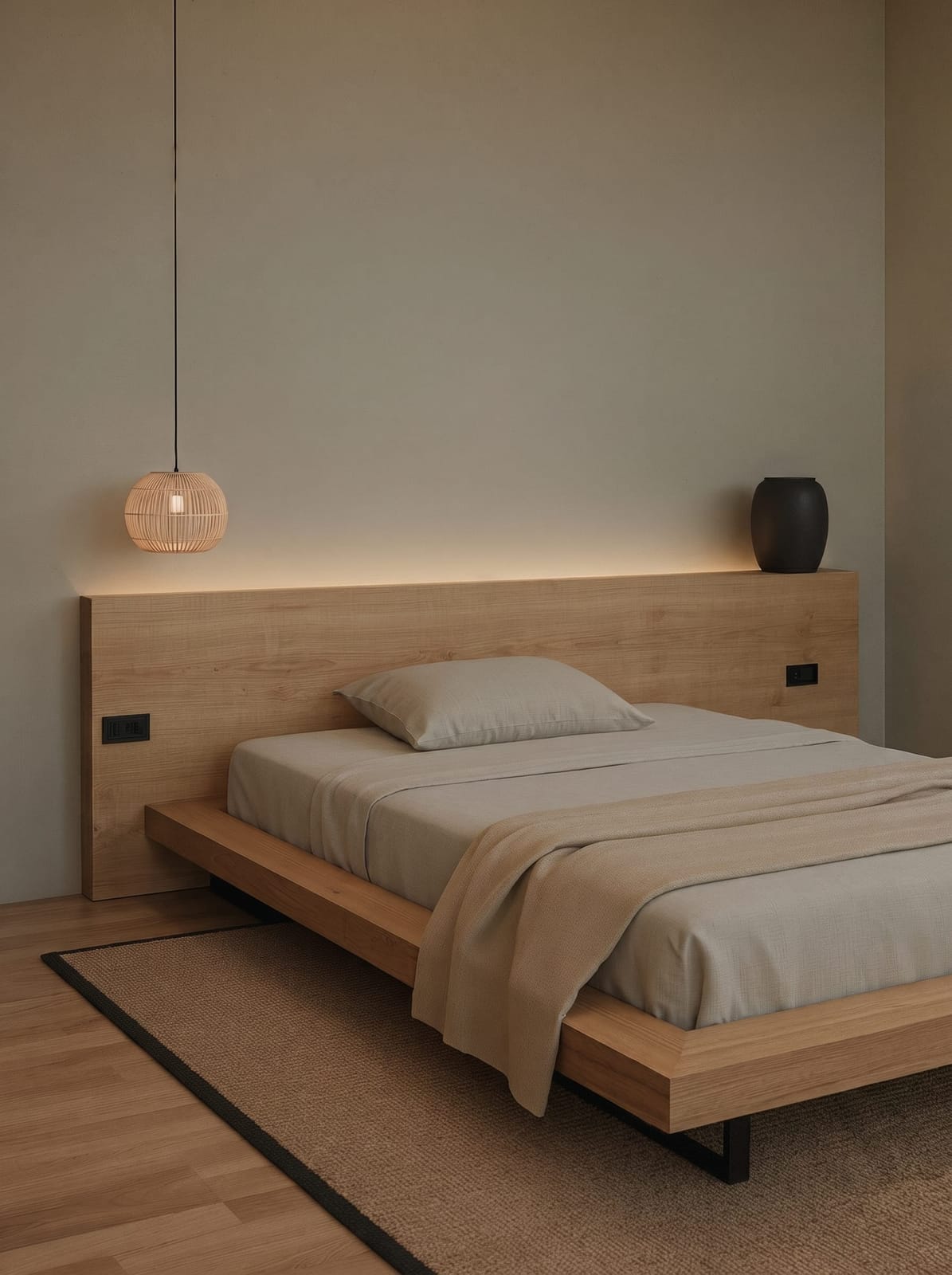
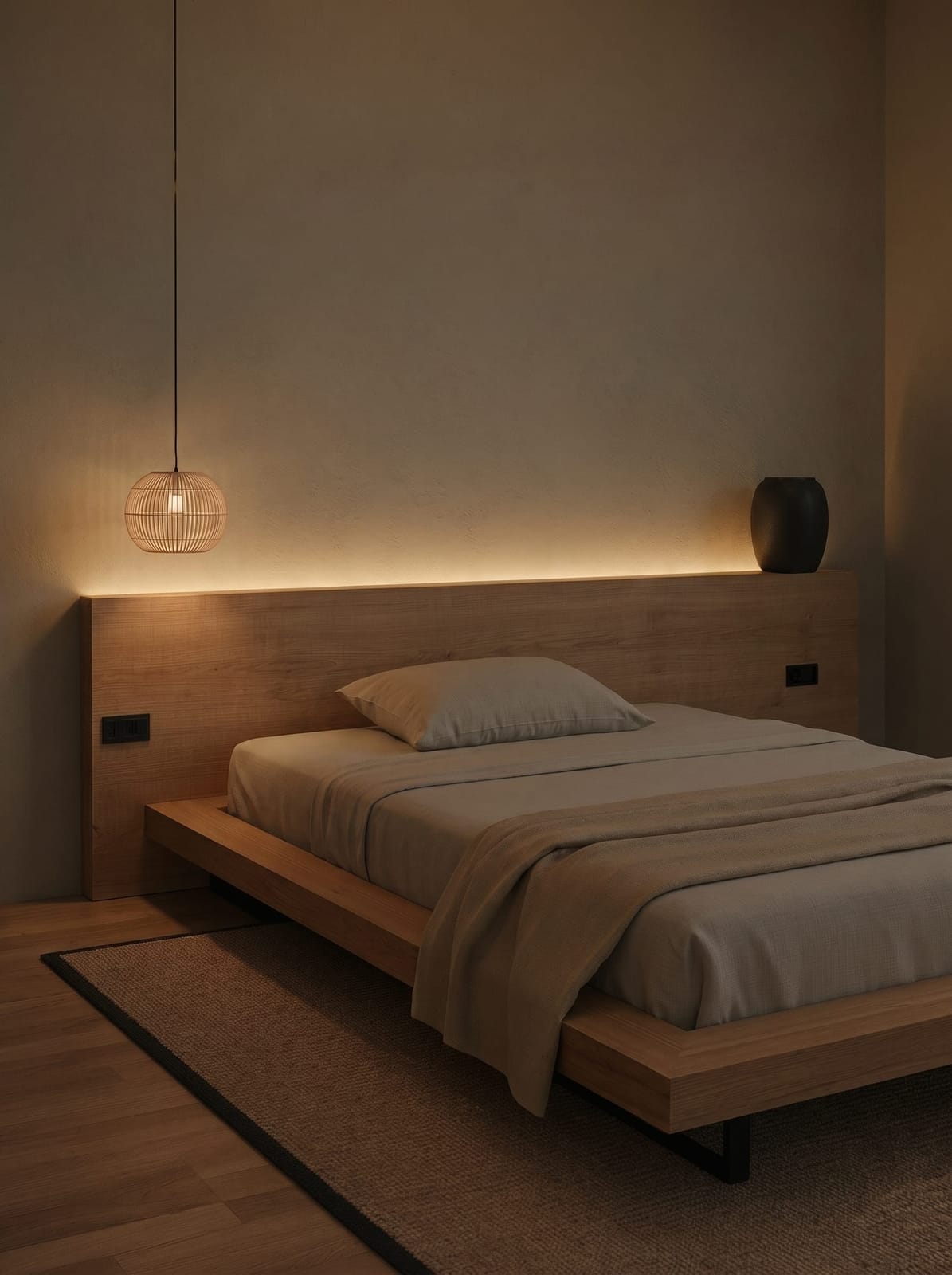
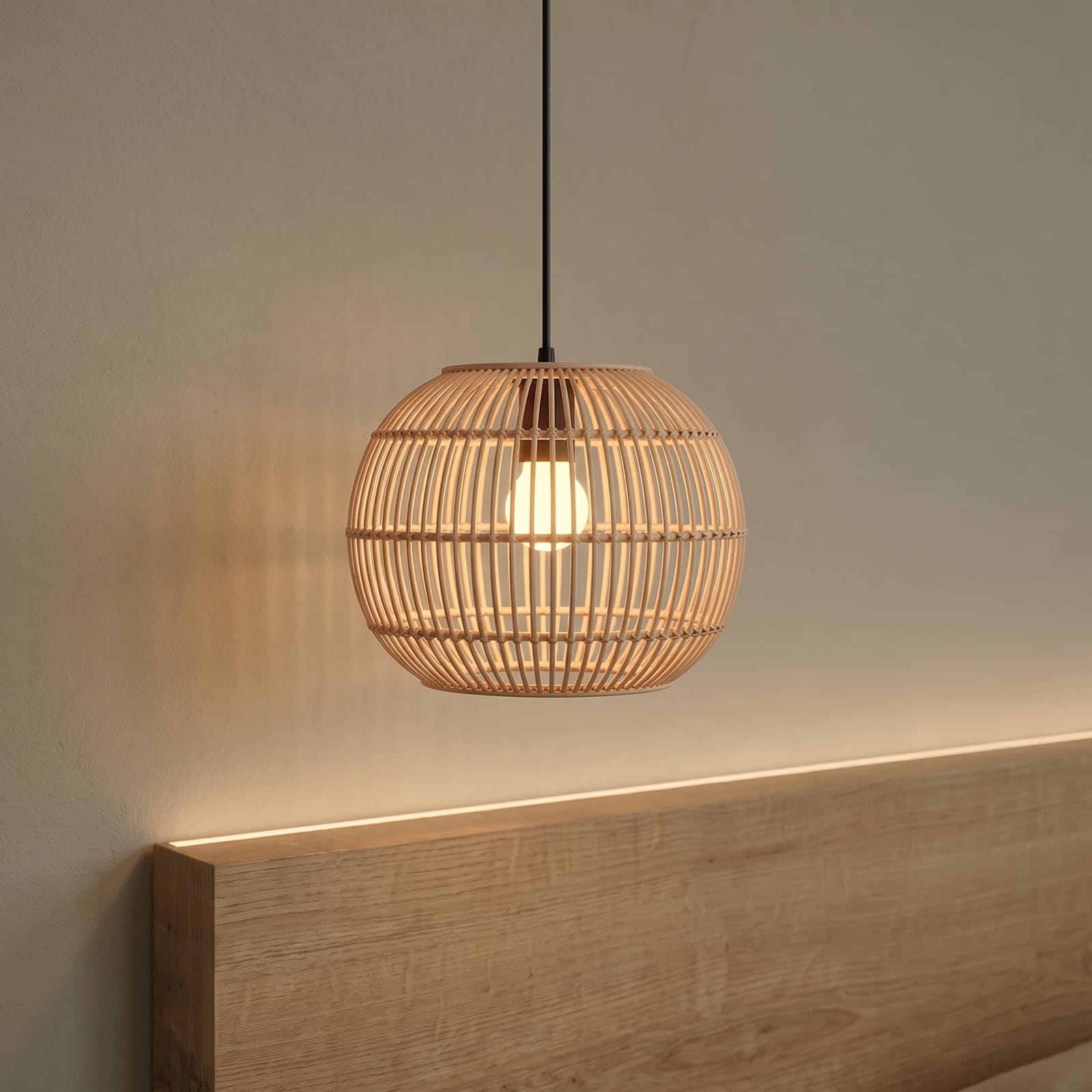
This Japandi bedroom works because it replaces visual noise with material warmth. A low oak platform bed sits close to the ground, anchored by a natural-fiber rug and layered in unbleached linen. A woven rattan pendant hangs overhead, casting light through its weave rather than from a bare bulb. A single black ceramic vase sits on the nightstand — one dark, quiet object that gives the entire neutral palette something to lean against. Nothing here is decorative for the sake of filling space. Everything is chosen for what it does to the feeling of the room.
The result is a bedroom that is minimal without being empty, warm without being cluttered, and calm because every material, proportion, and negative space is doing work.
Why This Japandi Bedroom Works
The visual logic of this room depends on a few deliberate choices working together.
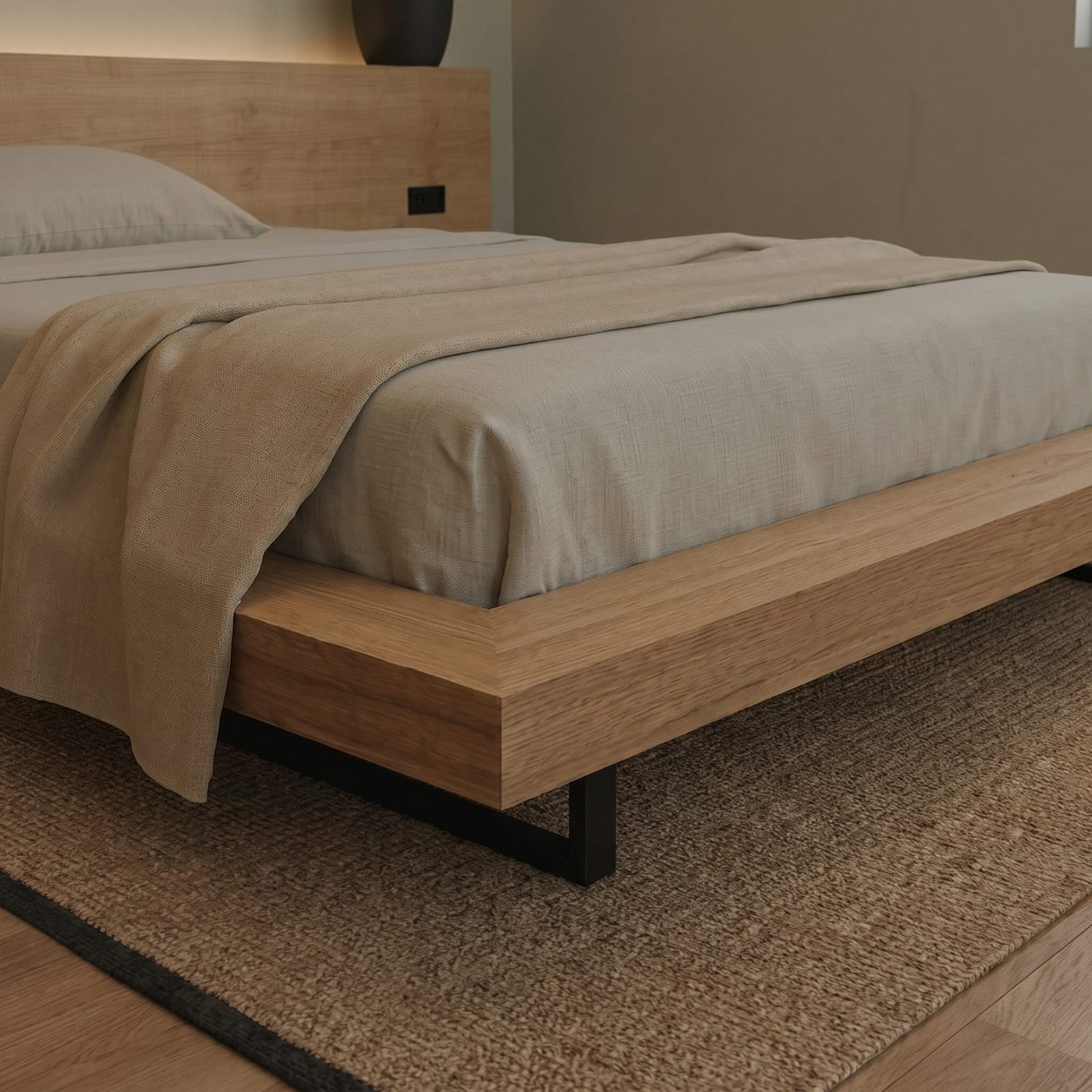
The bed sits low. A platform frame in pale oak brings the sleeping surface closer to the floor, which lowers the room’s visual center of gravity. The wall above the headboard panel opens up, and the ceiling feels further away. The room breathes upward.
The oak is warm, not cool. The bed frame, the wall-mounted headboard panel, and the nightstand all share the same pale oak tone — a honey-edged grain that reads as warm, visible-grain oak rather than a flat manufactured surface. It grounds the room in something organic without competing with the bedding.
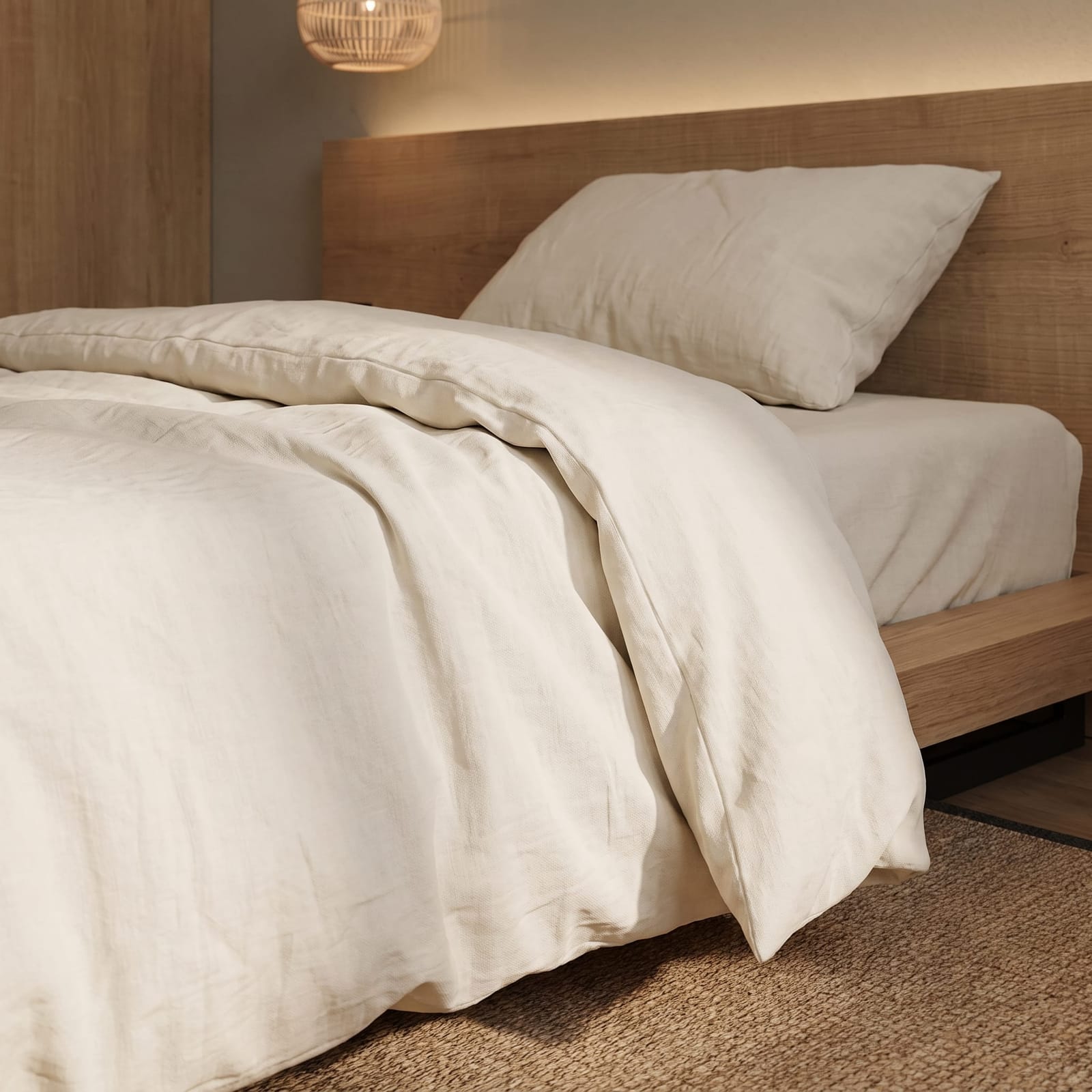
The linen is neutral, not white. The duvet and sheets sit in the range of alabaster and oatmeal rather than optical white. They look lived in. They catch the light softly. They do not reflect it back like a hospital sheet.
The pendant is woven, not solid. A rattan pendant light filters the bulb through its natural fiber weave, scattering warm light across the ceiling and upper walls in the evening. It adds sculptural presence during the day and soft atmosphere at night.
The rug is jute with a border. A flatweave natural-fiber rug with a darker fabric border sits under the bed, adding texture underfoot and visually anchoring the bed to the floor. It also does something critical: it separates the warm wood floor from the warm wood bed frame, giving the eye a resting point between two similar tones.
The dark accent is singular. One black ceramic vase — matte, hand-thrown, slightly irregular — sits on the nightstand. It is the only truly dark object in the room. That restraint is the point. It draws the eye just enough to make the surrounding warmth feel intentional, not accidental.
And the negative space is earned. The walls above the bed are mostly bare. The nightstand holds one or two objects. The floor between the rug edge and the wall is open. This emptiness does not feel unfinished because the materials that are present carry enough depth to hold the room.
Japandi, Wabi-Sabi, and the Idea of Breathing Room
Japandi is a practical style, not an academic one. At its simplest, it borrows two things: the restraint and spatial clarity of traditional Japanese interiors, and the material warmth and domestic comfort of Scandinavian design. The combination works because both traditions already value honesty in materials, quietness in form, and rooms that serve the people living in them.
Two Japanese concepts are useful to understand, even if you never use the words out loud.
Ma is the idea of intentional negative space — the pause between objects, the silence between sounds, the open wall above a low bed. It is not emptiness. It is breathing room that gives the things around it more presence. In a Japandi bedroom, ma is the reason the nightstand holds one vase instead of five candles.
Wabi-sabi is the acceptance of imperfection, natural aging, and the beauty of materials that show use. A linen duvet that wrinkles, a ceramic vase with a slightly uneven glaze, a jute rug with natural tonal variation — these are not flaws. They are what makes the room feel human instead of staged.
In practice, applying these ideas is simpler than it sounds: choose natural materials that look better with age, leave enough open space for the room to feel quiet, and resist the urge to fill every surface.
The 3 Rules Behind the Room
If you want to build a room like this without copying it piece by piece, three underlying principles will get you further than any shopping list.
1. The 60-30-10 Color Rule
The palette in this room follows a rough proportion:
- 60% warm neutral base. The walls, ceiling, and largest surfaces are warm plaster white, ivory, or soft cream. This is the canvas. It should feel warm under any light — morning sun or evening lamp.
- 30% natural material tones. Oak wood, linen fabric, jute fiber, and rattan weave occupy the middle layer. These materials bring warmth through grain, weave, and texture rather than color.
- 10% dark grounding accent. The black ceramic vase. A charcoal-bound book spine. A dark bronze lamp base. One or two objects in a deeper tone that anchor the palette and prevent the room from floating in beige.
This ratio is not a formula. It is a guardrail. If the room feels washed out, add more of the 10%. If it feels heavy, pull back.
2. The One-Third Surface Rule
Most flat surfaces in a Japandi bedroom should be at least two-thirds empty. A nightstand with a lamp and a vase. A bench at the foot of the bed with a folded throw and nothing else. A shelf with three objects and open space between them.
This is not about deprivation. It is about letting each object have enough room to register visually. A crowded nightstand makes the eye skim past everything. A nightstand with one considered object makes the eye stop. Research has linked cluttered home environments with higher self-reported stress, and while a single vase will not fix anyone’s life, reducing visual noise can make a room feel easier to settle into at the end of the day.
3. Lower the Center of Gravity
Low-profile furniture draws the eye downward and makes the wall space above feel more open. In a Japandi bedroom, this is not just about the bed. It applies to the nightstand height, the pendant drop, the rug weight on the floor, and the vertical placement of any wall-mounted headboard panel.
When the heaviest visual elements sit in the lower third of the room, the upper two-thirds become breathing room. The ceiling recedes. The proportions feel calmer. The room opens up without removing anything.
Start with a Low Oak Platform Bed
The bed is the largest object in the room, so it sets the tone for everything else. A low oak platform frame — one that sits close to the floor with a clean horizontal profile — establishes the Japandi character immediately.
What to look for: a frame in natural or pale oak with visible wood grain, a slat system that eliminates the need for a box spring, and a headboard that is either integrated into the frame or replaced by a wall-mounted panel. The finish should be matte or satin, not high-gloss. The profile should feel grounded, not floating.
What to avoid: tall upholstered headboards that push the visual weight upward, glossy lacquered finishes that reflect light harshly, metal frames that read as industrial rather than warm, and any bed that requires a tall box spring or foundation that raises the mattress above the frame line.
The height of the bed matters more than it seems. A platform frame that brings the top of the mattress to roughly 45–50 cm / about 18–20 inches above the floor creates the low, horizontal posture that gives the room its calm proportions. Too high, and the bed dominates the wall. Too low — truly floor-level — and the room can feel like a student apartment rather than a considered space.
Choose Neutral Linen Bedding Instead of Optical White
The bedding is the largest soft surface in the room, and its color and texture shape the mood of the entire bed zone. In a warm Japandi bedroom, optical white bedding is almost always a mistake. Against warm oak and plaster walls, bright white reads as clinical. It bounces light too aggressively. It makes the organic materials around it look dirty by comparison.
Instead, look for linen in alabaster, oatmeal, natural flax, warm cream, or unbleached tones. washed linen or European flax linen works especially well for this kind of bedding because it has the right weight and drape — substantial enough to fall in soft, irregular folds without looking limp, and textured enough to catch side light in the morning.
Linen also improves with washing, which is the opposite of most bedroom textiles. The first wash softens it. The tenth wash gives it the relaxed, slightly rumpled hand that makes a Japandi bed look lived in rather than staged. You do not iron it. That is the point. The wrinkles are the texture.
Layer the bed simply: a fitted sheet, a duvet in a linen cover, two or three pillows in matching or closely tonal cases, and a folded throw at the foot. No more. The bed should look inviting, not upholstered.
Use a Woven Pendant for Warm, Diffused Light
Lighting is where most bedrooms quietly fail. A single overhead fixture with a cool-white bulb will flatten every material decision you have made. The oak loses its warmth. The linen looks grey. The plaster walls go from soft to sterile.
A woven pendant — rattan, wicker, paper, or natural fiber wrapped around a steel frame — solves this by filtering the light source through its material. The bulb is not directly visible. Instead, the light passes through the weave, scattering in warm, uneven patterns across the ceiling and walls. During the day, the pendant reads as a sculptural object. At dusk, it becomes the room’s atmosphere.
For the bulb, warm low-glare lighting in the range of 2700K to 3000K is generally better suited to a bedroom than cooler task lighting. The goal is a glow that feels like late-afternoon sun, not a reading lamp in an office.
If the room has additional lighting — a table lamp on the nightstand, a wall sconce beside the bed — keep those warm as well. Consistency in color temperature is more important than brightness. A bedroom that shifts from warm pendant to cool task lamp as you move through it feels unsettled. A bedroom where every light source shares the same warmth feels like one room.
Ground the Bed with a Natural Fiber Rug
A rug under the bed does two things. First, it adds warmth and texture underfoot — important in a room where the materials are deliberately restrained. Second, it visually anchors the bed to the floor, creating a defined zone within the room.
A jute flatweave with a darker fabric border is strong in this context because it introduces a natural texture that is distinct from the oak and linen already in the room. Jute has a visible, irregular weave that catches light differently than woven cotton or wool. It reads as raw and organic without looking rustic.
Size matters more than pattern. The rug should extend at least 60 cm / about 24 inches beyond the sides and foot of the bed so that you step onto it when getting out of bed, not onto bare floor. For a queen bed, that usually means a rug in the range of 240 × 300 cm / about 8 × 10 ft. For a king, go larger. A rug that is too small — one that floats under the center of the bed without reaching the edges — makes the bed look like it is sitting on a placemat. It shrinks the room instead of grounding it.
Add Texture Without Adding Clutter
Three objects in this room deserve specific attention because they show how texture works when there is almost nothing else.
A beige knit throw, folded at the foot of the bed, introduces a chunky organic-cotton weave that is heavier and more dimensional than the linen sheets above it. It breaks the horizontal plane of the bed into two textures — smooth linen on top, dense knit below. It also gives the bed a visual base, something to anchor the lower edge of the composition. The color stays in the same warm neutral family as the linen, so it layers rather than contrasts.
A black ceramic vase on the nightstand is the room’s single dark object. Matte-glazed, hand-thrown, slightly irregular in profile — it does not try to be decorative. It is a simple vessel that happens to be the darkest thing in the room, and that contrast is precisely why it works. Without it, the palette would drift into an undifferentiated beige. With it, the eye has a focal point, and every warm tone around it feels more deliberate by comparison.
An oak wall-mounted headboard panel extends the material language of the bed frame up the wall without adding another piece of furniture. It gives the bed a vertical backdrop, frames the pillows, and makes the sleeping zone feel more defined. Because it matches the bed frame material, it reads as architecture rather than decoration — a continuation of the oak plane rather than a separate object.
The restraint here is the lesson. Three textural additions. Three different materials — cotton knit, ceramic, oak. Each one does a specific job. Nothing overlaps. Nothing repeats. and the room still has more empty space than occupied space.
Common Japandi Bedroom Mistakes to Avoid
Using cool grey or optical white everywhere. A Japandi palette should feel warm. Cool grey walls with white bedding and chrome hardware is Scandinavian minimalism at its coldest, not Japandi. Shift toward ivory, oatmeal, warm cream, and materials with natural yellow or amber undertones.
Buying matching furniture sets. A nightstand, dresser, and bed frame from the same furniture line in identical finishes will make the room look like a catalog page. Mix wood tones subtly — pair a pale oak bed with a slightly warmer walnut tray, or a lighter ash nightstand. The variation should be gentle, not chaotic, but it should exist.
Choosing a rug that is too small. A rug that does not extend past the bed’s footprint makes the bed look disconnected from the floor. Size the rug to the bed, not to the room’s center.
Using harsh overhead lighting. A single recessed downlight or a bare-bulb pendant will flatten the room’s texture. Use diffused, warm light sources that scatter rather than spotlight.
Overdecorating nightstands and shelves. A nightstand with a lamp, a candle, a stack of books, a tray, a plant, and a phone charger is not Japandi — it is a surface that needs editing. One lamp, one object. Two at most.
Making the room so empty it feels unfinished. Japandi is not about removal for its own sake. If the room feels cold or vacant, it needs more texture, not more objects. Add a heavier rug, a warmer throw, a wall-mounted panel, or a pendant with more visual presence. The goal is quiet warmth, not austerity.
How to Shop the Look
If you are building a warm Japandi bedroom from the ground up, buying order matters. Start with the pieces that define the room’s proportions and work outward toward the details.
1. The bed frame. This is the room’s largest object and sets the material tone, height, and visual weight. Get the platform, the wood, and the profile right before choosing anything else.
2. The rug. Size the rug to the bed before it arrives. A rug that is too small will look wrong immediately and is expensive to replace. Measure for at least 60 cm / about 24 inches of overhang on the sides and foot.
3. The bedding. Choose linen in a warm neutral rather than white. Touch it if you can — weight and drape matter more than thread count. Look for garment-washed or pre-softened washed linen or European flax.
4. The lighting. A woven or paper pendant that diffuses warm light will do more for the room’s atmosphere than any decorative object. Choose the fixture for its material and light quality, not its size.
5. The throw and accent objects. A knit throw, a single ceramic vessel, a small tray. These are the pieces that add the final layer of texture. Buy them last so they respond to the room as it actually looks, not as you imagined it.
6. The wall or headboard panel. If the bed does not have an integrated headboard, a wall-mounted oak panel can define the sleeping zone and add vertical warmth. It is the most optional piece in this list, but in a room with bare plaster walls, it can be the detail that makes the composition feel finished.
When shopping, prioritize material over brand. A well-made oak bed from an unfamiliar maker will age better than a particle-board frame from a name you recognize. Touch the linen. Look at the ceramic glaze in person if you can. The materials in a Japandi bedroom are visible and close — they need to hold up to proximity.
Sources & Details
Explore the complete source list for this room, from the anchor pieces to the smaller finishing details.
Source note: Some links in this source list may be affiliate links, which means we may earn a commission at no extra cost to you. As an Amazon Associate I earn from qualifying purchases.
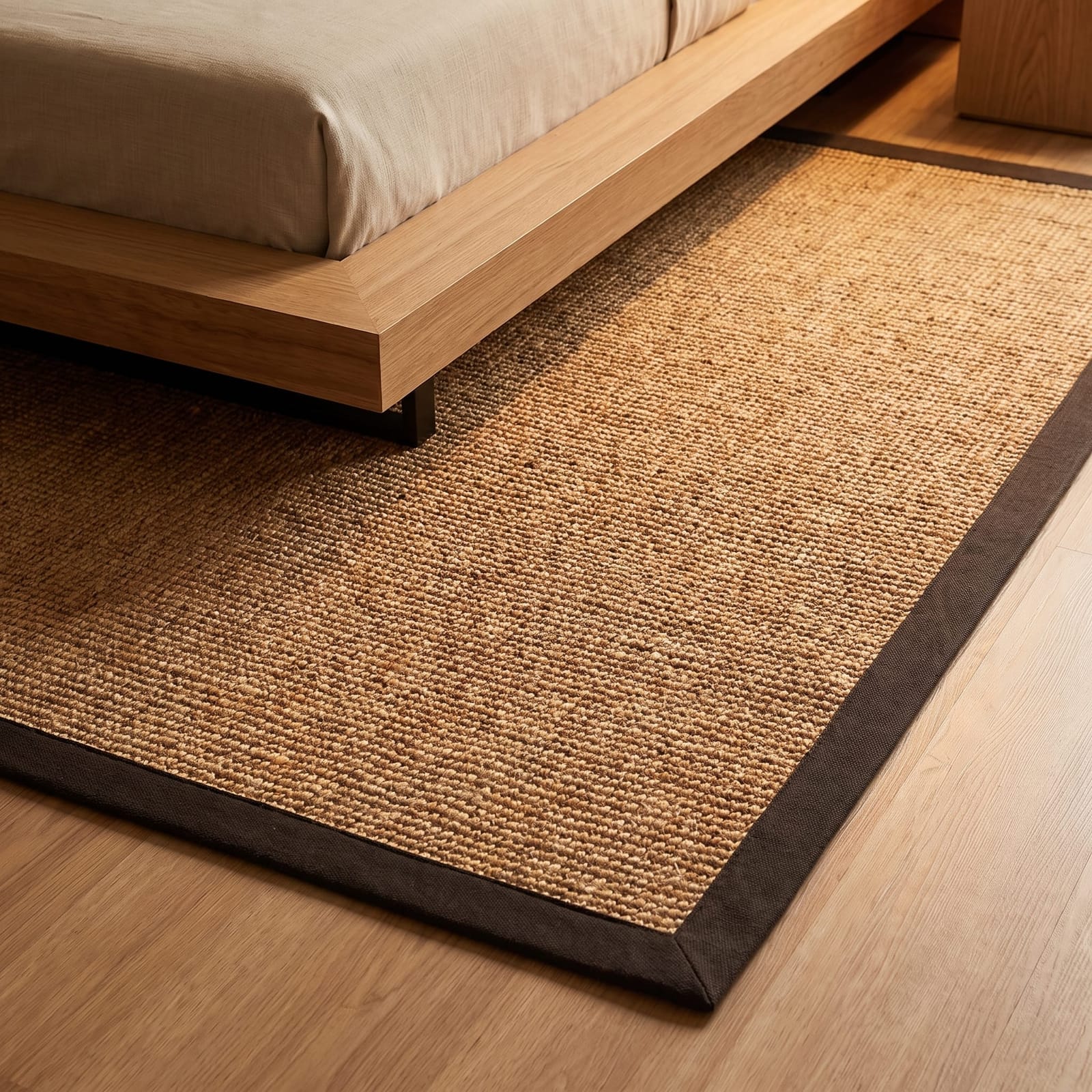
Bordered Jute Flatweave Area Rug
100% natural hand-spun jute flatweave with a durable dark fabric border.
The texture of the natural jute combined with the crisp charcoal/black canvas border is an exact match for the rug layered under the bed.
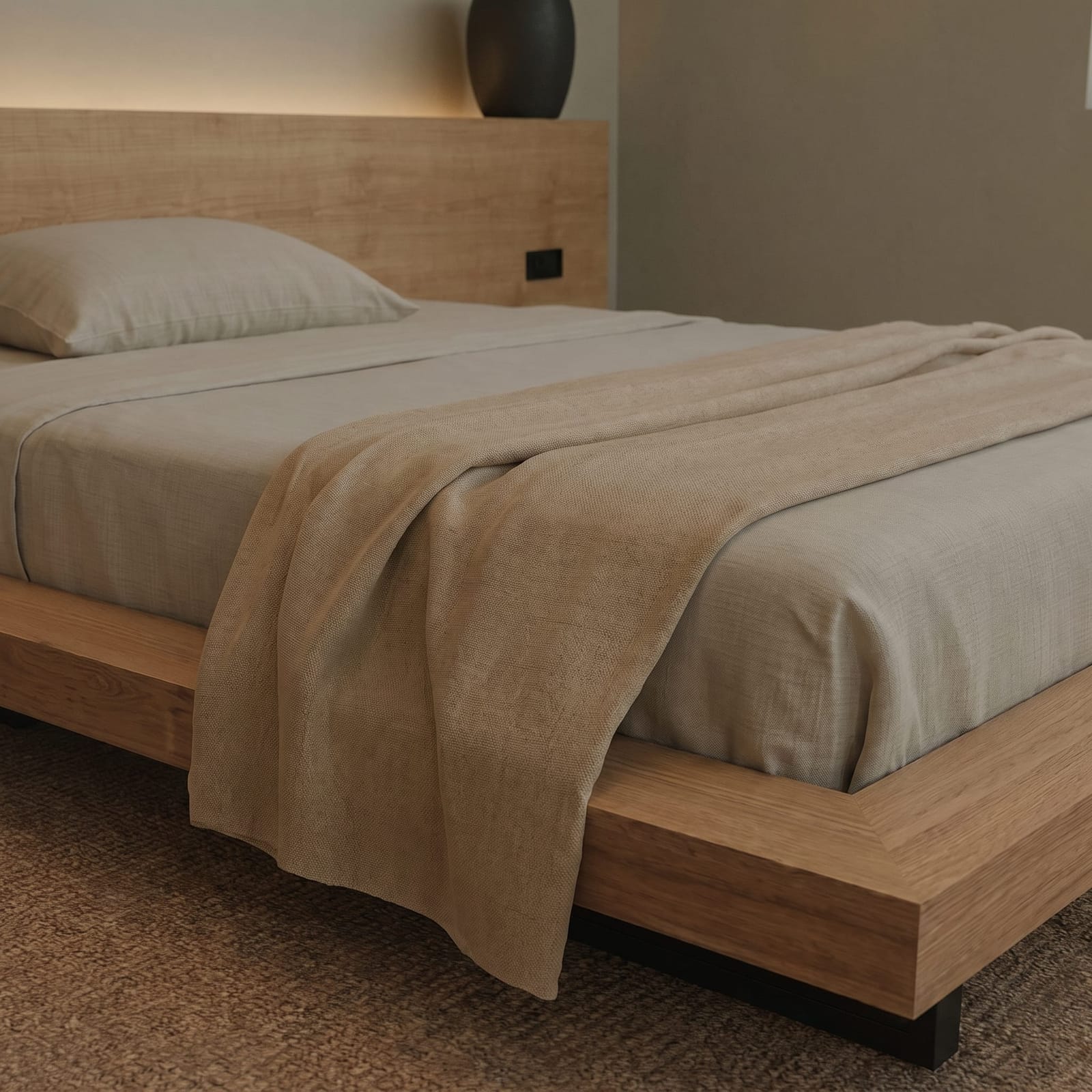
Chunky Hand-Knit Cotton Throw Blanket
100% organic cotton, hand-knit for a heavy, cozy, texture-rich feel.
The 'Sand Beige' tone and the artisan hand-knit texture duplicate the throw blanket layered over the linen bedding.
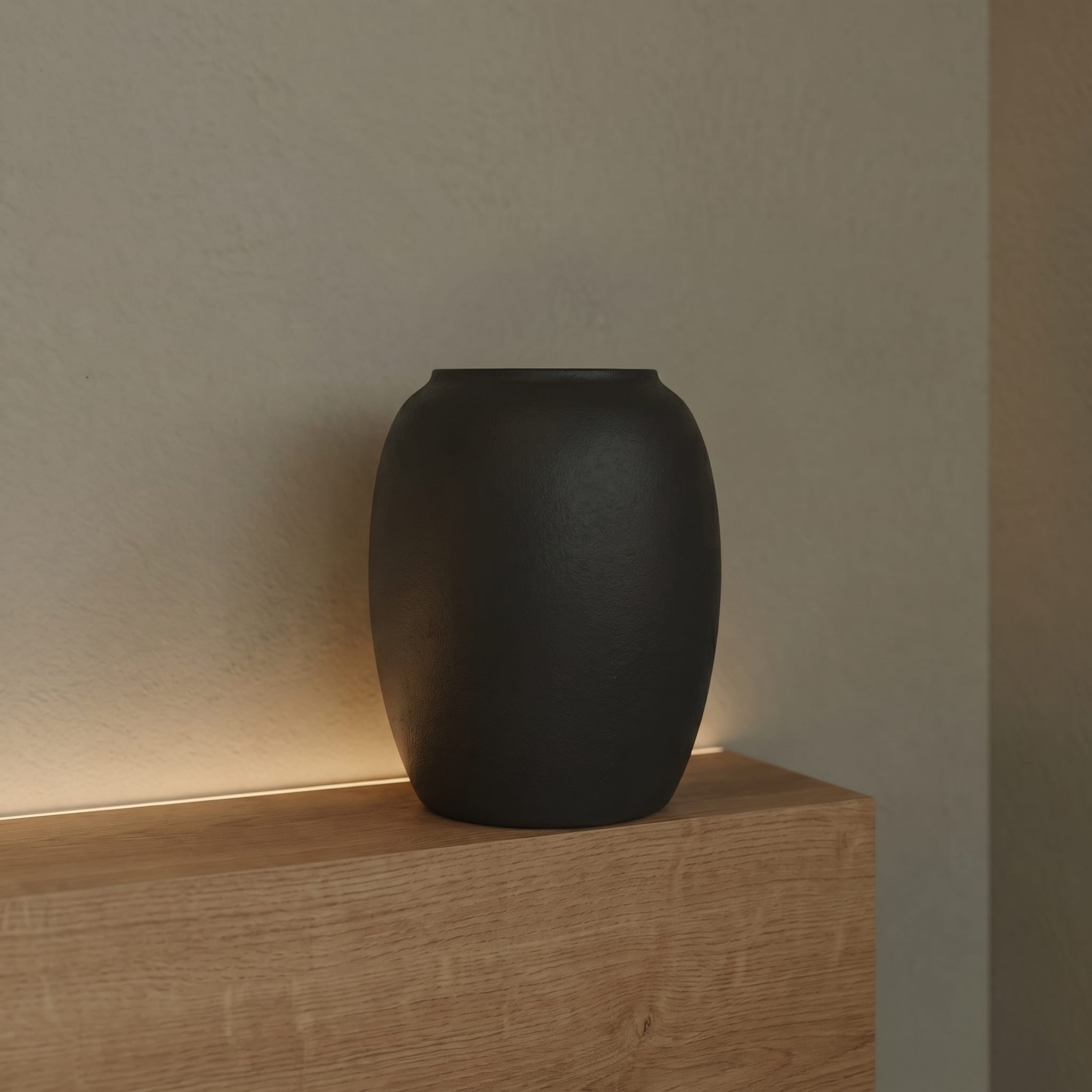
Matte Black Stippled Ceramic Vase
Hand-thrown terracotta with a stippled matte black glazed finish. Watertight.
The stippled dark charcoal/black matte finish and organic rounded curves replicate the decorative vase resting on the oak panel ledge.
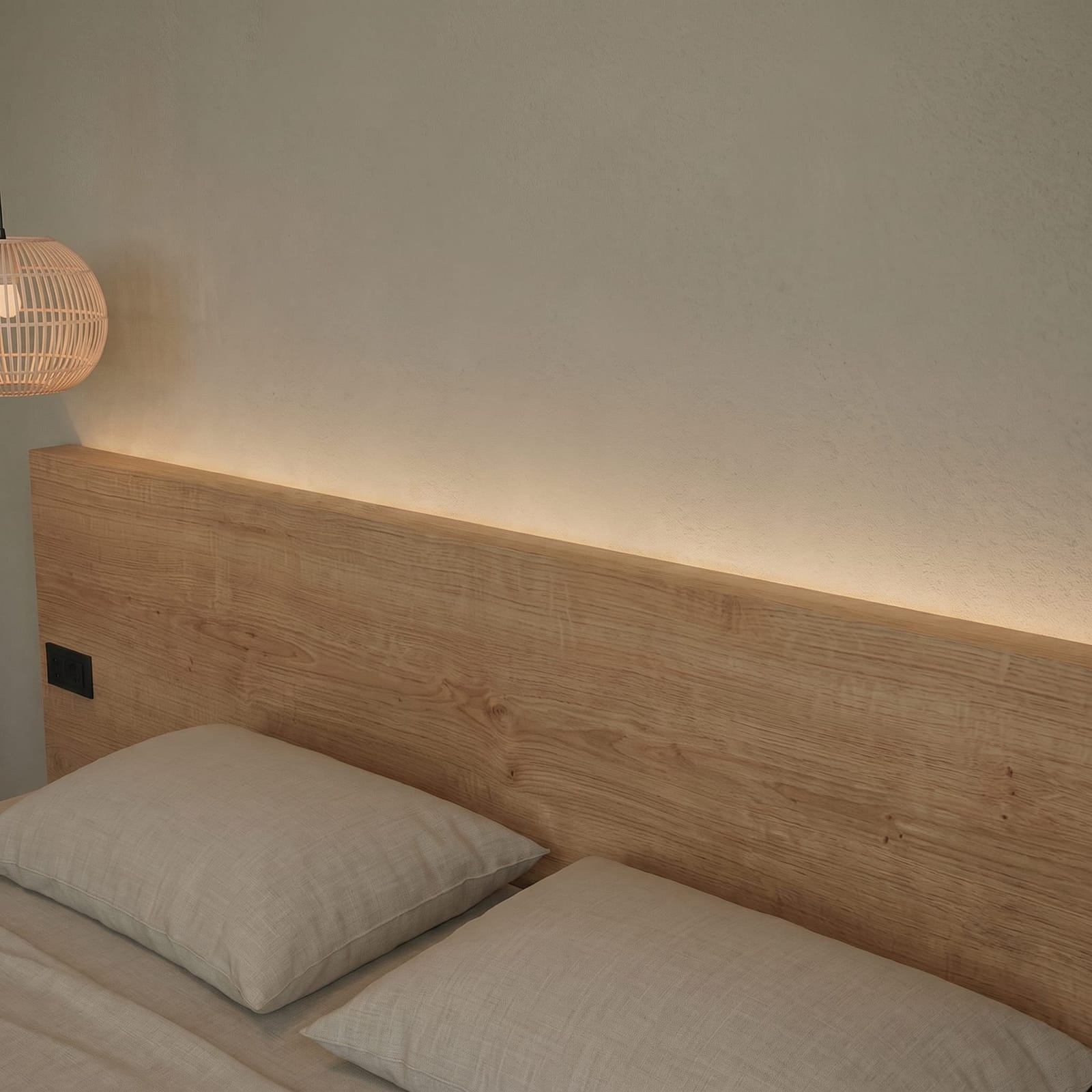
Oak Headboard Wall Panel
Solid and engineered wood covered in warm Ash/Oak veneer.
Captures the clean wood grain panel look. When wall-mounted behind a low plinth bed frame, it provides the exact built-in architectural look visible in the bedroom.
Frequently Asked Questions
What is a Japandi bedroom?
A Japandi bedroom combines the spatial restraint of Japanese interiors with the material warmth of Scandinavian design. It typically features low furniture, natural materials like oak and linen, a warm neutral palette, and intentional negative space. The goal is a room that feels calm and grounded rather than empty or cold.
What is the difference between Japandi and wabi-sabi?
Japandi is a design style that blends Japanese and Scandinavian principles — clean lines, natural materials, and functional warmth. Wabi-sabi is a Japanese aesthetic philosophy that values imperfection, natural aging, and the beauty of materials that show use. Wabi-sabi influences Japandi, but it is a broader concept. In a Japandi bedroom, wabi-sabi shows up in the wrinkled linen, the irregular ceramic glaze, and the visible grain of the wood.
How do you make a Japandi bedroom feel warm instead of cold?
Avoid cool grey walls, optical white bedding, and chrome or steel hardware. Instead, use warm plaster tones on the walls, oatmeal or alabaster linen on the bed, pale oak furniture with visible grain, and warm-toned lighting around 2700K to 3000K. Texture does the heavy lifting — a jute rug, a knit throw, and a hand-thrown ceramic vase add warmth without adding clutter.
What colors are best for a Japandi bedroom?
Warm whites, ivory, oatmeal, cream, soft taupe, stone beige, pale oak, muted clay, and charcoal as a grounding accent. The palette should feel tonal and layered, with small shifts in warmth from one material to the next. Avoid stark white, cool grey, or any single color used uniformly across every surface.
What type of bed frame works best for Japandi style?
A low-profile platform frame in pale oak or natural wood with a matte finish and clean horizontal lines. The frame should bring the top of the mattress to roughly 45 to 50 centimeters / about 18 to 20 inches above the floor. Avoid tall upholstered headboards, high-gloss finishes, metal frames, and any design that requires a box spring or visible foundation.
What lighting is best for a Japandi bedroom?
Warm, diffused light from a woven pendant, paper lantern, or linen-shaded lamp. Look for bulbs in the 2700K to 3000K range, which produce a soft amber glow rather than a cool white. Avoid harsh overhead downlights and exposed bright bulbs. Consistency in color temperature across all light sources matters more than brightness.
What type of rug works under a platform bed?
A natural-fiber flatweave — jute, sisal, or wool-jute blend — works well because it adds texture without competing with the linen and wood already in the room. Size the rug to extend at least 60 centimeters / about 24 inches beyond the sides and foot of the bed. For a queen bed, a rug around 240 by 300 centimeters / about 8 by 10 ft is typical. Avoid small accent rugs that float under the center of the bed.
How do you decorate a Japandi bedroom without clutter?
Keep most surfaces at least two-thirds empty. Use one lamp and one object on the nightstand, not five. Place a folded throw at the foot of the bed instead of layering pillows. Choose a single dark accent — a ceramic vase, a book, a small sculpture — and let it be the room's focal point. If a surface has more than two or three objects, remove one and see if the room improves.
Is Japandi good for small bedrooms?
Yes. Japandi is one of the strongest approaches for small bedrooms because it favors low furniture, open floor space, and visual breathing room. A low platform bed makes the ceiling feel higher. Wall-mounted lighting and a floating headboard panel free up floor space. A simple palette with minimal pattern keeps the room from feeling visually compressed. The less you add, the larger the room reads.