There is a particular kind of quiet that belongs to certain rooms. Not silence exactly, but a hush built into the surfaces themselves: plaster that absorbs sound, brass that catches light without reflecting it back sharply, clay that holds the temperature of the air around it. The terracotta tadelakt shower is one of those rooms.
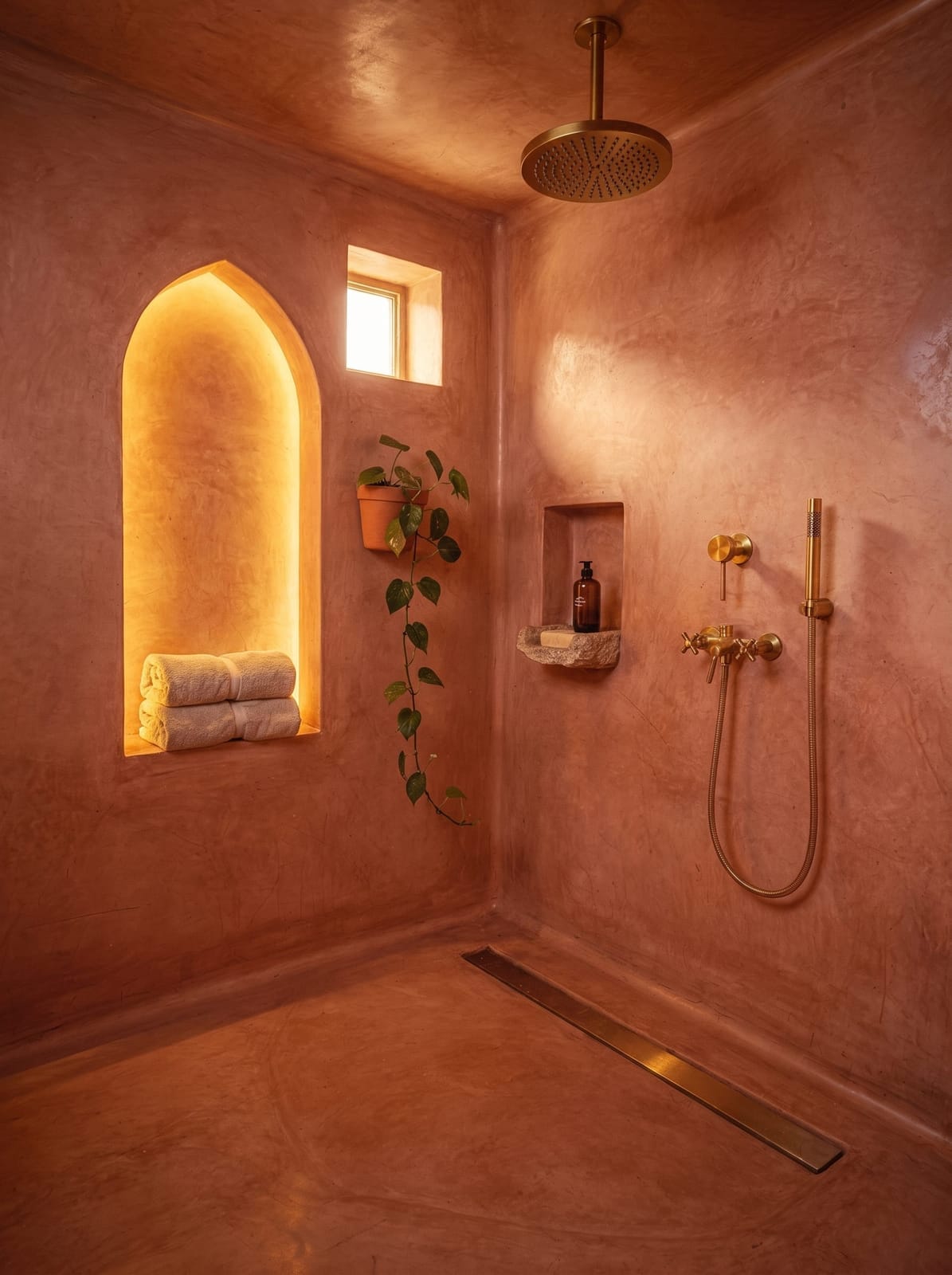
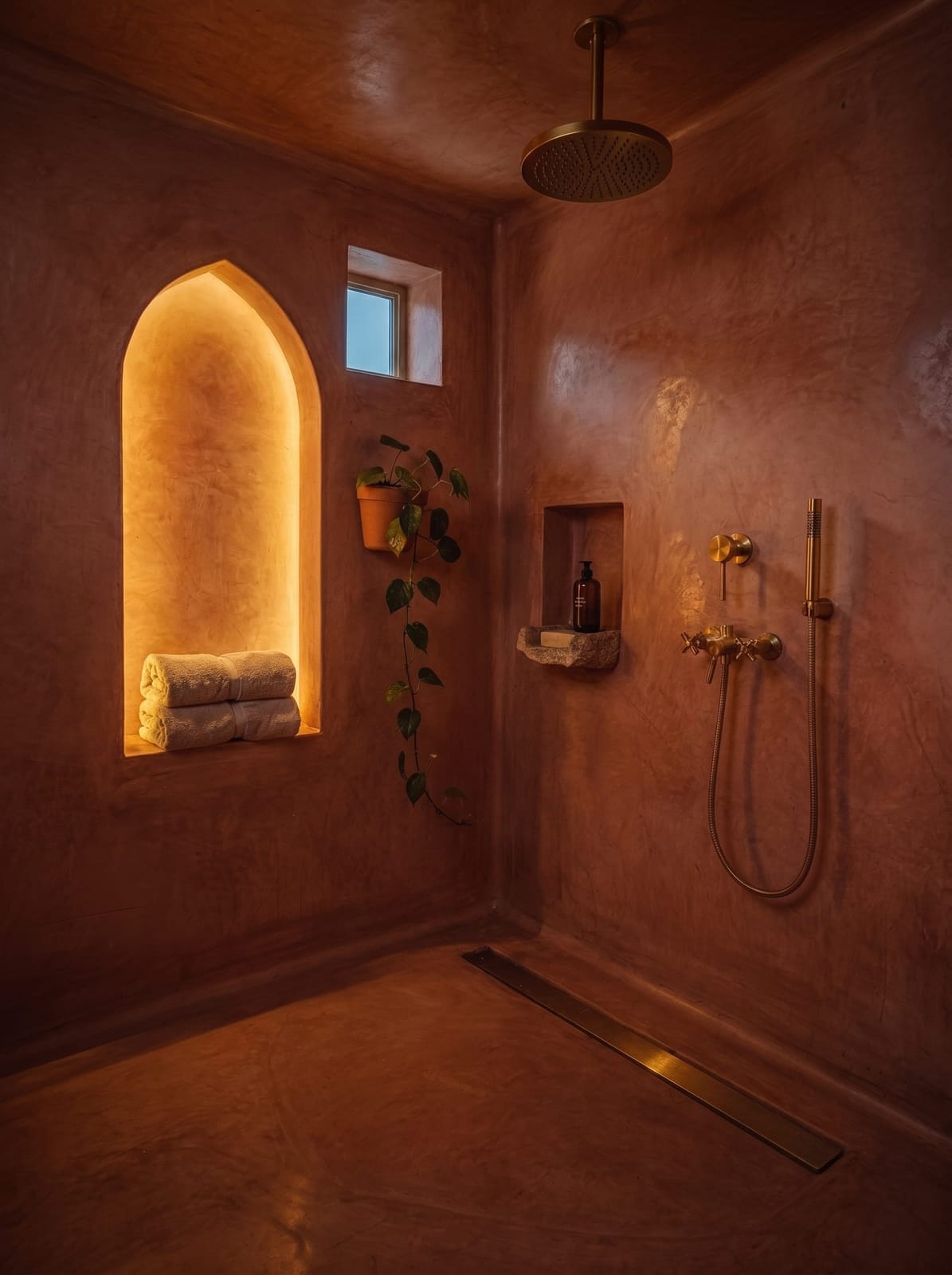
This is not a bathroom designed to impress with novelty. It is designed to slow you down. The walls are hand-polished Moroccan lime plaster in a deep, sun-baked terracotta, applied without seams, without grout lines, without interruption. The effect is sculptural. The corners soften. The surfaces breathe. When natural light enters through the high window, the entire enclosure shifts in warmth, from burnt sienna at midday to a deep clay rose in the evening.
Why Tadelakt Works in a Shower
Tadelakt is not a decorative coating. It is a structural plaster system with roots in Moroccan hammam architecture, where it has been used for centuries to line steam rooms and bathing pools. The technique involves applying lime plaster in compressed layers, then burnishing the surface with a polishing stone and sealing it with olive oil soap or natural wax. The result is a dense, water-resistant finish that naturally sheds moisture without the need for synthetic sealants.
What makes tadelakt particularly effective in a walk-in shower is the absence of grout. Grout lines are the weakest point in any tiled shower, where moisture collects, mold develops, and maintenance becomes a recurring problem. Tadelakt eliminates that vulnerability entirely. The wall becomes a single, continuous surface, simultaneously waterproof and breathable, resistant to mold, and remarkably easy to clean.
The terracotta tone deepens this material logic. Warm earth pigments mixed into the lime base create a color that is not painted on but built into the plaster itself. It will not peel, chip, or fade. Over years of use, the surface develops a subtle patina, the kind of slow aging that makes a bathroom feel more settled, not more worn.
The Material Palette: Brass, Clay, and Stone
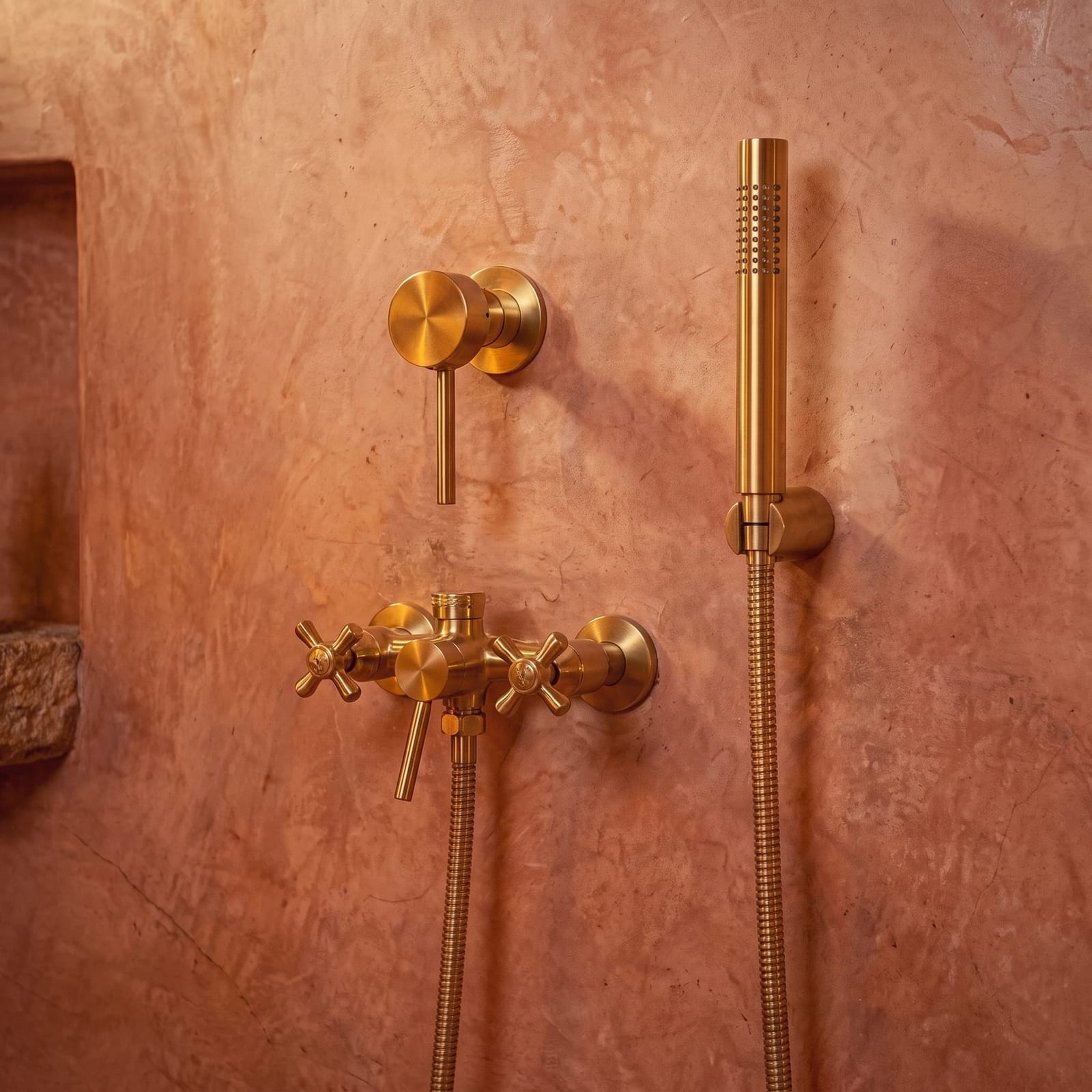
Every object in this shower was chosen to belong to the same tonal family. The hardware is unlacquered brass, a living finish that arrives bright and slowly darkens to a warm, mottled gold as it reacts with humidity and touch. This is not a flaw. It is the defining characteristic. In a bathroom finished with raw, imperfect materials, polished chrome would look clinical. Brushed nickel would feel cold. Unlacquered brass understands the room.
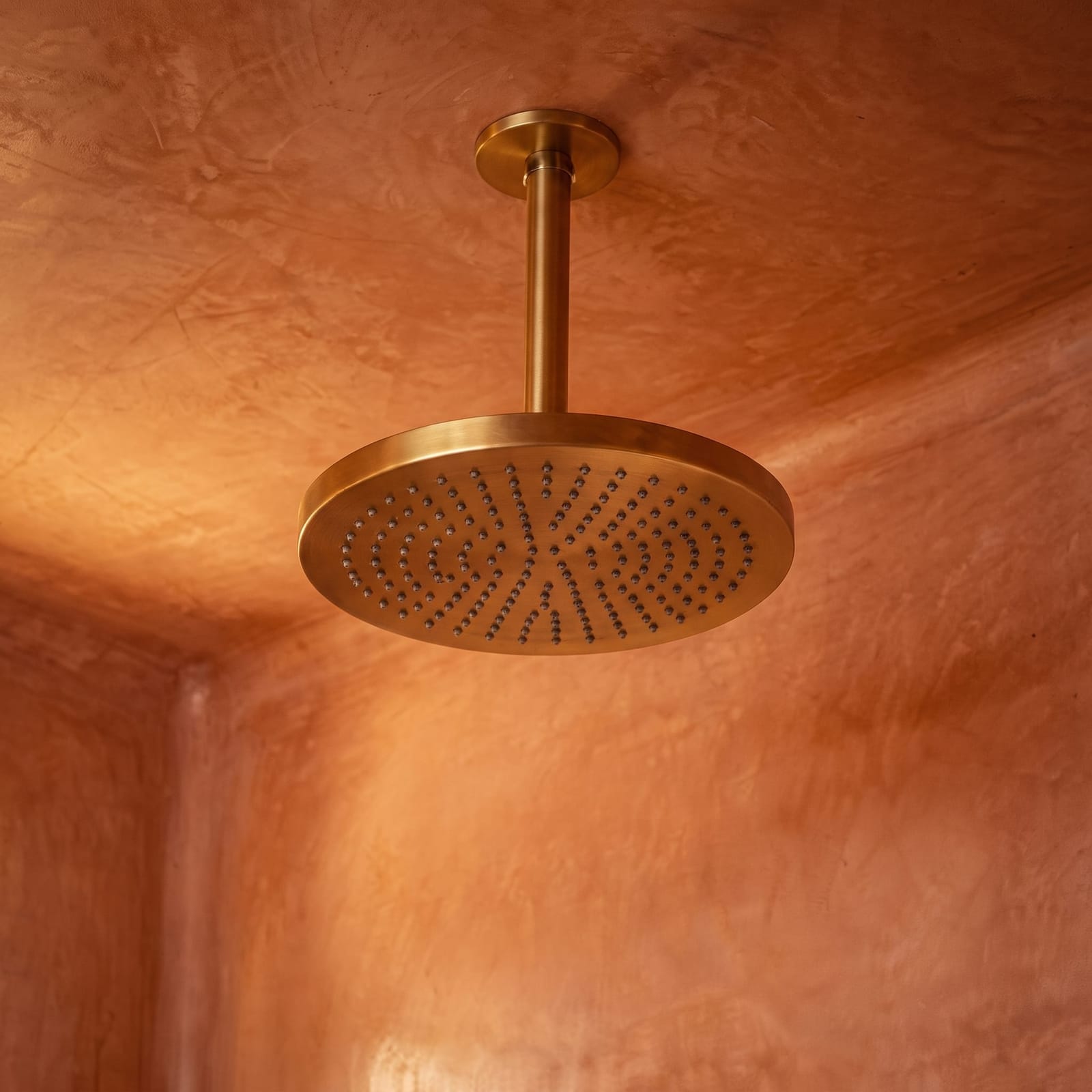
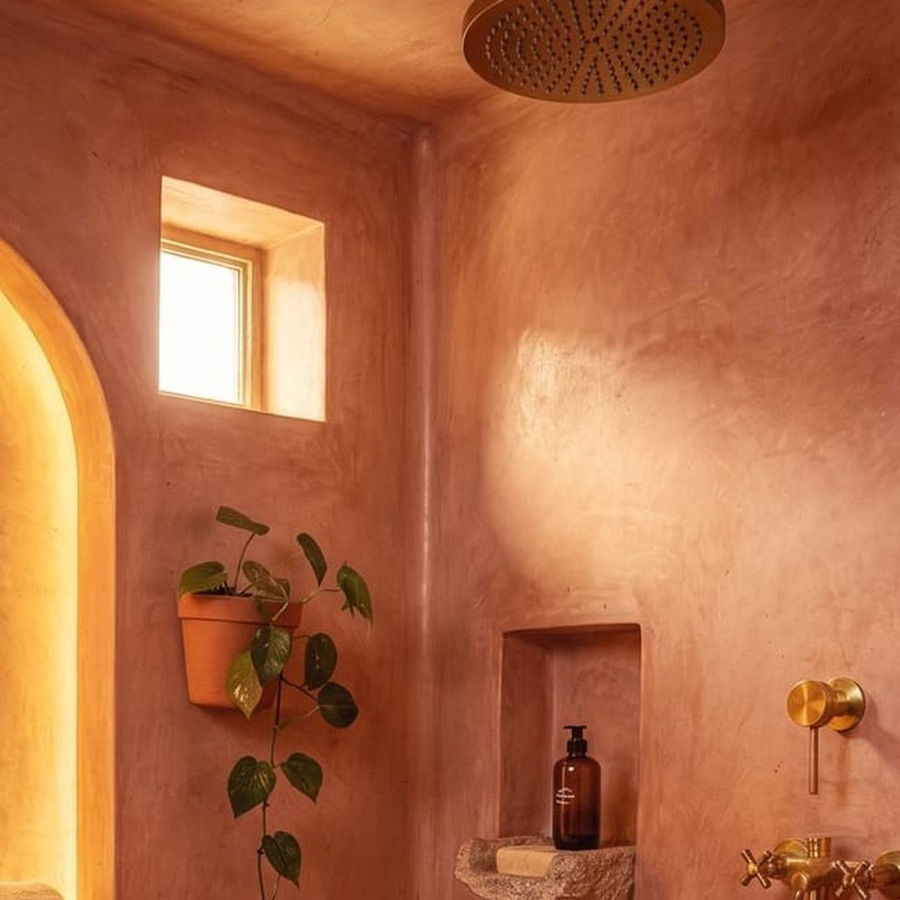
The exposed shower system runs along the wall in visible pipes, an honest piece of plumbing that doubles as architectural detail. The round rain shower head is mounted overhead, wide enough to distribute water in a soft, even fall. The hand sprayer hangs from a simple hook, its braided brass hose curving gently against the plaster.
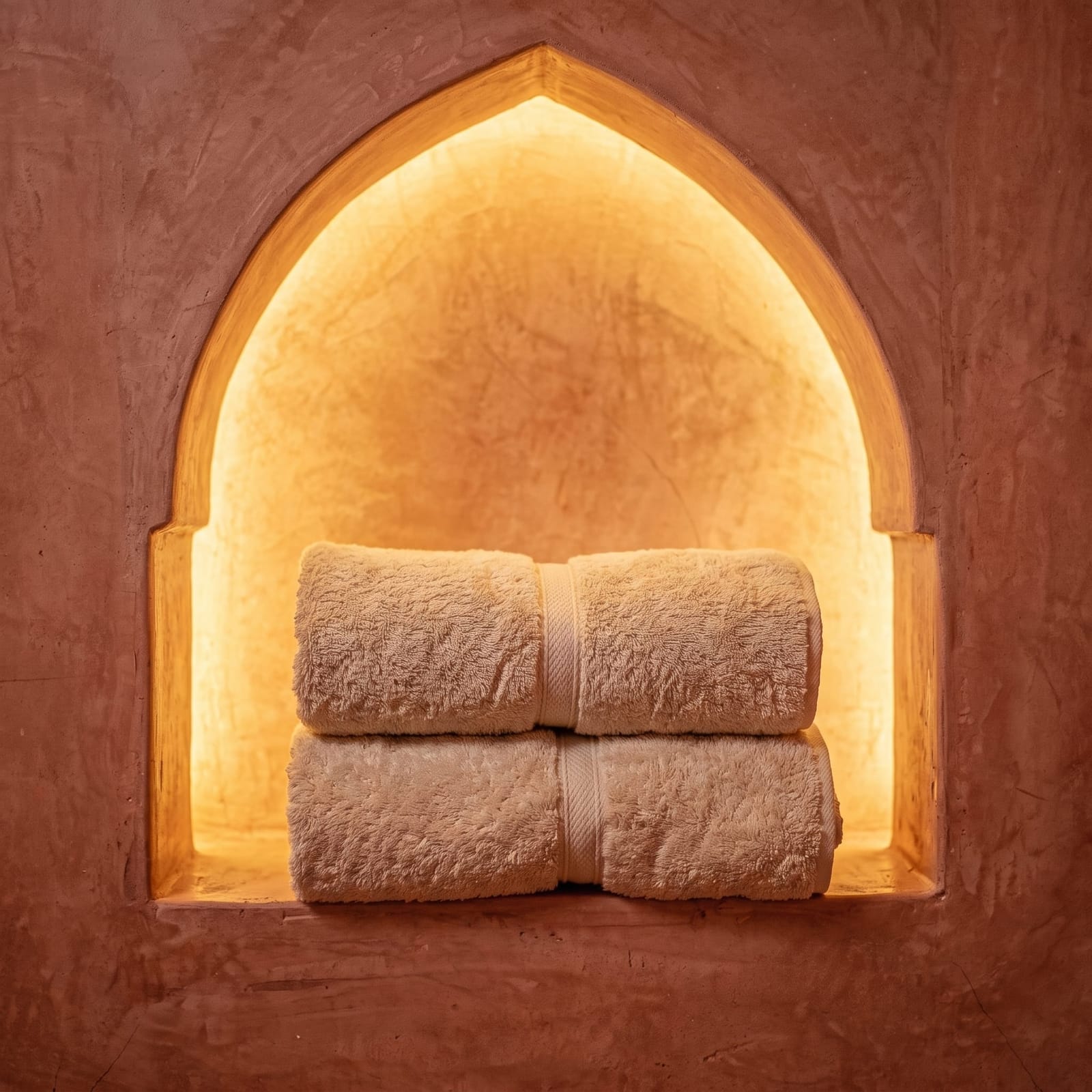
On the opposite wall, an arched niche, shaped like a traditional Moroccan doorway, is recessed into the plaster and lined with a warm backlight. Two folded cream bath towels rest on its ledge, their soft organic cotton a quiet counterpoint to the hard mineral surface surrounding them. This is the only storage in the shower, and it is all the shower needs.
Softening the Scene: Plants, Glass, and Textiles
A terracotta wall planter, mounted high on the wall beside the niche, holds a trailing pothos whose green leaves drape downward against the clay-colored plaster. The plant does not merely decorate the space. It changes the atmosphere. Green against terracotta is one of the oldest color relationships in architecture, from Tuscan farmhouses to Moroccan courtyards, and it works because both materials come from the earth.
Below the planter, a shallow stone shelf protrudes from the wall, just deep enough to hold a single amber glass soap dispenser. The amber tone of the glass catches the warm hue of the surrounding plaster, while the matte black pump keeps the object from looking precious. This is a bathroom where every visible item has been considered, not for style alone, but for how it feels to reach for it with wet hands.
At the floor, a brass linear drain runs the width of the shower, its brushed finish matching the hardware above. Linear drains are not merely aesthetic. They allow the floor to slope in a single direction, which simplifies waterproofing and creates the clean, unbroken floor plane that makes a curbless walk-in shower feel spacious.
Designing with Restraint
The lesson of this shower is not about replicating specific products. It is about understanding a principle: when you commit to a small number of honest materials, the room designs itself.
Terracotta tadelakt sets the tone. Unlacquered brass provides the metalwork. Cream cotton introduces softness. A single green plant brings life. Amber glass holds the daily necessities. There are no accent tiles, no patterned encaustics, no floating shelves crowded with bottles. The room is complete because it does not try to be more than what it is.
This kind of restraint requires confidence. It means trusting that raw plaster and exposed pipes have enough visual weight to carry a room. It means accepting that the brass will darken and the plaster will mark, and understanding that those changes are not damage but biography.
For anyone drawn to bathrooms that feel grounded rather than styled, that age rather than date, the terracotta tadelakt shower is a place to begin.
Sources & Details
Explore the complete source list for this room, from the anchor pieces to the smaller finishing details.
Source note: Some links in this source list may be affiliate links, which means we may earn a commission at no extra cost to you. As an Amazon Associate I earn from qualifying purchases.
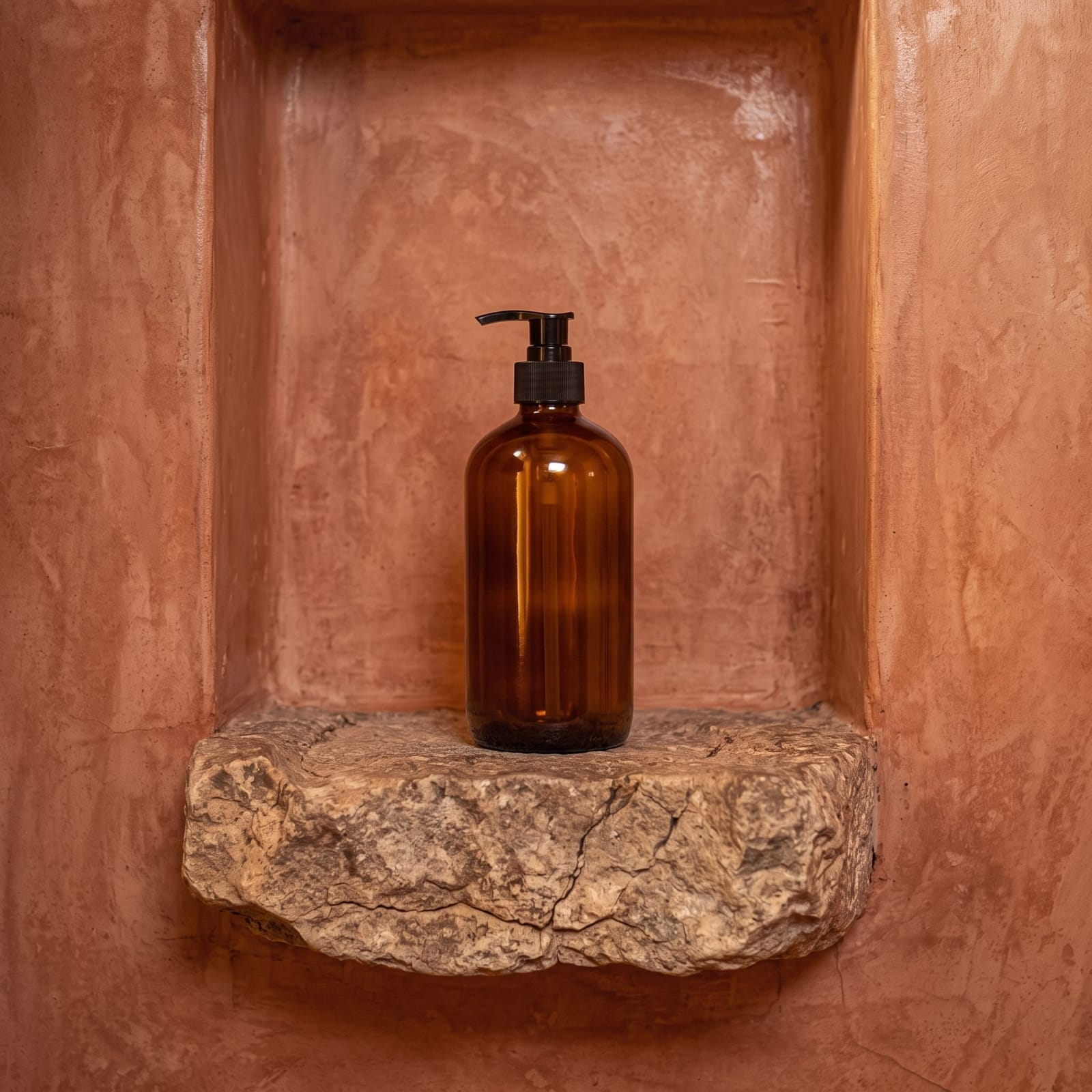
Apothecary Amber Glass Soap Dispenser
Apothecary-style amber glass soap bottle with a matte black metal pump.
An amber glass bottle on the soap shelf keeps daily liquids visually quiet and beautifully integrated.
Frequently Asked Questions
What is tadelakt plaster?
Tadelakt is a traditional Moroccan lime plaster, originally used in hammams and riads, that is hand-applied in thin layers, compressed with a trowel or polishing stone, and sealed with olive oil soap or natural wax. The result is a seamless, water-resistant surface with a soft, luminous sheen. Unlike tile, tadelakt has no grout lines, which makes it naturally resistant to mold and gives walls a sculptural, organic character.
Is tadelakt waterproof enough for a shower?
Yes. When properly applied and sealed, tadelakt is one of the most reliable natural plaster finishes for wet areas. Its lime-based composition naturally sheds water, and the burnishing process creates a dense, non-porous surface. Tadelakt has been used in Moroccan bathhouses for centuries precisely because of its water resistance. Periodic resealing with wax or soap, typically every two to three years, maintains its protective finish.
How do you style a terracotta bathroom?
Start with a limited material palette. Pair the warm, clay-like tones of terracotta plaster with raw metal finishes such as unlacquered brass or aged bronze. Soften the hard mineral surfaces with organic textiles like cream cotton towels or linen. Introduce vertical greenery through a wall-mounted planter with trailing pothos or philodendron. Keep accessories minimal and material-driven: an amber glass soap bottle, a stone shelf, a brass linear drain. The goal is restraint, not decoration.
What is the difference between tadelakt and microcement?
Both create seamless, grout-free surfaces, but they differ in composition and character. Tadelakt is a natural lime plaster with a soft, luminous sheen and subtle tonal variation that shifts in changing light. Microcement is cement-based, typically more uniform in appearance, and tends to feel flatter and more industrial. Tadelakt is also considered more breathable and eco-friendly as a mineral finish. For bathrooms where warmth and organic texture are the priority, tadelakt is the more refined choice.
Does unlacquered brass tarnish in a shower?
Yes, and that is part of its appeal. Unlacquered brass is a living finish that develops a natural patina over time, especially in the humid environment of a shower. The surface darkens and mellows, acquiring a warm, aged character that polished or lacquered finishes cannot replicate. If you prefer a brighter look, the patina can be gently removed with fine steel wool and lemon. Most designers choose unlacquered brass specifically because it ages gracefully alongside natural materials like stone and plaster.
How much does a tadelakt shower cost?
A professional tadelakt installation typically costs more than standard tile because of the specialized skill and hand labor involved. Material costs vary by color and supplier, but the primary expense is application, which requires an experienced plasterer. For most homeowners, the investment is comparable to high-end natural stone tile work. The trade-off is a surface that is seamless, mold-resistant, and ages with a warmth that tile cannot achieve.