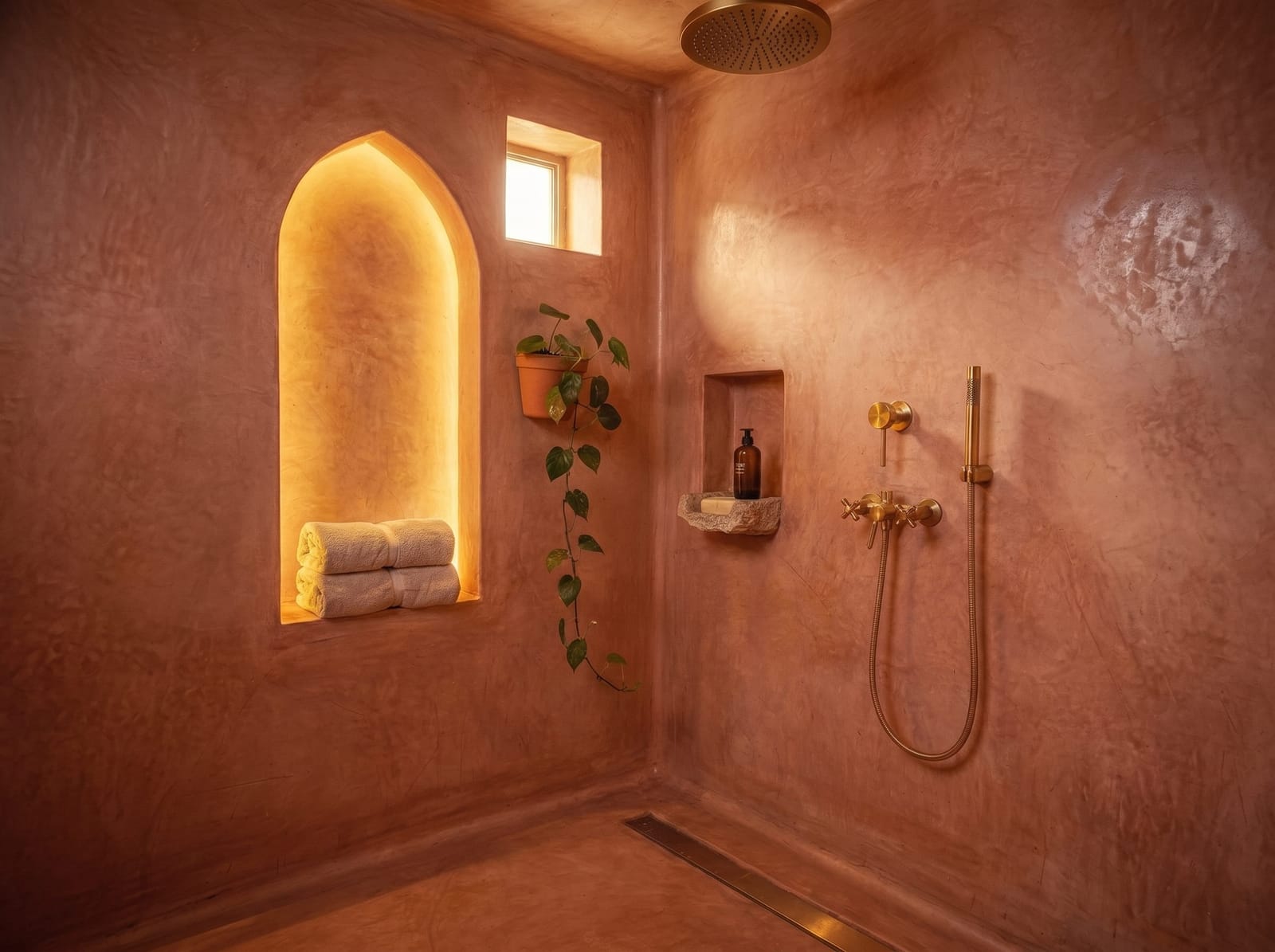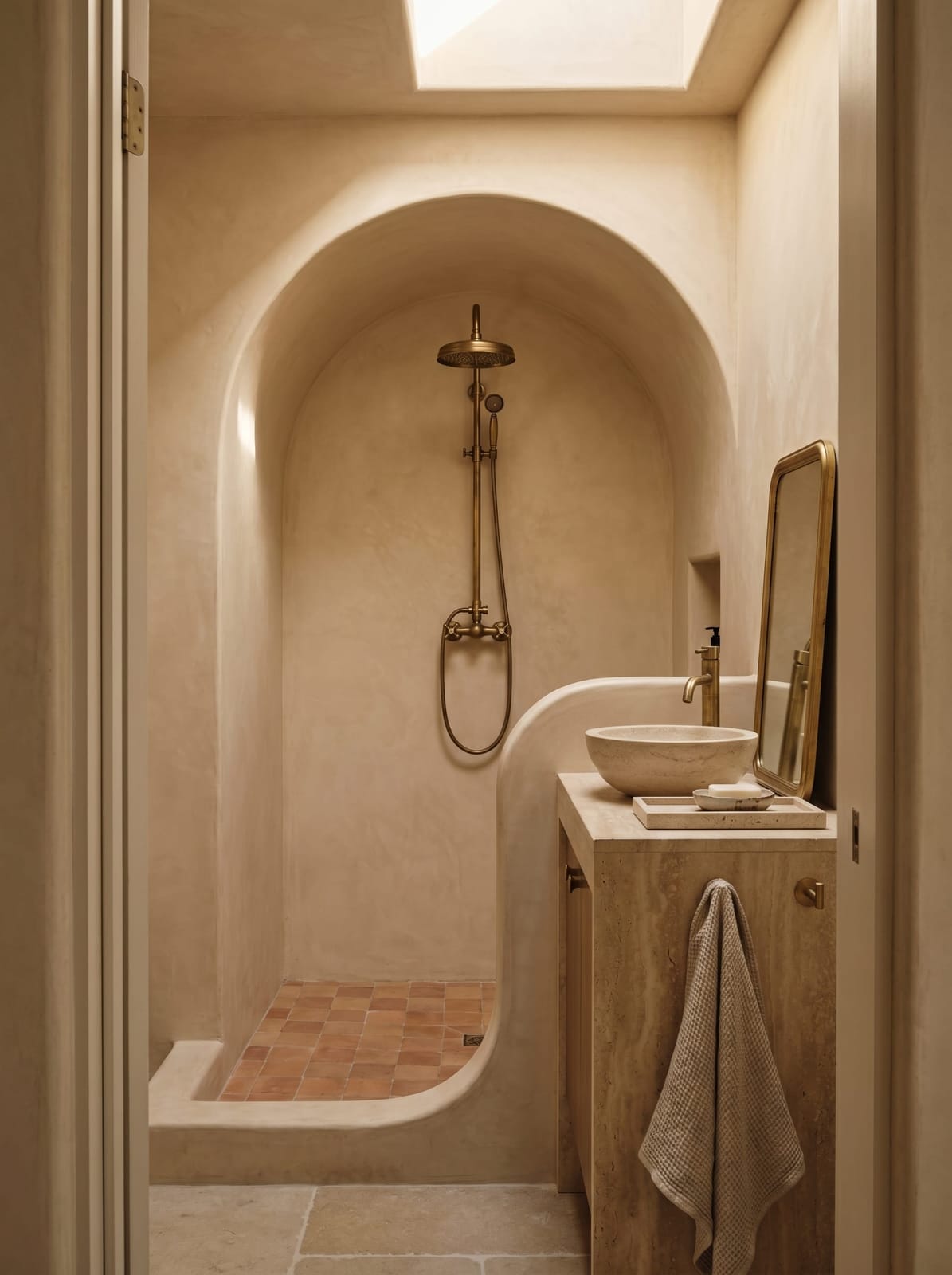
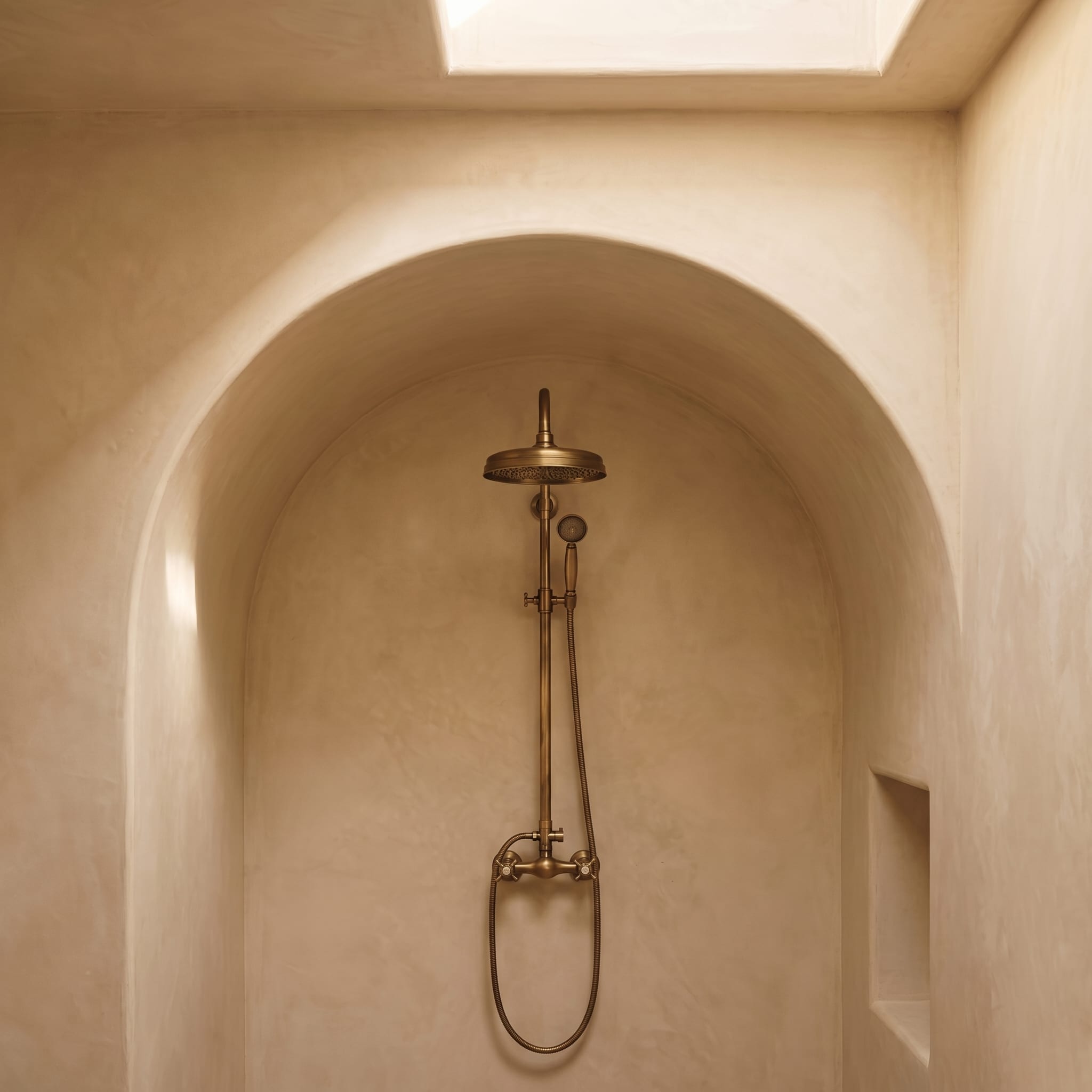
There is a particular quality of light inside an arched plaster shower that does not exist anywhere else in a home. The curve of the opening compresses the view, framing the interior like the entrance to a grotto. Water falls through a column of warm air. The walls, hand-troweled to a soft matte finish, soften the light into something diffuse and close. It is not a shower in the way that a glass-enclosed stall is a shower. It is a room within a room — a carved-out volume where standing under water feels deliberate and unhurried.
This bathroom is built on the tension between two ideas: the ancient and the precise. The plaster arch is a form that predates modern construction by millennia. The brushed brass fixtures bring a more precise, machined counterpoint. The travertine stone was deposited by mineral-rich water over thousands of years. The terracotta tiles were shaped by hand and fired in a kiln. Nothing here is accidental, but nothing looks engineered either. Among arched plaster shower ideas, this approach works because the room reads as something that was found rather than built — a Mediterranean sanctuary assembled from earth, mineral, and warm metal.
Why the Plaster Arch Defines the Bathroom
The decision to use an arch rather than a square shower opening is not decorative. It is structural and atmospheric.
A squared doorway in a plaster bathroom creates four hard corners where the eye stops and the surface catches shadow. An arch eliminates those interruptions. The plaster flows in a continuous curve from wall to ceiling to wall, creating a monolithic shell that reads as a single gesture rather than an assembly of planes. Glass shower doors, metal frames, silicone seams — all of the visual noise that makes a standard shower enclosure feel utilitarian — disappear. What remains is the quiet, unbroken relationship between plaster, water, and light.
The curve also changes how the shower feels spatially. A squared opening defines a rigid threshold: you are either inside or outside. An arch softens that boundary. The transition from the vanity zone into the shower is gradual, sculptural, almost geological — as though the room had been carved from a single mass of stone rather than assembled from separate surfaces.
Under a skylight, the arch concentrates the vertical light into the shower’s interior, catching the fine trowel ridges and subtle variations in depth that give hand-applied plaster its character. The walls read differently at every hour — chalky white under the direct midday sun, soft sand as the light drops in the evening, and a deep, warm cream when the brass shower fixtures catch the last amber glow of a wall sconce.
Wet-Zone Plaster: Beautiful, but Not Casual
This is the section that matters most, and the one that most plaster shower articles handle poorly.
Plaster-style wet-room finishes — whether traditional lime plaster, tadelakt, microcement, or other proprietary systems — can create a seamless, grout-free shower surface that is visually unlike anything tile or stone can achieve. The walls become monolithic. The shower reads as a carved volume rather than a tiled box. The look is extraordinary.
But the installation is not casual, and the material is not inherently waterproof the way glazed ceramic tile is. Wet-zone plaster finishes depend on a complete system: a stable, compatible substrate; a proper waterproofing assembly behind the plaster; professional application by a trained artisan; and ongoing care according to the product or installer’s guidance. Remove any one of those layers, and the finish can fail.
Traditional tadelakt — the Moroccan lime-plaster technique used in hammams — achieves water resistance through a burnishing and soap-treatment process that compresses the lime surface into a dense, mineral-rich skin. The chemistry is elegant: natural soap reacts with the lime to form a water-repellent compound on the surface. But even tadelakt requires a waterproof sub-wall and professional application. It is not a paint. It is not a DIY weekend project. And it is not a substitute for proper waterproofing — it is one layer within a larger waterproof assembly.
Microcement and other cementitious wet-room systems work differently, using polymer-modified cements and topical sealers rather than lime chemistry. Each system has its own substrate requirements, sealer protocols, and maintenance expectations.
The honest guidance is this: if you want plaster-style walls in a shower, work with a qualified plaster artisan or waterproofing professional who has specific experience with wet-room installations. Specify the finish system, the substrate, the waterproofing membrane, and the maintenance protocol before the first coat goes on the wall — not after. The aesthetic is achievable. It is also unforgiving of shortcuts.
Travertine Vanity and Vessel Sink: Mineral Weight
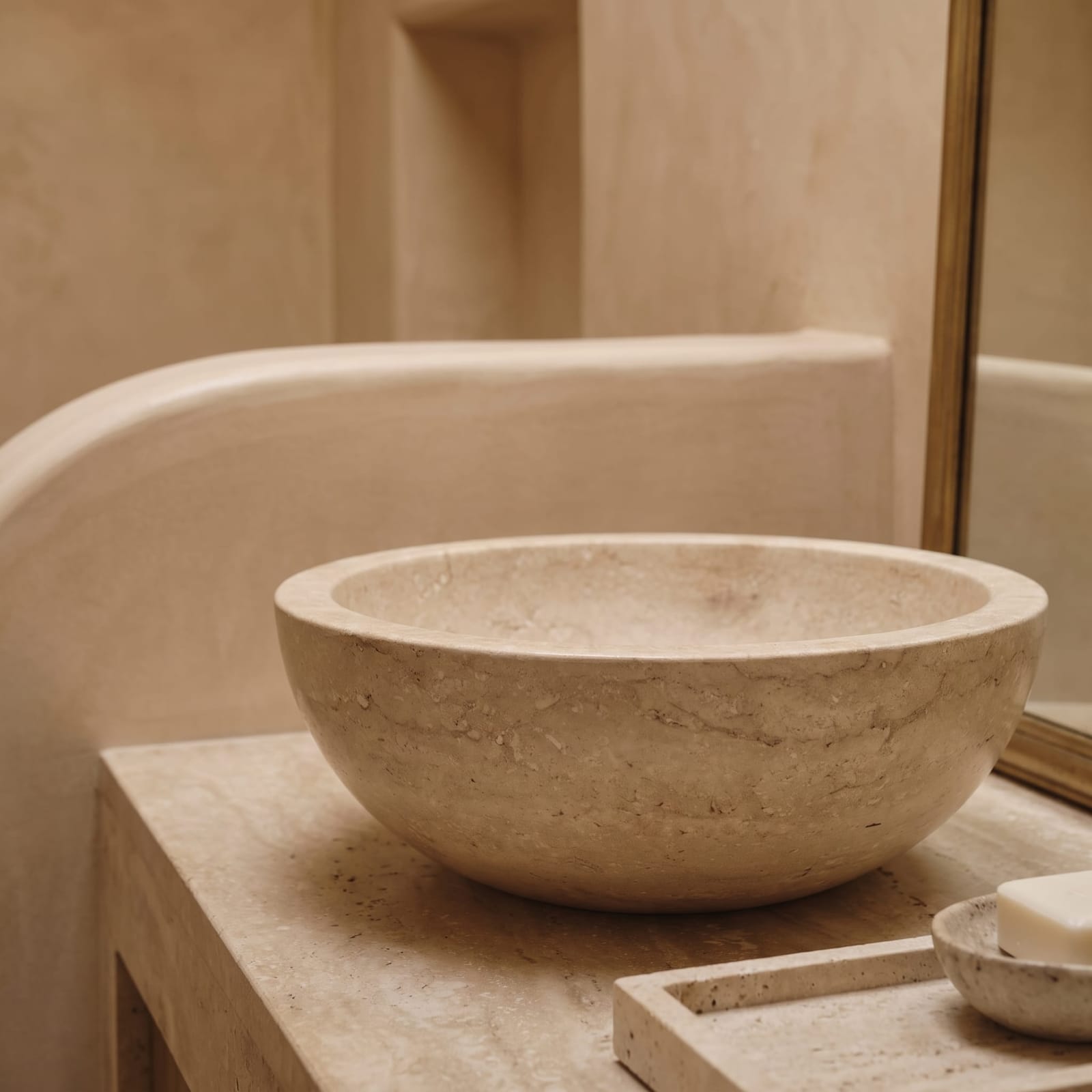
Outside the shower arch, the vanity zone is organized around a single piece of stone furniture. A travertine-style vanity cabinet with light white oak drawer fronts sits against the plaster wall, its stone-clad top and sides creating a continuous mineral surface that wraps the storage volume like a sleeve. The travertine pattern — soft beige with the characteristic pitting and clouded veining of natural limestone — coordinates with the plaster without matching it. The plaster is smooth and chalky. The stone is dense and tactile. They share a color family but speak in different textures.
Resting on the stone deck, a round honed travertine vessel sink continues the material logic. The basin is carved from natural stone, its interior polished to a smooth, shallow bowl that holds water with the quiet weight of a baptismal font. The round form echoes the curve of the shower arch, creating a visual rhyme that connects the two zones of the bathroom without requiring any forced symmetry.
The white oak drawer fronts introduce the vanity’s only warm wood element — a light, fine-grained timber that reads as organic and tactile against the cool density of the stone. Oak and travertine share a warmth that keeps the vanity from feeling cold or monumental, even though the dominant material is mineral. The drawers serve a practical purpose too: they hold everything that a bathroom needs to function, keeping the stone surface clear of bottles, trays, and the accumulated clutter that undermines every vanity’s visual composure.
A note on natural stone care
Travertine and travertine-style stone surfaces are porous or can be sensitive depending on the finish. They absorb moisture, oils, and staining agents if left unsealed or improperly maintained. Natural stone generally benefits from pH-neutral care products and manufacturer-recommended sealing where appropriate. Avoid acidic cleaners — vinegar, lemon juice, and citrus-based products can etch the surface over time. The stone’s organic pitting and matte texture are part of its beauty, but they also mean the surface asks for more attentiveness than glazed ceramic.
Brass Fixtures: Wall-Mounted Faucet and Exposed Shower System
The fixtures in this bathroom are brushed brass, and they serve a specific visual function. In a space dominated by matte plaster, matte stone, and matte clay, brass introduces the only reflective surface. It catches light and redistributes it in small, focused points — the cylindrical spout of the wall-mounted faucet, the slim frame of the rounded mirror above the sink, the vertical riser pipe of the exposed shower system inside the arch.
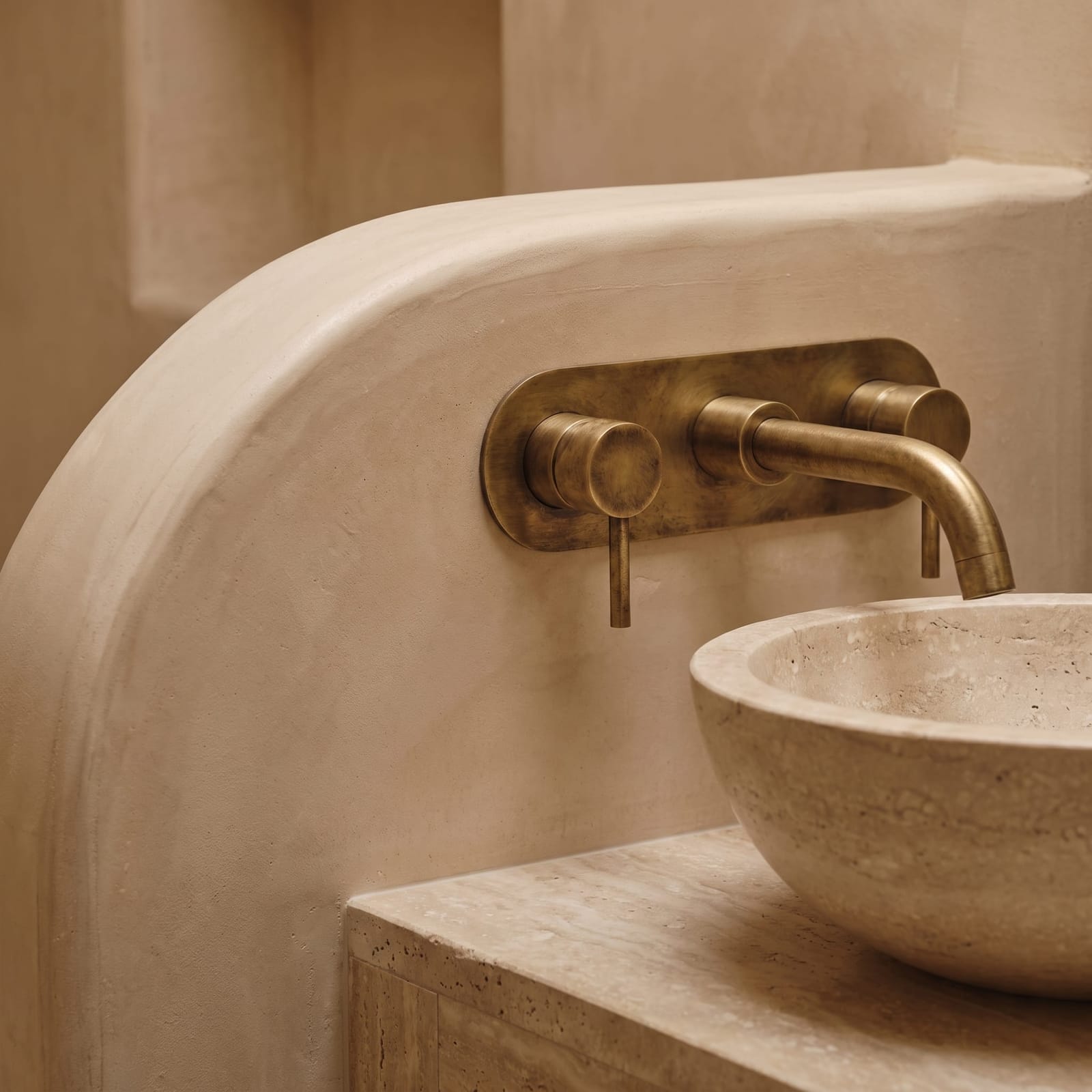
The wall-mounted faucet is the most considered detail in the vanity zone. By mounting the spout and handles directly into the wall rather than onto the stone countertop, the vanity surface remains completely uninterrupted. The travertine deck holds only the vessel sink. There are no base plates, no supply hoses visible at the backsplash, no silicone joints around deck-mounted stems. The faucet floats against the plaster like a piece of jewelry pinned to fabric, and the stone below it reads as a continuous geological surface rather than a countertop with hardware installed on it.
Wall-mounted faucets require early coordination between the fixture specifications, sink height, wall build-up, and plumber. The rough-in valve sits behind the finished wall, so the plumbing and the plaster must be planned together from the start — not resolved after the walls are complete. This is a planning decision, not a design afterthought.
Inside the shower arch, an antique brass exposed shower system provides the room’s most vertical brass element. The riser pipe runs up the plaster wall in full view, carrying warm water from the valve to the rain head overhead. Exposed systems are inherently honest — every pipe, every joint, every handle is visible. In a room built from ancient materials, that mechanical honesty reads as authentic rather than industrial. The brass patinas slightly over time, adding its own slow biography to a room already full of surfaces shaped by hand and heat.
Different brass and brass-toned finishes age differently, so care should follow the fixture manufacturer’s finish guidance. Some finishes are PVD-coated for consistent color; others are unlacquered and develop a natural patina. Both are appropriate here — the choice depends on whether you want the brass to stay or to change.
The mirror continues this language. A rounded rectangle in a slim brass frame, it echoes the arch of the shower entrance at a smaller scale. It organizes the vanity composition by providing a single reflective focal point that balances the vessel sink below.
Terracotta Shower Floor Tile: Warmth, Texture, and Honest Tradeoffs
The shower floor is laid with square terracotta tiles — handmade, unglazed, and carrying the slight irregularities of hand-molded clay. Each tile has its own tonal character: uneven edges, mineral flecks, shifts from pale sienna to deep rust depending on the tile’s position in the kiln. These are not mass-produced porcelain imitations. They are fired earth.
The warm burnt-earth color of the terracotta creates a grounding plane that anchors the pale plaster walls above it. The transition is not jarring. Lime and clay are related materials — both shaped by heat, both carrying the soft, irregular texture of handwork. They belong together the way linen belongs with wool.
Unglazed or handmade terracotta can offer tactile variation underfoot, but wet-zone use depends on the specific tile, its finish, sealers, grout, slope, and installer guidance. Raw terracotta is a porous material that absorbs water if left untreated, so wet-zone use typically requires appropriate sealing before and after grouting, confirmed with the tile supplier and installer. Shower floor tile selection should be confirmed with the tile supplier and installer for wet rating, slip resistance, sealing requirements, and long-term maintenance.
The honest position on terracotta in a shower is this: it is beautiful, it is warm, and it connects the floor to the walls in a way that porcelain tile cannot replicate. It also requires more planning and maintenance than a standard ceramic floor. If you are willing to seal it properly and care for it attentively, terracotta rewards that care with a surface that ages with character rather than deterioration. If ease of maintenance is the priority, porcelain terracotta-look tile offers a lower-maintenance alternative — though it will not carry the same depth of material honesty.
Skylight, Sconces, and the Evening Shift
A skylight above the shower can be one of the most compelling features in a plaster bathroom. Vertical natural light catches the trowel texture in the plaster, illuminating the fine ridges and valleys that distinguish hand-applied lime from flat paint. The light shifts through the day — cool and direct at noon, warm and angled in the late afternoon — and the plaster walls record every change.
However, humidity, condensation, ventilation, and waterproof detailing around a shower skylight all need professional planning. A skylight in a wet zone introduces variables that a standard bedroom or hallway skylight does not: persistent steam, temperature differentials between the warm shower air and the cool glass, and the potential for condensation to drip back down onto the plaster below. These are solvable problems, but they require early coordination between the skylight manufacturer, the roofer, and the bathroom contractor — not a decision made after the roof is closed.
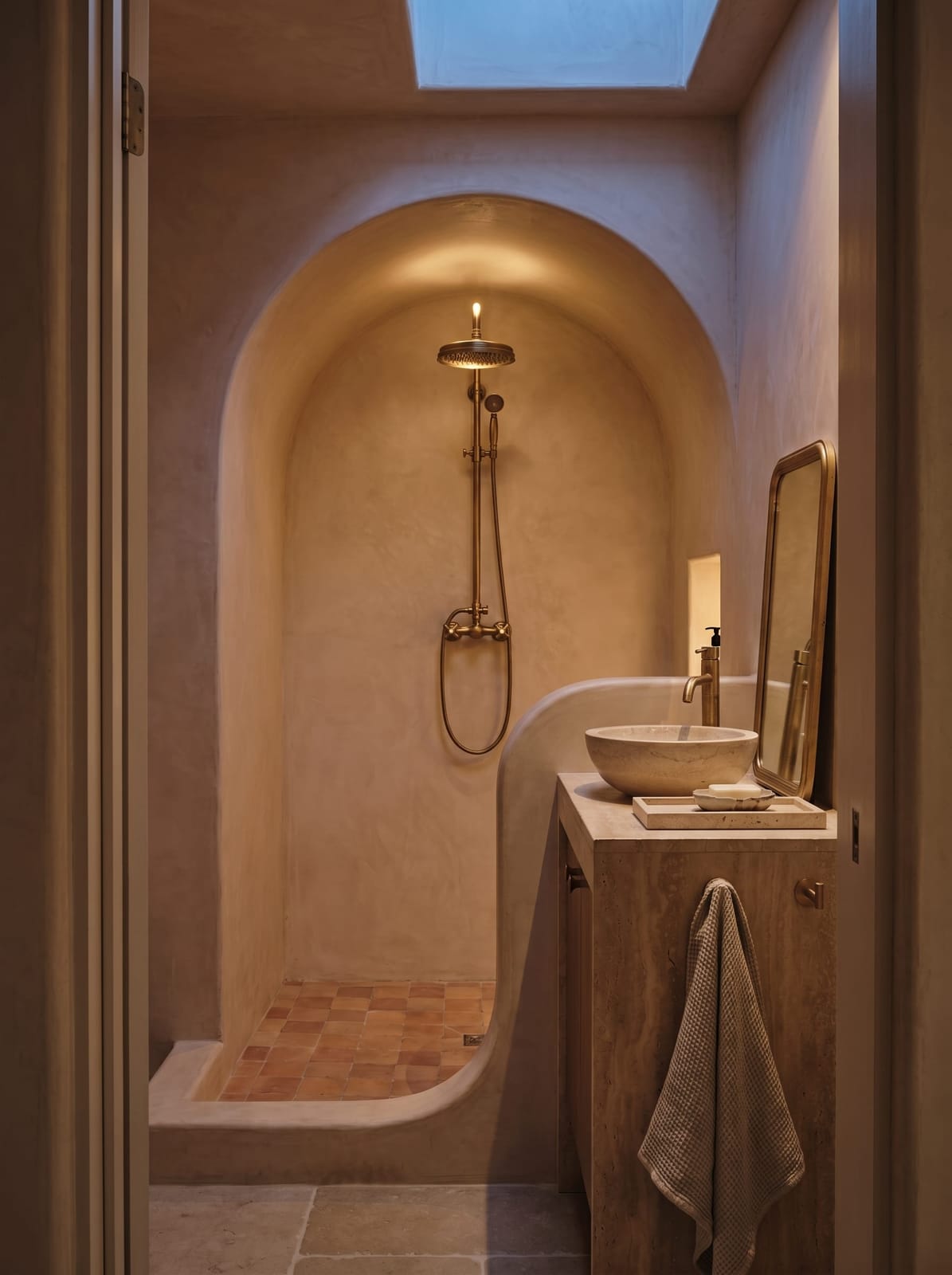
In the evening, the bathroom transforms. The skylight dims to a deep blue rectangle. The plaster walls, which read as chalky white at midday, shift to a warm sand under the amber glow of wall-mounted sconces and soft mirror backlighting. The trowel marks, invisible under flat overhead light, emerge as soft ridged shadows under directional illumination. The travertine pitting deepens. The brass fixtures catch focused points of warm light along their curves. The terracotta floor darkens to a rich, earthy brown.
Use damp- or wet-rated fixtures where required for bathroom lighting, and follow local code and electrician guidance for placement near water zones.
The Waffle Towel and the Discipline of Less
Hanging beside the vanity on a simple wall peg, a single cotton waffle-weave towel in antique beige completes the composition. The waffle texture introduces a fine, rhythmic pattern that breaks the large, still surfaces of plaster and stone. The warm sand color sits between the white of the lime walls and the deeper beige of the travertine, bridging the two without drawing attention.
There is nothing else on the counter. No soap trays, no candle holders, no decorative objects arranged for visual interest. The storage drawers hold everything that a bathroom requires. What remains visible is only what the room needs to function: a sink, a faucet, a mirror, and a towel.
This restraint is the most important design decision in the room. A stone vanity earns its beauty through its surface. Every object placed on it competes with that surface. By clearing the counter to a single vessel sink, the travertine performs as architecture rather than furniture, and the bathroom maintains the calm, uncluttered atmosphere that makes it feel like a sanctuary rather than a utility room.
Making a Plaster Bathroom Feel Warm Instead of Plain
The risk with a plaster bathroom is blandness. A room where every surface is the same matte cream can feel like an unfinished construction site if nothing interrupts the monotony. Three things prevent that here.
Tonal variation in the stone. The travertine pitting and clouded veining provide subtle visual texture that reads against the smooth plaster the way a woven fabric reads against a solid wall. The plaster and the stone share a color family, but the stone has interior depth — shadows inside its pores, variations in opacity across its surface — that gives the eye somewhere to rest.
Warm metal in small doses. The brass faucet, mirror frame, shower riser, and sconce hardware introduce the room’s only reflective surfaces. They catch whatever light exists in the space and redistribute it in small, focused points. A few warm metal elements prevent the matte surfaces from reading as flat. Too many would turn the bathroom into a showroom.
The terracotta floor as chromatic anchor. The burnt-earth floor tile is the room’s warmest and most saturated surface. It grounds the entire composition and prevents the pale plaster and stone from floating in an undifferentiated beige. Without it, the room would lack a base. With it, the palette has a clear warm center that radiates upward through the stone and the plaster.
Care and Planning Notes
Plaster shower walls. Wet-zone plaster finishes require professional installation and periodic maintenance according to the product or installer’s guidance. For traditional lime-based finishes, some artisans recommend periodic re-soaping to maintain the water-resistant surface layer. Avoid abrasive scrubbing and harsh chemical cleaners. For microcement or other proprietary systems, follow the manufacturer’s specific care protocol.
Travertine vanity and sink. Clean with a soft cloth and pH-neutral stone soap. Avoid acidic cleaners. Blot spills promptly — standing liquid can absorb into unsealed pores. Discuss sealer type and reapplication schedule with your stone supplier or installer. The organic pitting in the stone is part of the material’s character, not a defect.
Terracotta shower floor. Sweep or rinse regularly to prevent grit from wearing the sealed surface. Avoid acidic or abrasive cleaners. Discuss re-sealing intervals with the tile supplier — frequency depends on the sealer used, the volume of shower traffic, and the specific tile. Blot standing water in grout lines if drainage is slow.
Brass fixtures. Follow the fixture manufacturer’s finish care guidance. PVD-coated finishes generally need only a soft dry cloth. Unlacquered brass develops a natural patina — wipe with a damp cloth to maintain brightness, or allow it to age. Avoid abrasive cleaners on any brass finish.
Waffle towels. Wash according to the care label. Avoid fabric softener where possible, which can reduce the waffle weave’s absorbency. Tumble dry low. The waffle texture softens and deepens with repeated washing, which is the point.
Sources & Details
Explore the complete source list for this room, from the anchor pieces to the smaller finishing details.
Source note: Some links in this source list may be affiliate links, which means we may earn a commission at no extra cost to you. As an Amazon Associate I earn from qualifying purchases.
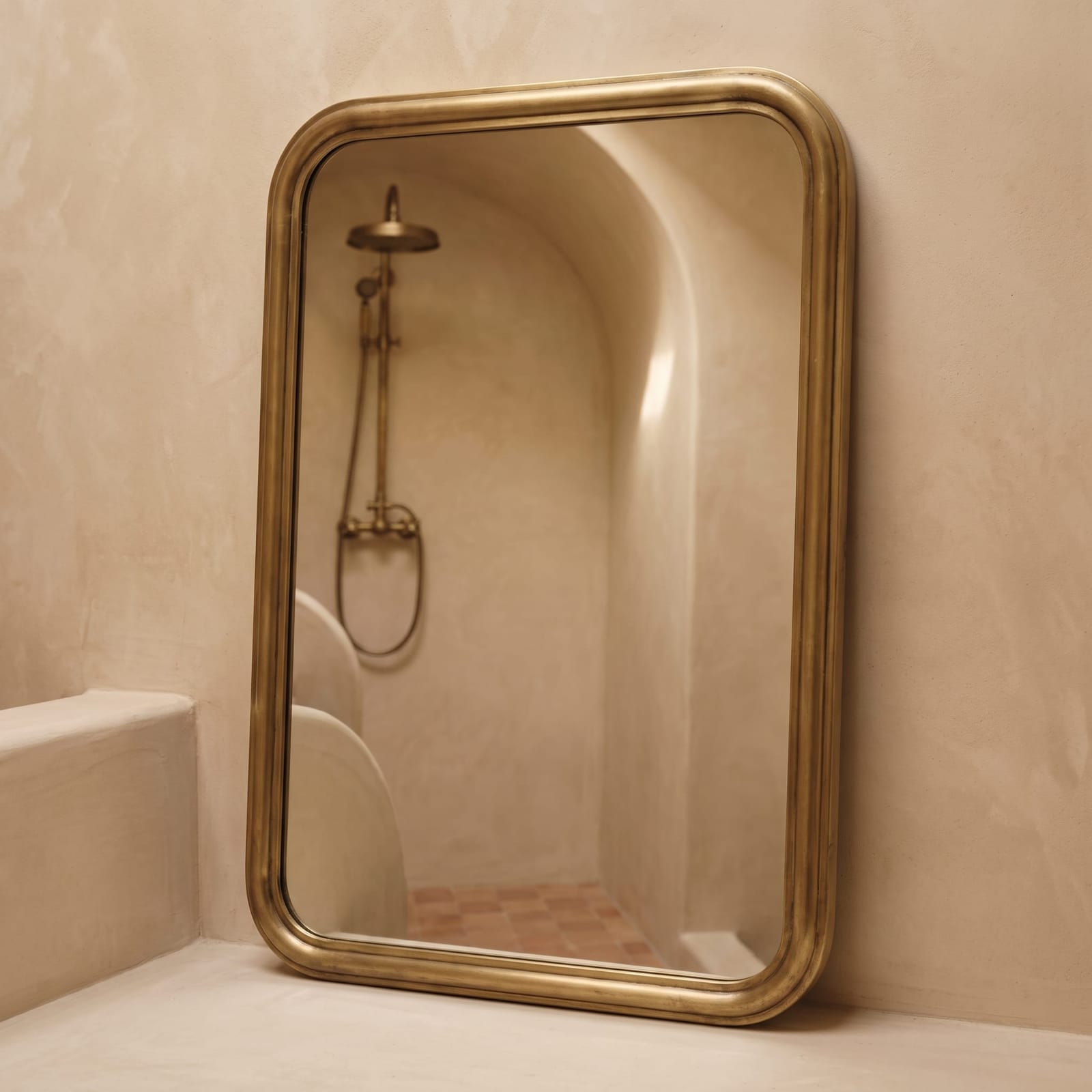
Slim Brass Rounded Rectangle Mirror
Rounded rectangle mirror with a slim brushed brass metal frame.
A rounded rectangle brass mirror echoes the arched details of the plasterwork and frames the sink area.
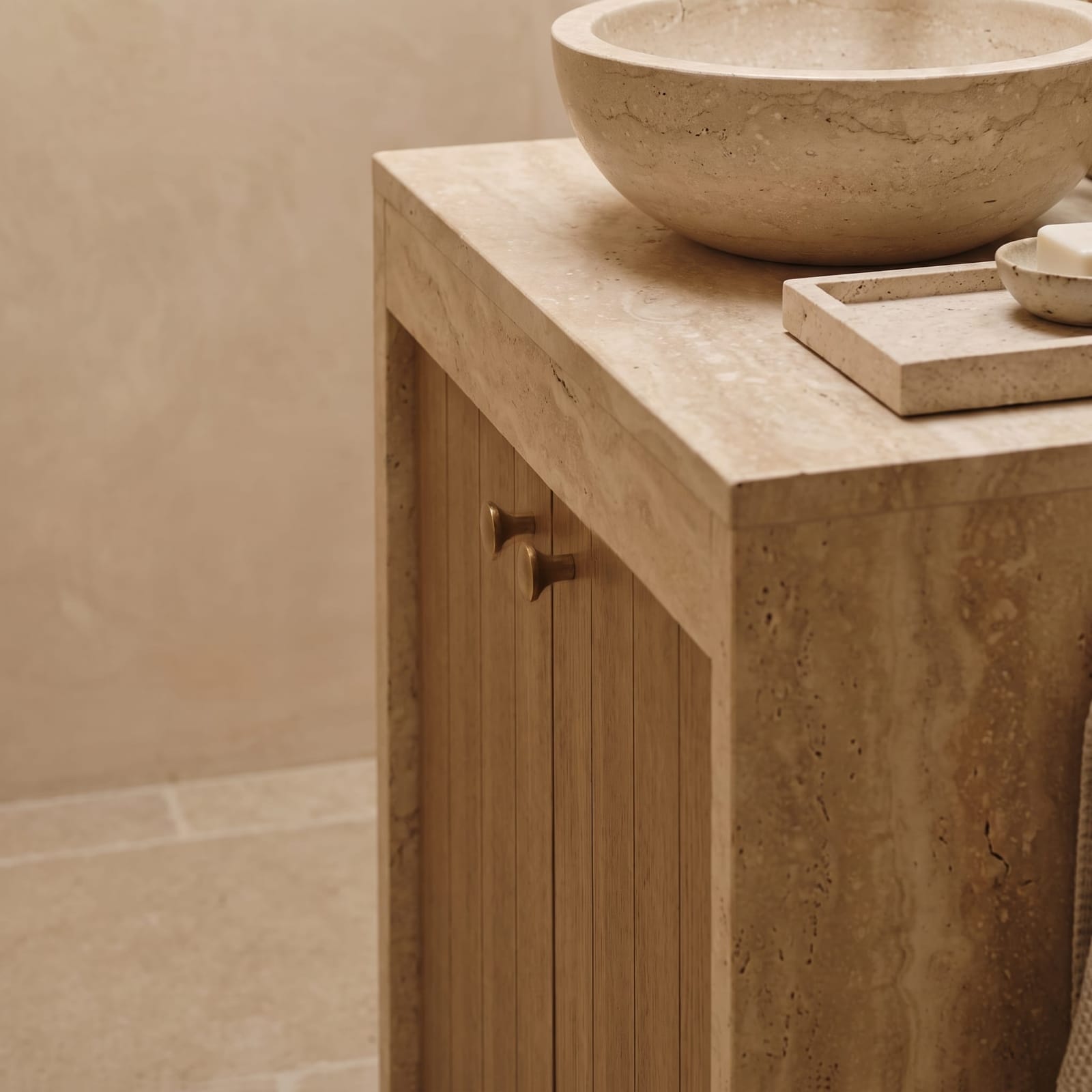
Living Source 24" Travertine and White Oak Vanity
24-inch vanity cabinet featuring a sintered stone travertine top, stone sides, and a white oak drawer front.
A travertine-pattern sintered stone cabinet casing with light white oak wood drawers integrates storage.
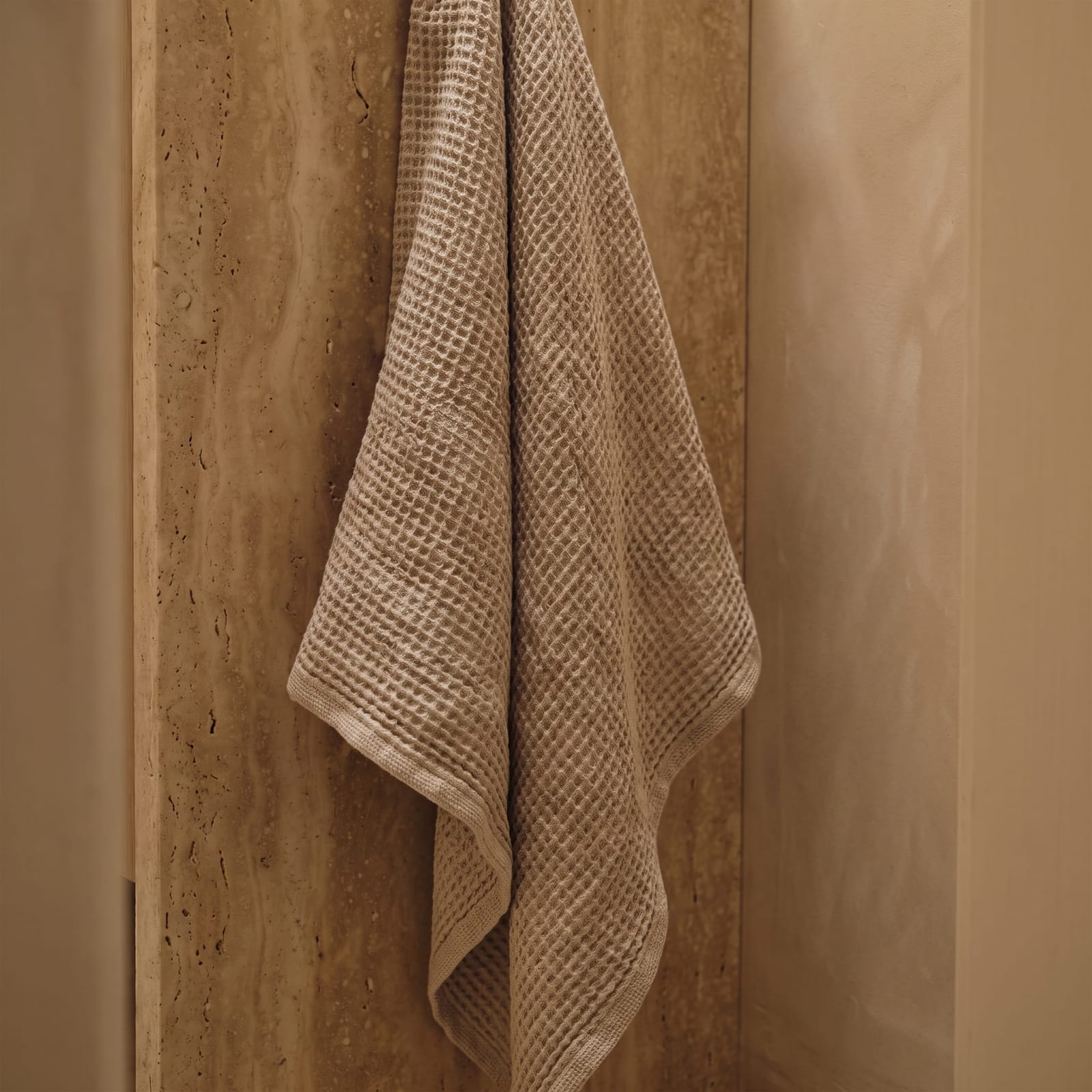
Antique Beige Waffle Bath Towel
Honeycomb waffle-weave cotton bath towel in a natural sand tone.
Waffle-woven towels in antique beige bring visual rhythm and softness to contrast the stone vanity.
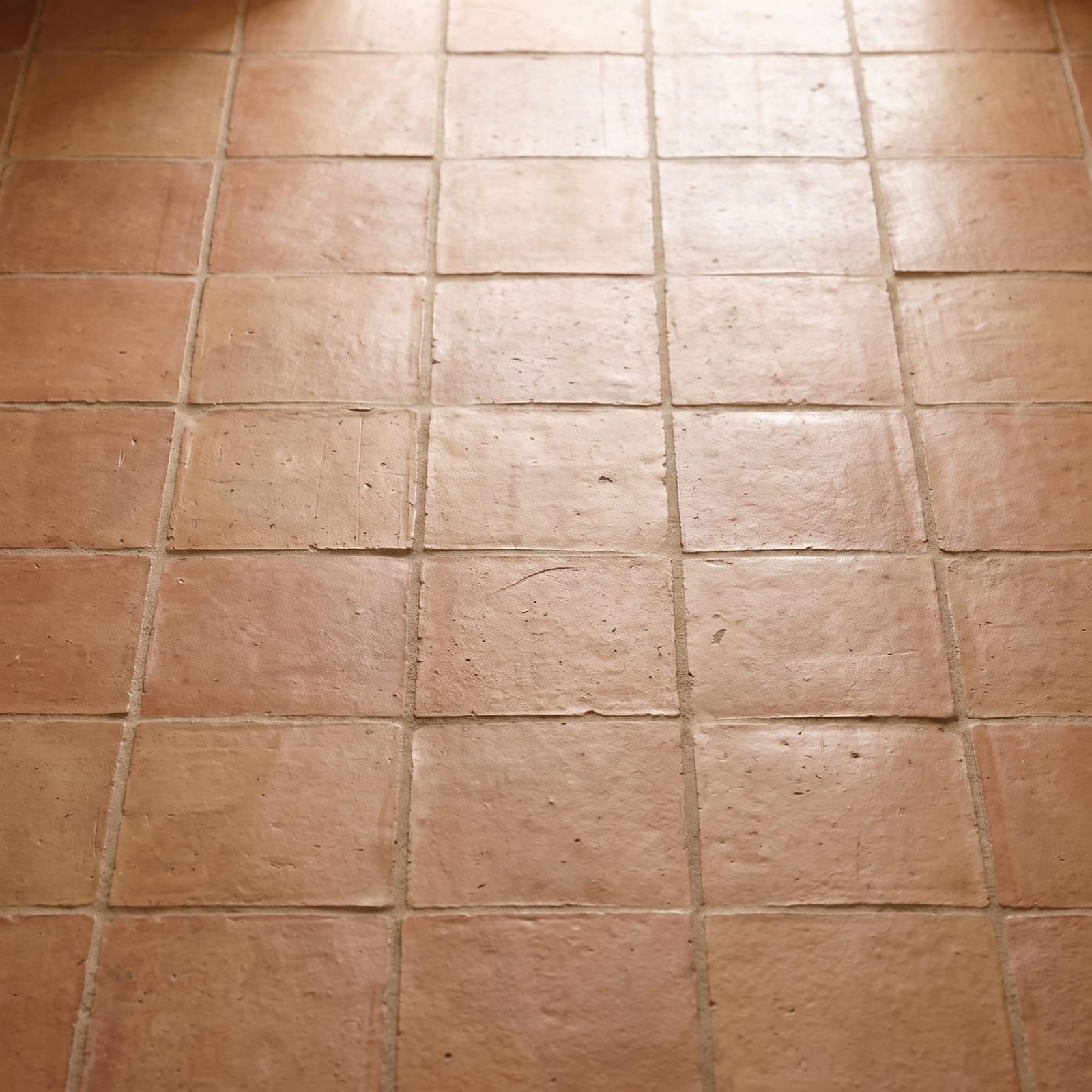
Reclaimed Terracotta Floor Tile
Reclaimed 6x6-inch unglazed square terracotta tiles with natural red, sienna, peach, and clay color variation.
Square reclaimed terracotta tiles coordinate with the plaster shower palette, adding rustic clay variation and Mediterranean warmth underfoot.
Frequently Asked Questions
Are plaster shower walls waterproof?
Not inherently. Standard lime plaster is not waterproof on its own. Specialized wet-room plaster finishes — including traditional tadelakt and various microcement systems — can achieve water resistance when applied by a trained professional over a proper waterproofing assembly. The plaster is one layer within a larger system that includes a waterproof membrane, a compatible substrate, and ongoing maintenance. No plaster finish should be relied on as the sole waterproofing barrier in a shower. Work with a qualified plaster artisan and waterproofing professional for wet-zone installations.
What is the difference between tadelakt and microcement in a shower?
Tadelakt is a traditional Moroccan lime-plaster technique in which the surface is burnished with stone and treated with natural soap to create a water-resistant mineral skin. It has a soft, chalky, slightly undulating surface. Microcement is a polymer-modified cement system applied in thin layers and sealed with a topical coating. It tends to be smoother and more uniform than tadelakt. Both can be used in showers when properly specified and installed, but they have different substrate requirements, care protocols, and visual textures. The right choice depends on the desired look, the installer's experience, and the project's waterproofing plan.
Is terracotta tile safe for a shower floor?
Unglazed or handmade terracotta can offer tactile variation underfoot, but its suitability for a shower floor depends on the specific tile, its finish, the sealer used, the grout, the slope of the shower pan, and the installer's guidance. Raw terracotta is porous and must be sealed before and after grouting. Slip resistance varies by tile — it is not a universal property of all terracotta. Confirm the specific tile's wet rating and slip characteristics with your tile supplier and installer before committing to a shower floor application.
Does travertine work well for a bathroom vanity?
Travertine and travertine-style stone surfaces can be beautiful for bathroom vanities, bringing a warmth and mineral depth that synthetic surfaces cannot replicate. However, travertine is porous or can be sensitive depending on the finish. It absorbs moisture, oils, and staining agents if left unsealed. It benefits from pH-neutral cleaning products and manufacturer-recommended sealing. It is not a low-maintenance surface — it asks for attentiveness and care. If you are comfortable with that tradeoff, it rewards the effort with a surface that ages with character.
Are wall-mounted faucets practical in bathrooms?
Yes, and they offer specific design advantages. A wall-mounted faucet clears the vanity deck of hardware, allowing the countertop and vessel sink to read as uninterrupted surfaces. It simplifies cleaning around the sink. However, wall-mounted faucets require early coordination between the fixture specs, the sink height, the wall build-up, and the plumber. The rough-in valve sits behind the finished wall, so the plumbing and the wall finish must be planned together from the start. This is a planning consideration, not a difficulty — it simply requires forethought.
What should you know before putting a skylight over a shower?
A skylight above a shower can be beautiful, but it introduces humidity, condensation, and waterproofing challenges that require professional planning. The persistent steam, temperature differentials between warm shower air and cool glass, and the potential for condensation drip-back all need to be addressed in the design. Coordinate between the skylight manufacturer, the roofer, and the bathroom contractor early in the project — not after the roof is closed.
How do you clean travertine and terracotta in a bathroom?
For travertine, use a soft cloth and pH-neutral stone soap. Avoid acidic cleaners — vinegar, lemon juice, and citrus-based products can etch the surface. Blot spills promptly. Discuss sealer type and reapplication schedule with your stone supplier. For terracotta, rinse or sweep regularly to remove grit. Avoid acidic and abrasive cleaners. Discuss re-sealing intervals with the tile supplier. Both materials benefit from consistent, gentle care rather than aggressive cleaning.
Do brass fixtures work with travertine and terracotta?
They are one of the strongest pairings. Brass brings the only reflective surface into a room otherwise built from matte plaster, matte stone, and matte clay. Its warm gold tone coordinates with the amber and sand palette of travertine and terracotta without introducing a competing color. Different brass finishes age differently — PVD-coated finishes maintain a consistent tone, while unlacquered brass develops a natural patina over time. Both suit the warm organic aesthetic. Follow the fixture manufacturer's finish guidance for care.