There is a particular kind of kitchen that resists the clean, frameless anonymity of contemporary design. It is the kitchen where the tools of the craft hang in plain view—where copper gleams from a ceiling rack, clay tiles line the walls in uneven rows, and a prep table stands open-shelved in the center of the room, its lower rails stacked with earthenware bowls that have been in continuous production since the year eighteen hundred.
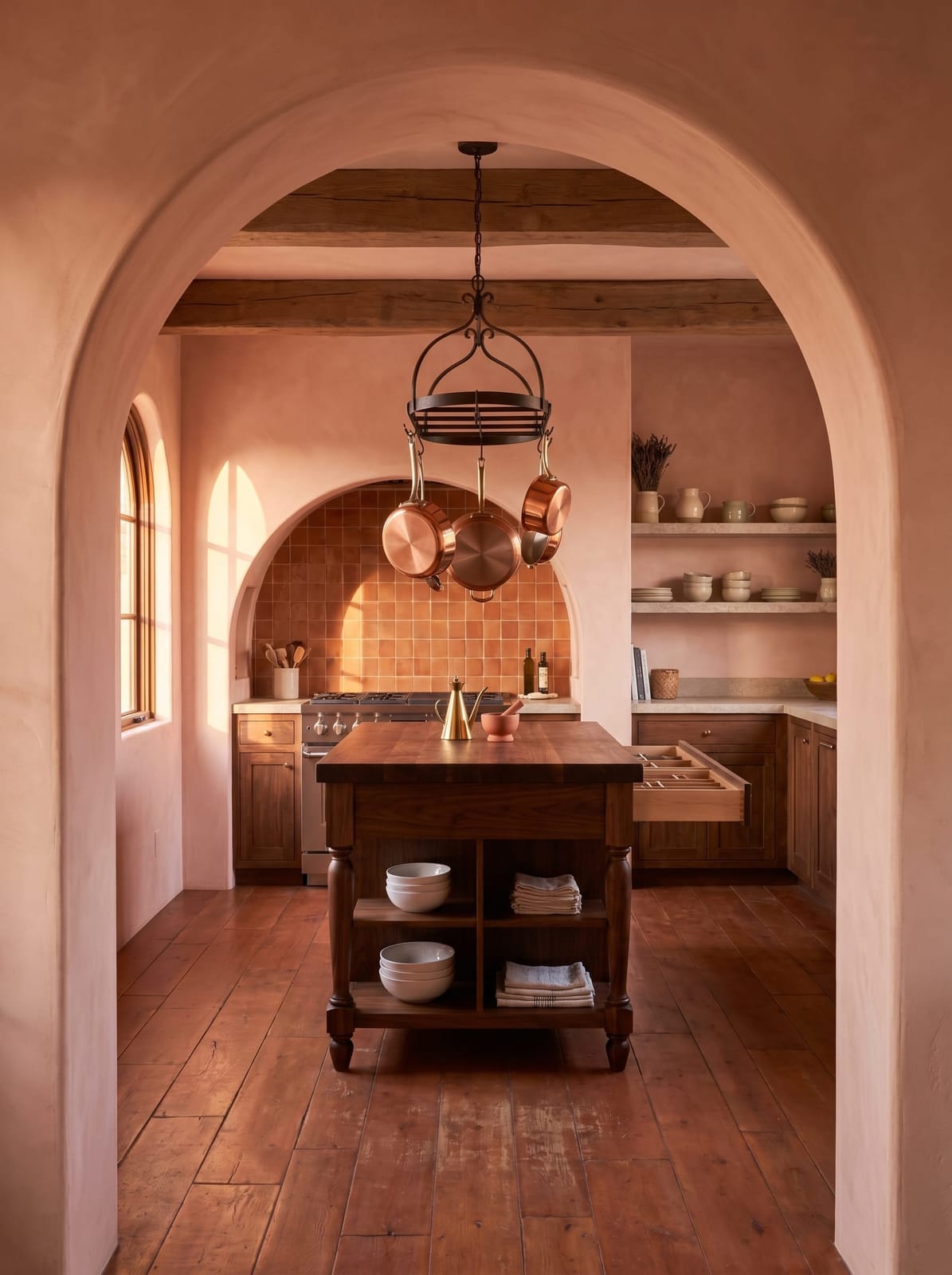
The arched terracotta copper kitchen is that room. Rather than concealing function behind flat-panel cabinetry, it frames the cooking range inside a shallow masonry arch clad in undulated cotto tiles and suspends a collection of French copper pans directly above the workspace. The result is a kitchen that reads as both a serious culinary workshop and a warm, hospitable family room—a space where the material palette does the decorating.
The Cooking Alcove: Cotto Tile and the Geometry of the Arch
The architectural centerpiece is the arched alcove that frames the range. In historic European kitchens—from Tuscan farmhouses to Provençal country estates—the cooking hearth occupied a recessed niche in the masonry wall, protecting the surrounding plaster from heat and grease while creating a natural focal point for the room. This design borrows that principle, lining the alcove with Daltile Artcrafted Cotto Glazed Ceramic Tile in a four-by-four-inch square format.
The tile selection is deliberate. Each piece carries an undulated, zellige-style surface glaze that catches daylight at slightly different angles, scattering reflections across the alcove rather than bouncing them in a single flat plane. The rust-red cotto tone shifts subtly from tile to tile—some pieces fire deeper and more saturated, others lighter and more terra-rosa—creating a patchwork of organic warmth that prevents the alcove from reading as a uniform sheet of color. This variation is the hallmark of handmade-look ceramics: the glaze moves, the light plays, and the wall feels alive.
At nine dollars and eighty cents per square foot, the Artcrafted Cotto delivers extraordinary visual impact at an accessible material cost. The glazed ceramic surface is also fiercely practical: it resists cooking grease, wipes clean with a damp cloth, and tolerates the radiant heat thrown by the range without cracking or discoloring.
Copper in the Air: The Enclume Pot Rack
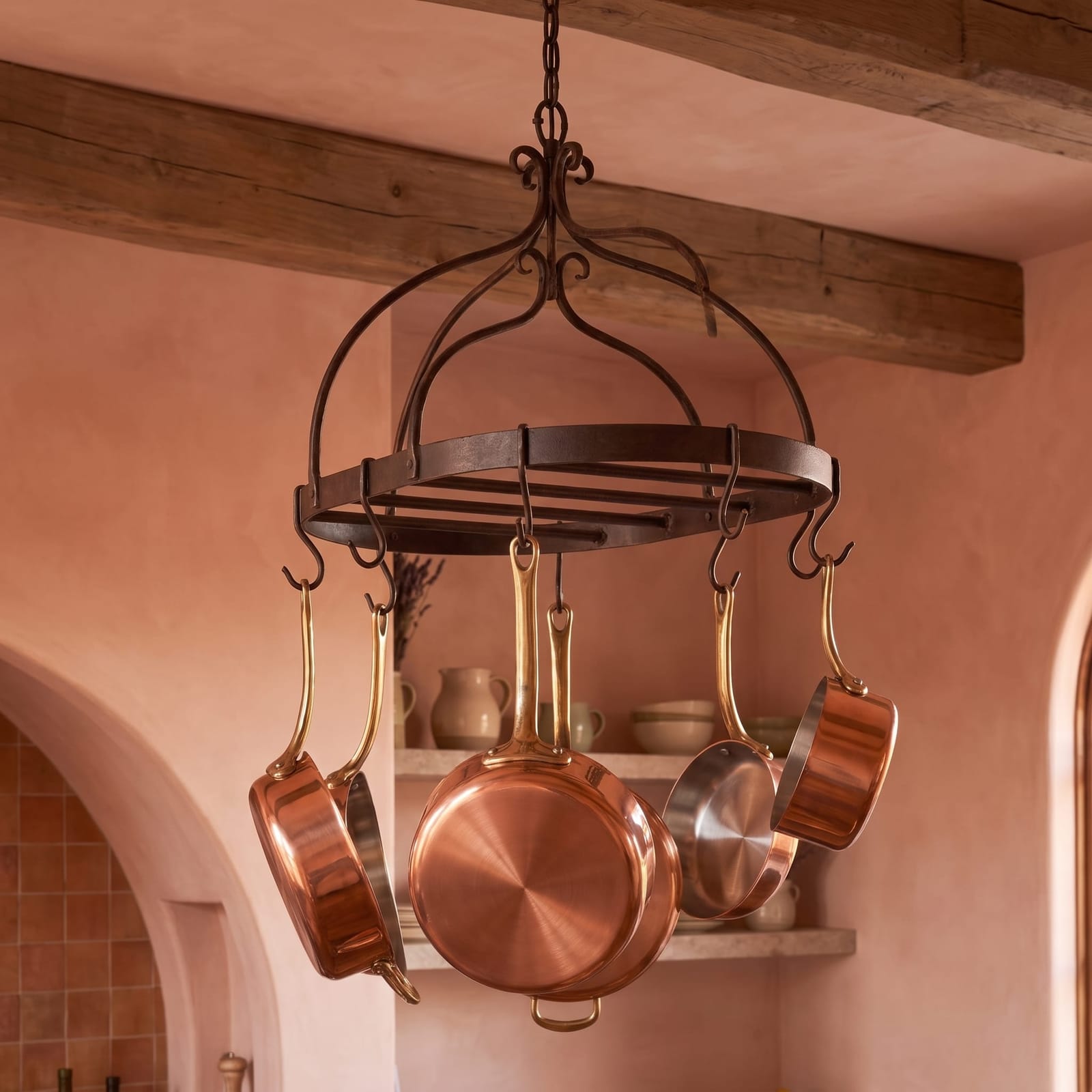
Suspended from the ceiling by four steel chains, centered directly above the cooking zone, hangs the Enclume Handcrafted Cottage Round Rack with 6 Hooks. The rack measures eighteen inches in diameter, stands sixteen inches tall including its chain hardware, and weighs eleven pounds empty—a substantial, anchored presence that signals permanence.
Forged in the Pacific Northwest from quarter-inch-thick hot-rolled high-carbon steel, the Enclume rack carries a hammered finish that reveals the texture of the metalworking process. The clear protective coating preserves that hand-forged character while preventing rust. Six removable straight hooks hang from the circular frame, each capable of supporting the weight of a heavy copper sauté pan. The rack’s total load capacity is twenty-five pounds—more than enough to hold the daily-use pieces of a serious home kitchen.
What the rack achieves spatially is as important as its function. By drawing the eye upward, it emphasizes the vertical proportions of the kitchen, transforming dead ceiling space into active display. The suspended cookware creates a sculptural silhouette that changes as pans are added, removed, and rearranged through the rhythms of daily cooking. The counter below remains clear—free of the clutter that accumulates when heavy pots are stacked inside lower cabinets.
The Copper Collection: Mauviel M’150B
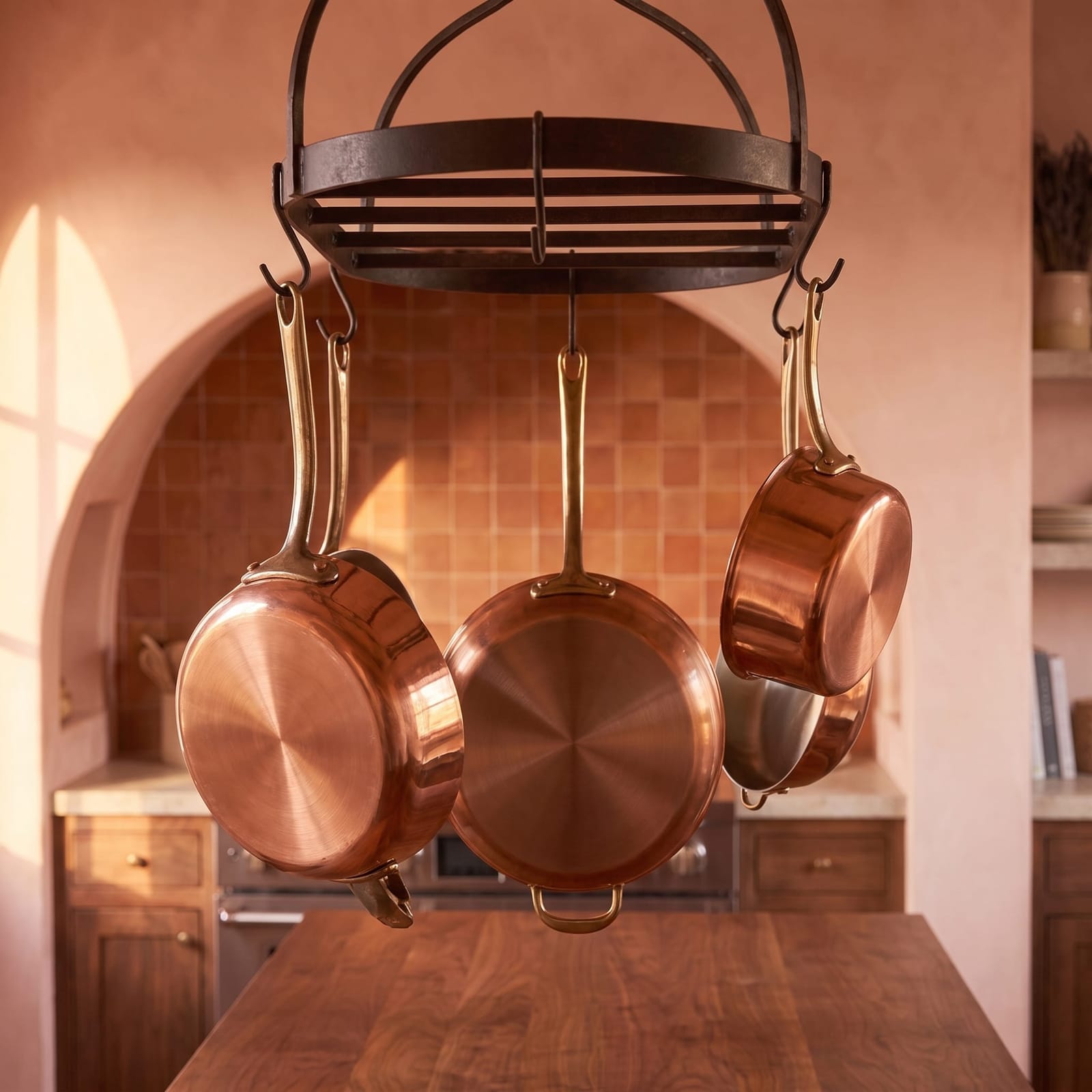
Hanging from those hooks is a collection of Mauviel M’150B Copper Cookware with Brass Handles, crafted in Villedieu-les-Poêles, Normandy—a village whose metalworking tradition predates the company’s founding in 1830. The eight-piece set includes a one-and-three-quarter-quart splayed sauté pan, a two-quart saucepan, a three-and-a-quarter-quart sauté pan, and a five-and-a-half-quart stew pan, each with a fitted domed lid. The lids circulate heat and lock in moisture; the rolled rims facilitate dripless pouring.
Copper is the material of choice for chefs who demand precision. Its thermal conductivity is roughly twenty-five times greater than stainless steel, meaning the pan responds almost instantaneously to changes in flame—essential for the controlled temperature transitions required in sauce work, caramelization, and emulsification. The M’150B’s 1.5-millimeter copper body provides this responsiveness while the thin stainless-steel interior lining offers a nonreactive, easy-to-clean cooking surface.
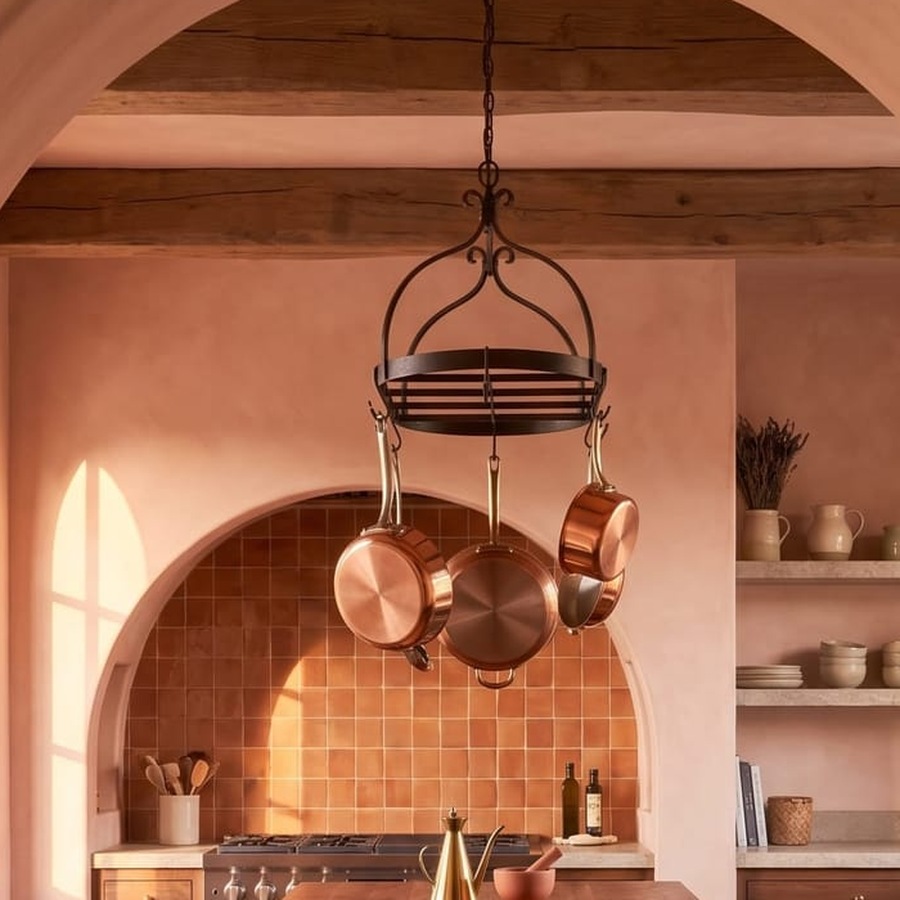
Warm copper tones echo the rust-red backsplash, while brighter metal details add contrast.
The polished brass handles, riveted securely to each pan, introduce a secondary warm metal that reads as a visual bridge between the copper cookware above and the unlacquered brass hardware on the surrounding cabinetry. Those cabinet fixtures—Rejuvenation Massey Knobs and Drawer Pulls in unlacquered brass—are crafted from solid brass in a Fair Trade Certified factory. Like the copper pans, the hardware has a living finish. It will patinate over time, the high-touch zones remaining bright gold where fingers grip daily, the recessed edges deepening to a warm amber. Together, the copper and the brass age in parallel, building a kitchen that grows richer with use.
The Prep Island: Solid Rubberwood with Turned Legs
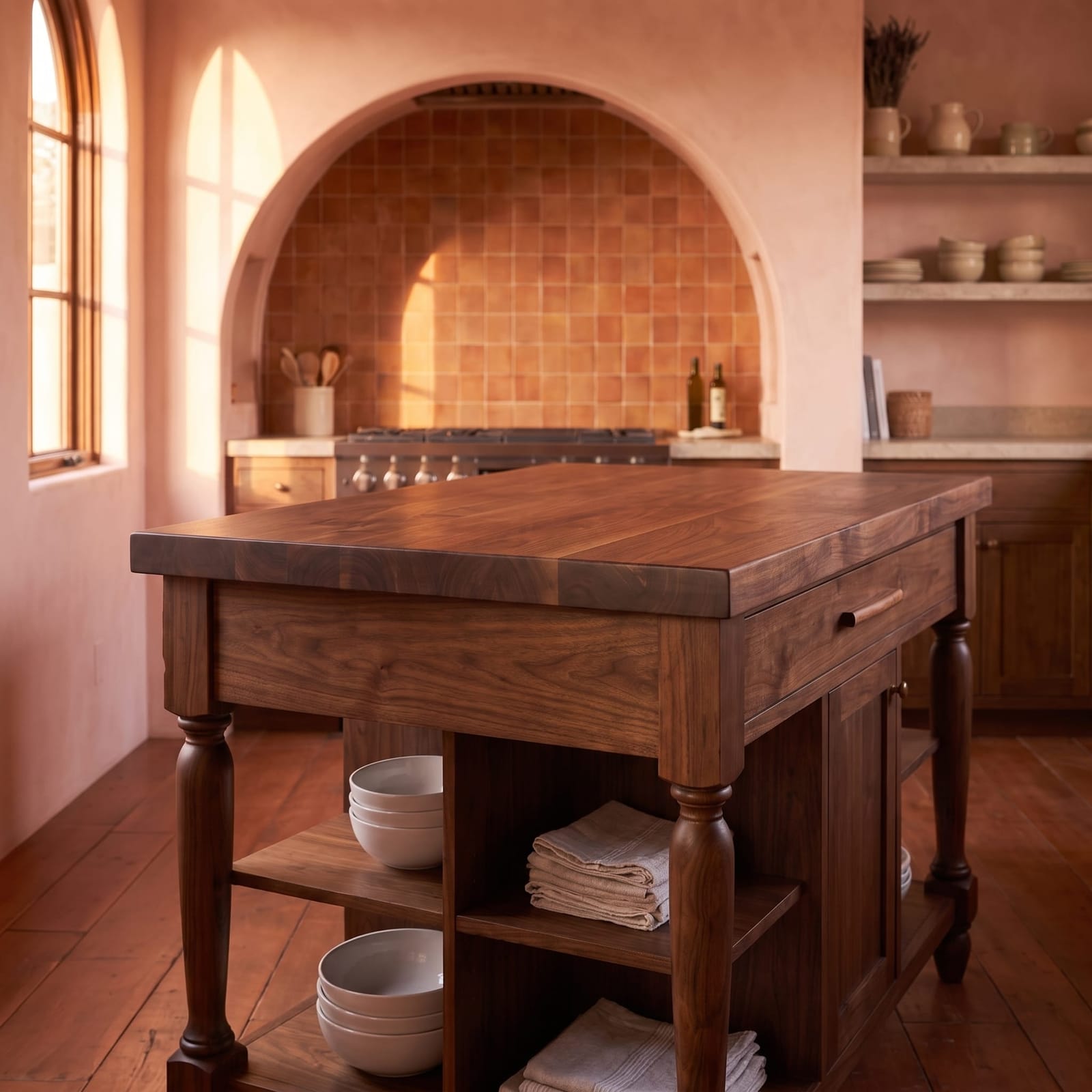
At the center of the kitchen floor, positioned between the alcove and the sink run, stands the August Grove Herriott 40” Solid Wood Prep Table in Black and Dark Brown. Constructed from solid rubberwood—a dense, close-grained tropical hardwood—the table provides a food-safe butcher block surface for active prep work.
The Herriott’s design language is important. Its classical turned legs give the piece a furniture quality that a slab-sided cabinet island cannot achieve. Those legs taper and swell with the regularity of a baluster, casting elongated shadows across the floor as the light shifts through the day. Below the prep surface, two open slat shelves provide visible, accessible storage for the tools of daily cooking.
On the lower shelf sits a Mason Cash Mixing Bowl Set of 3 in cream. These heavy earthenware bowls have been manufactured in England since 1800. The iconic relief pattern on the exterior wall is not merely decorative: it provides a secure grip when the bowl is tilted during vigorous mixing. Stacked by size, the ivory-cream bowls glow against the dark rubberwood shelves, reading as quiet sculptural objects until they are lifted into service.
Draped over the table’s edge or folded beside the bowls, a pair of Williams Sonoma Linen Double Hemstitch Towels in natural flax provides a soft, textured counterpoint to the hard surfaces of copper and clay. Woven from one hundred percent Belgian flax and certified to the OEKO-TEX Standard 100, the towels are lint-free—ideal for drying glassware and polishing copper without leaving fiber residue.
The Supporting Cast: Clay, Spice, and Countertop Ritual
On the countertop beside the range, where the cotto tile meets the solid surface, sits the Handmade Thai Clay Mortar and Wooden Pestle. The nine-inch mortar, shaped in the Thai-Laos pottery tradition, is made of raw, unglazed terracotta—a material that directly echoes the cotto tile backsplash behind it. The slightly porous clay walls grip spice seeds and herb leaves as the hardwood pestle bruises them, releasing essential oils without pulverizing the ingredients into dust.
It is a functional tool, but it is also a visual anchor: the warm, matte, ancient-looking clay object connects the glazed architectural surface of the backsplash to the intimate, handheld scale of the countertop. The mortar belongs to the same material family as the tiles, but it is softer, smaller, and more personal—a bridge between the room and the hand.
Material Balance: Hard and Soft, Glossy and Matte
The success of this kitchen relies on a careful equilibrium. The glazed cotto tiles and polished copper pans provide the room’s high-shine highlights—surfaces that catch the sun, reflect ambient light, and shimmer with warmth. These glossy elements are counterbalanced by the matte, absorbing textures of the black prep table base, the unglazed clay mortar, and the natural flax linen towels. Neither family of material dominates. The copper and tile energize; the wood and linen calm. The result is a room that feels simultaneously vibrant and restful.
The color palette operates within a tight, warm range: rust-red cotto, polished copper, golden brass, dark rubberwood brown, cream earthenware, and natural flax. There is no cool blue, no clinical white, no chrome. Every surface reads as warm. The kitchen feels, at all hours, as though a fire has just been lit.
Dusk in the Alcove
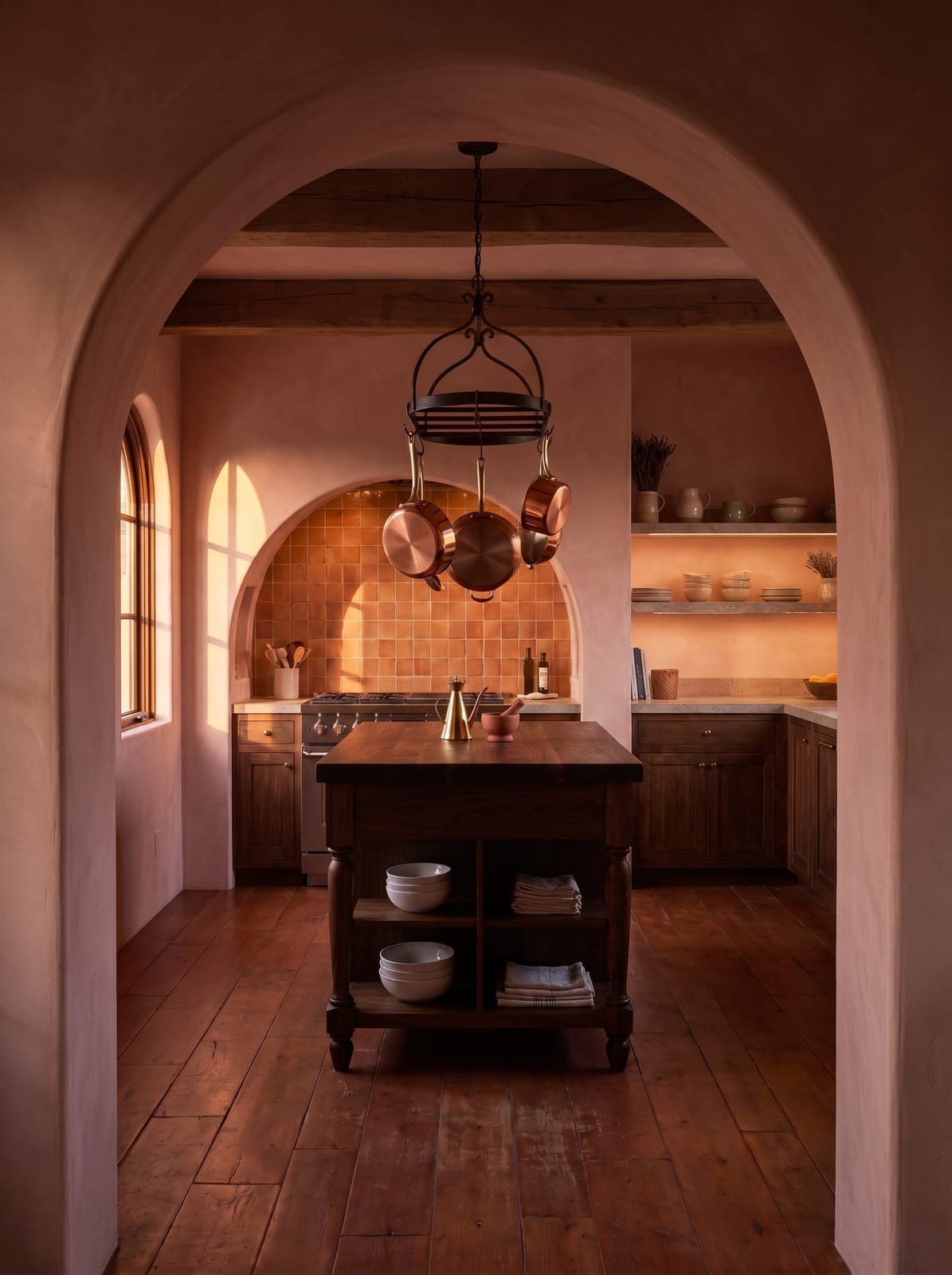
As afternoon light fades and the under-cabinet fixtures take over, the kitchen undergoes its daily transformation. The cotto tiles deepen from bright terra-rosa to a dark, saturated brick. The copper pans, catching the low amber glow, throw warm halos along their polished rims. The stainless-steel interiors of the Mauviel pans, visible where the pans hang at a slight angle, flash a cool silver accent against the surrounding warmth.
The turned legs of the prep table cast long, architectural shadows across the floor. The cream Mason Cash bowls on the open lower shelf absorb the ambient light, softening from bright ivory to a warm, candlelit parchment. The linen towels, draped over the table edge, catch a thread of light along their hemstitched border.
It is the hour when the kitchen feels most itself—a room built for warmth, for the smell of browning onions in a copper pan, for the rhythmic thud of a pestle against clay. A room that celebrates the beauty of functional objects and the dignity of natural materials, providing a quiet, enduring backdrop for the daily rituals of cooking and gathering.
Sources & Details
Explore the complete source list for this room, from the anchor pieces to the smaller finishing details.
Source note: Some links in this source list may be affiliate links, which means we may earn a commission at no extra cost to you. As an Amazon Associate I earn from qualifying purchases.
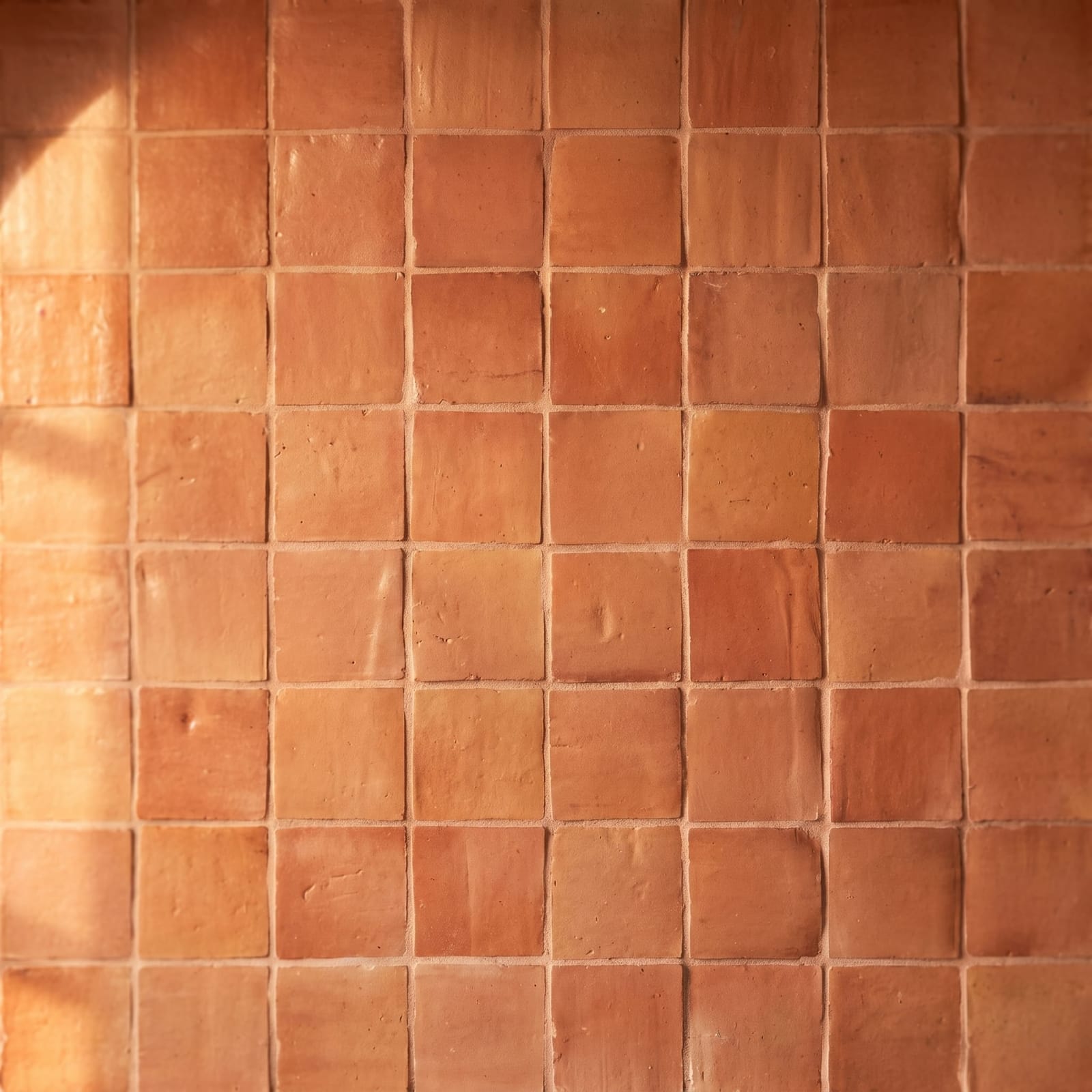
Cotto Rust Glazed Wall Tile
Glazed ceramic 4x4 inch tile with an undulated, handmade-look Zellige-style finish in warm cotto rust terracotta.
The undulation, glaze, 4x4 square size, and warm Cotto rust tone perfectly align with the hand-crafted clay backsplash in the day and night scene images.
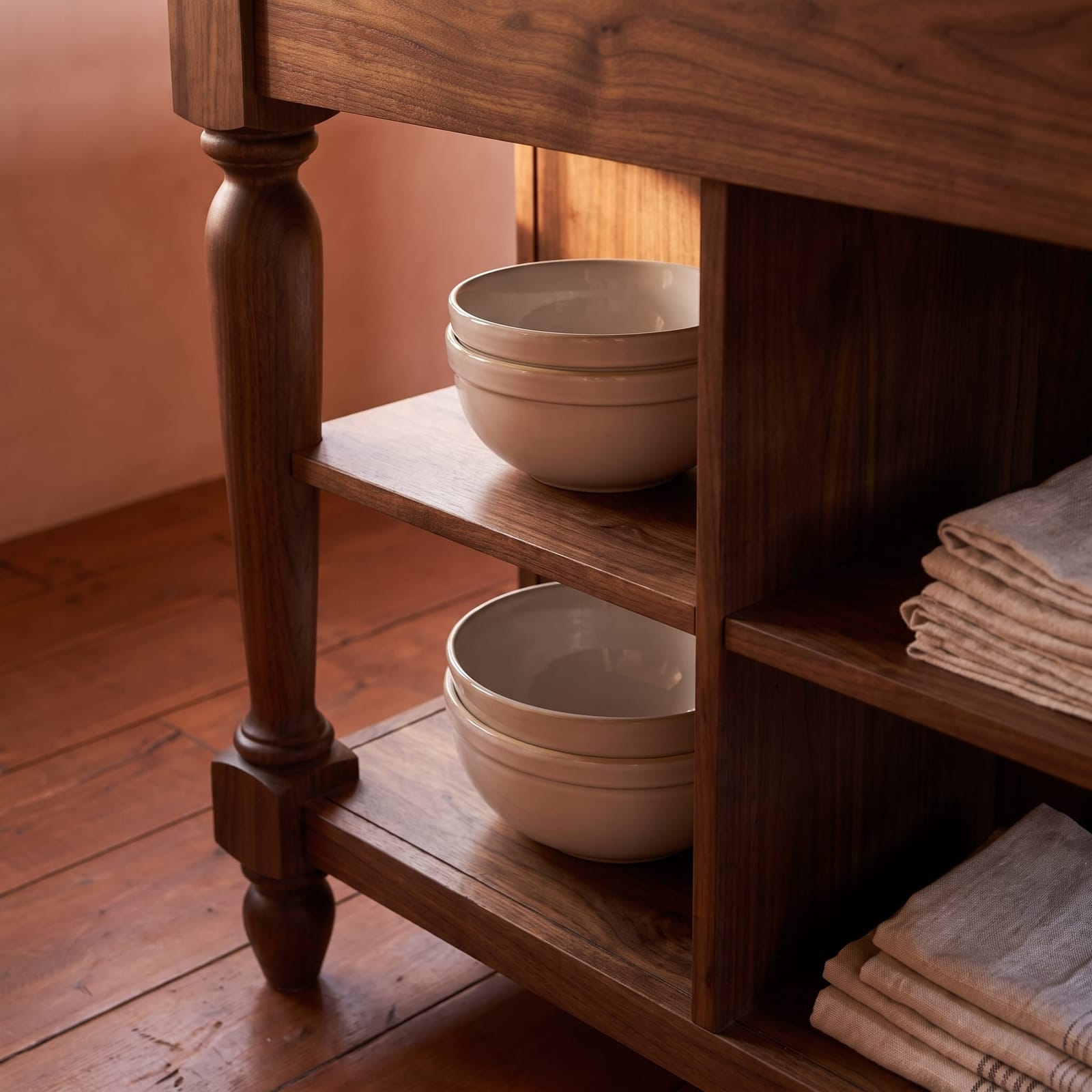
Earthenware Embossed Mixing Bowl Set
Chip-resistant earthenware mixing bowls with iconic textured relief patterns for grip.
Mason Cash Cane/Cream patterned bowls are the design standard for traditional kitchens.
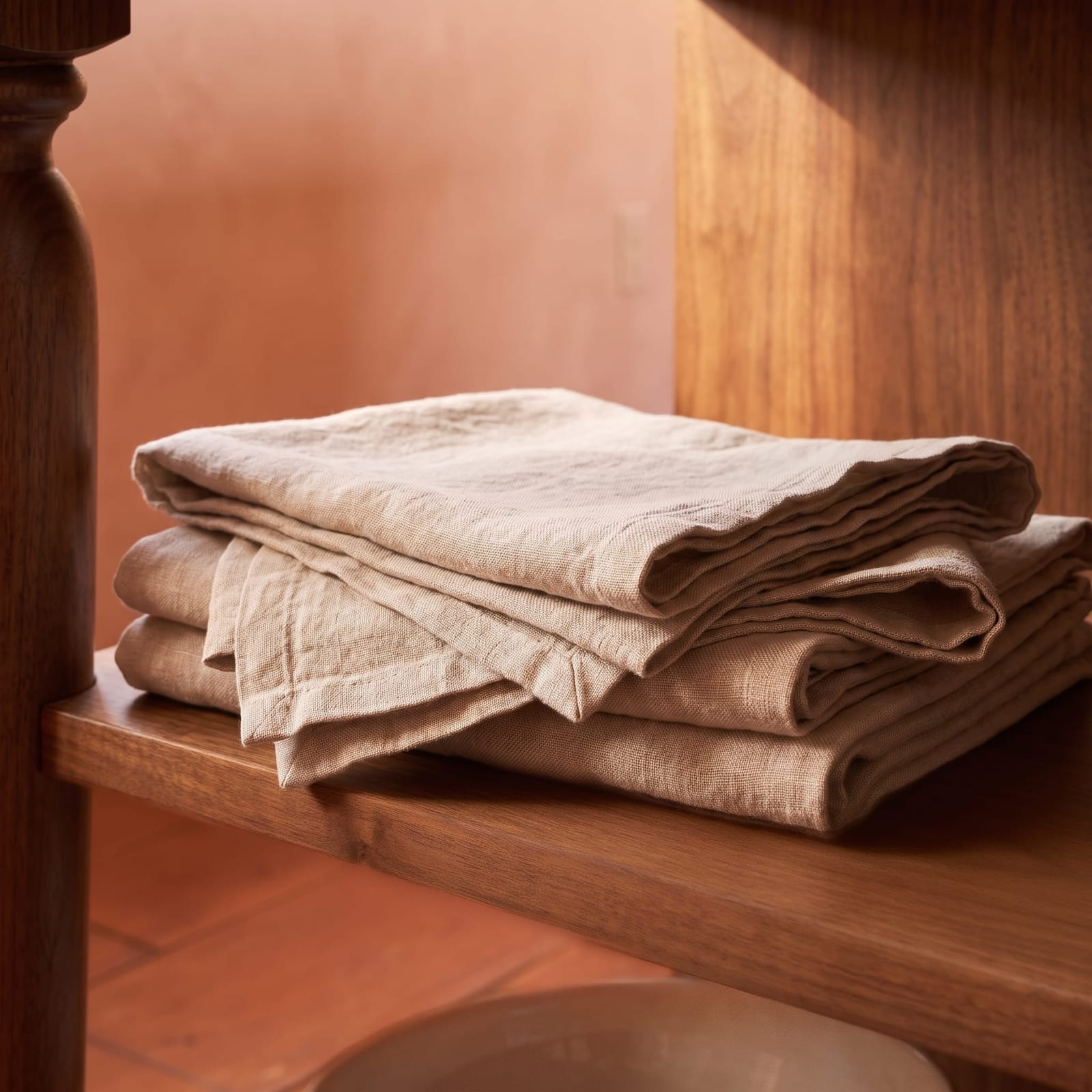
Belgian Flax Linen Hemstitch Towels
100% Belgian flax linen double hemstitch towels in natural flax oatmeal beige color.
The 'Flax' color option provides the exact textured natural beige linen look visible in the 1:1 towel crop.
Frequently Asked Questions
Why is a round hanging pot rack more effective than a wall-mounted rail in a traditional kitchen?
A round hanging pot rack, like the Enclume Cottage Collection rack, creates a strong vertical focal point that draws the eye upward and emphasizes ceiling height—something a flat wall rail cannot achieve. Suspended by four chains from the ceiling joists, the eighteen-inch-diameter circular frame holds up to twenty-five pounds of cookware within arm's reach of the stove, freeing valuable cabinet space below. The three-dimensional silhouette breaks up the flat planar surfaces of cabinetry and walls, adding architectural depth. Wall rails, by contrast, are limited to a single horizontal line, which can flatten a room visually and restrict the number of pans to a narrow strip of wall. The Enclume rack's hammered steel finish also introduces a textured, artisanal metalwork quality that complements copper cookware far more naturally than chrome or brushed nickel rail systems.
What makes Mauviel M'150B copper cookware with brass handles a worthwhile investment for a serious home cook?
Mauviel has been handcrafting copper cookware in Villedieu-les-Poêles, Normandy, since 1830—nearly two centuries of metallurgical expertise. The M'150B line features 1.5-millimeter-thick copper bodies that conduct heat almost instantaneously and distribute it with exceptional evenness across the base and sidewalls, providing the precise temperature control essential for delicate sauces, caramels, and reductions. The interior is lined with a thin, durable layer of stainless steel that prevents copper from reacting with acidic foods while remaining easy to clean. The polished brass handles are riveted directly to the copper body, offering a comfortable angled grip and introducing a secondary warm metallic tone that coordinates with unlacquered brass cabinet hardware. Over time, the copper exterior develops a unique heat-tinted patina that registers the history of meals cooked in the kitchen—a living finish that deepens the room's character with every use.
How does a turned-leg kitchen prep table differ from a solid-base kitchen island?
A prep table with classical turned legs—like the August Grove Herriott, constructed from solid rubberwood with a food-safe oil finish—offers a lighter, more open visual footprint than a boxy cabinet island. The open slat shelves underneath allow light to pass through the center of the kitchen, keeping the layout feeling airy rather than cramped. The turned legs bring a furniture-like, farmhouse character to the room, elevating the kitchen from a clinical workspace to an inviting, lived-in room. A solid-base island, by contrast, reads as a wall of cabinetry that can bisect the kitchen and block sightlines. Prep tables also encourage active, casual use: mixing bowls, linen towels, and mortar-and-pestle tools stored on the open lower shelves are visible and accessible at a glance, rather than hidden behind closed doors.
What is cotto tile, and why does the Daltile Artcrafted version work so well in a kitchen alcove?
Cotto is the Italian word for 'baked' or 'fired,' referring to the warm, rust-red terracotta clay tiles traditionally used in Mediterranean kitchens and courtyards. The Daltile Artcrafted Cotto is a four-by-four-inch glazed ceramic tile that replicates this handmade character with an undulated, zellige-style surface and natural shade variations from tile to tile. Unlike flat, uniform ceramic tiles that reflect light in a single direction, the undulated glaze scatters light at multiple angles, creating a soft, shimmering, dimensional effect that brings wall surfaces to life. At nine dollars and eighty cents per square foot, it delivers a high-impact artisanal look at an accessible price point. The glazed surface is also highly practical for cooking alcoves: it resists grease splatter, wipes clean easily, and withstands the heat and moisture generated by daily stove use.
How does unlacquered brass cabinet hardware age over time in a working kitchen?
Unlacquered brass is a living finish—it has no protective clear coat sealing the metal surface. As the Rejuvenation Massey collection knobs and pulls are exposed to oxygen, humidity, cooking steam, and the natural oils of your hands, the brass undergoes gradual oxidation. High-touch areas where fingers grip the pull daily will retain a bright, polished golden highlight, while recessed edges and low-contact zones darken to a rich, honeyed amber. Over months and years, this contrast creates a distinctive, layered patina unique to your kitchen. The effect coordinates beautifully with the Mauviel copper cookware, which undergoes its own parallel aging process. Crafted from solid brass in a Fair Trade Certified factory, the Massey hardware is designed to be a permanent, heirloom-quality fixture that improves with age rather than degrading.
Why are Mason Cash mixing bowls considered a kitchen design classic?
Mason Cash has been manufacturing earthenware in England since 1800, making their mixing bowls among the oldest continuously produced kitchen tools in the world. The signature cream-colored bowl features a detailed relief pattern on the exterior wall—a design element that is both decorative and functional, providing a secure grip when the bowl is tilted during vigorous whisking or kneading. The heavy glazed earthenware construction keeps the bowl stable on the countertop and naturally resists chipping and cracking. Stacked by size on the open shelves of a prep table, the ivory-cream bowls provide a clean, warm note against dark wood, reading as sculptural objects rather than utilitarian tools. Their chip-resistant durability and timeless silhouette make them a genuine heirloom piece—the kind of bowl that is passed from one generation to the next.
What are the advantages of Belgian flax linen kitchen towels over standard cotton?
Belgian flax linen is one of the strongest natural textile fibers in the world, making linen kitchen towels exceptionally durable and long-lasting. Linen fibers can absorb up to twenty percent of their weight in moisture before feeling damp, and they dry significantly faster than cotton—a critical advantage in a busy kitchen where towels are used continuously. The Williams Sonoma double hemstitch towels are woven from one hundred percent Belgian flax and certified to the OEKO-TEX Standard 100, meaning the fibers are free of harmful substances. The double hemstitch border adds a refined, traditional finish. Crucially, linen is naturally lint-free, making it ideal for drying glassware and polishing copper pans without leaving fiber residue behind. With each wash, the fibers soften further, developing a buttery hand-feel that improves over years of daily use.
What is the purpose and heritage of a Thai clay mortar and pestle in a kitchen?
The clay mortar and wooden pestle is a traditional tool from the Thai-Laos pottery tradition, designed for crushing spices, bruising herbs, and pounding curry pastes. Unlike granite or marble mortars that pulverize ingredients through sheer weight and hardness, the slightly porous, unglazed interior walls of the Thai clay mortar grip spice seeds and herb leaves as the hardwood pestle bruises them, releasing essential oils and creating aromatic pastes with texture rather than powder. This distinction is important for dishes like som tum, where the papaya must be bruised, not crushed. On the countertop, the raw terracotta exterior of the mortar echoes the warm cotto tile backsplash behind it, creating a material connection between the architectural surface and the functional tool. It is a piece that belongs in a working kitchen—beautiful when idle, essential when in use.