Some rooms are designed to host the morning rush. The moody walnut kitchen is built for the slow preparation of the evening meal.
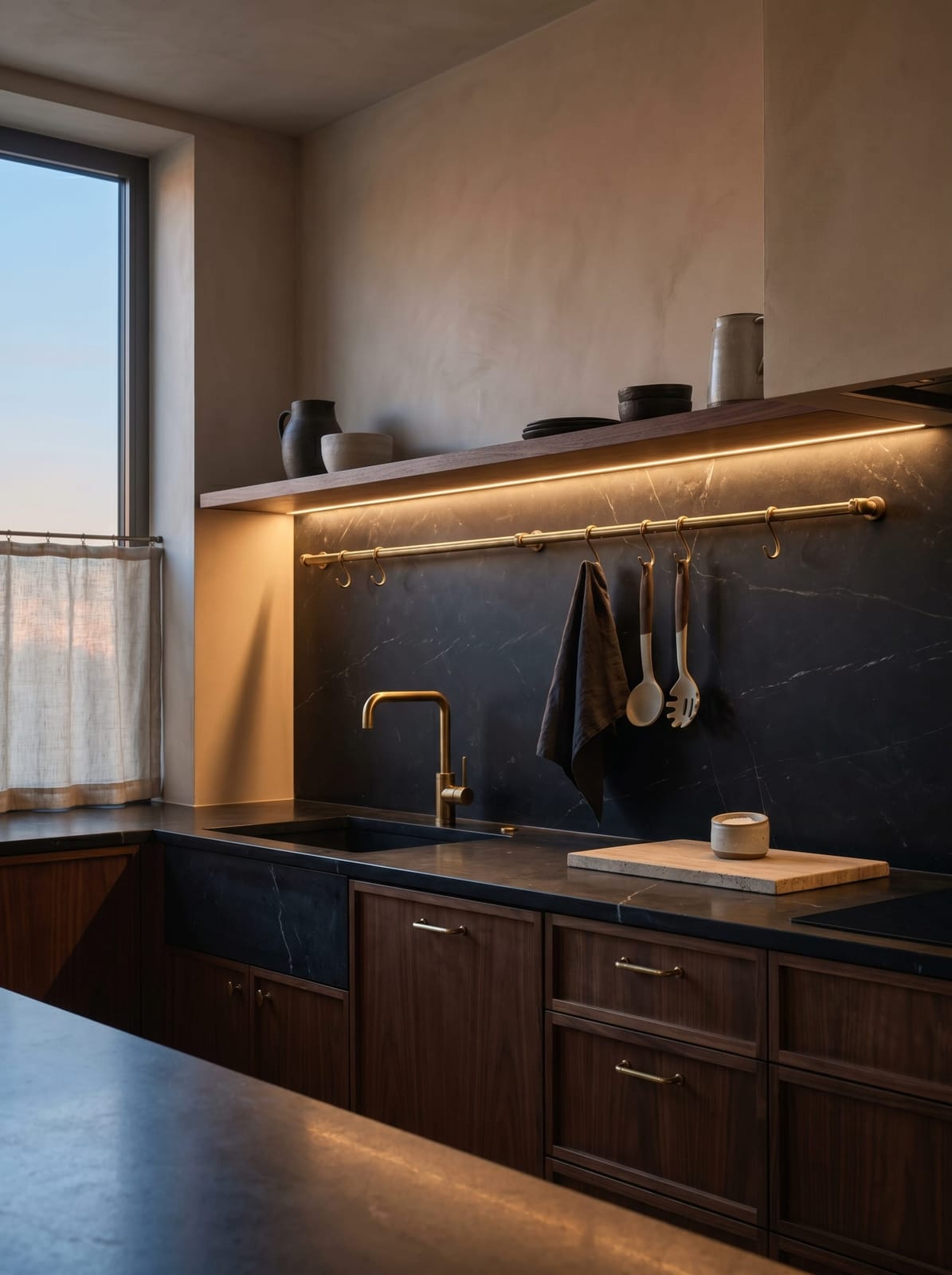
In modern residential architecture, the kitchen is frequently treated as an extension of the living room—bright, open, and white. While this approach maximizes light, it often sacrifices intimacy and texture. The moody walnut soapstone kitchen represents a deliberate turning inward. It is a space defined by dark, tactile materials that absorb light rather than reflecting it: oiled walnut cabinetry, deep charcoal soapstone, unlacquered brass, and soft, natural linen. By choosing materials that age with grace, this kitchen shifts from a clinical workspace to an inviting culinary sanctuary that feels alive and deeply personal.
At the heart of this design is the interplay between the warm grain of the walnut and the cool, matte expanse of the soapstone. This tension is resolved through small, thoughtful details—the flicker of candlelight, the golden gleam of a brass faucet, and the soft drape of a cafe curtain.
The Character of Walnut: Grain, Warmth, and Permanence
Designing a moody kitchen requires a careful selection of wood. Walnut is uniquely suited to this task. Unlike oak, which carries a prominent, rustic grain, or maple, which leans yellow and modern, walnut offers a dark, fine-grained surface with rich chocolate, amber, and subtle reddish undertones. It is a wood that carries visual weight without feeling heavy, providing a sense of permanence and architectural grounding to the space.
When paired with a matte dark stone, walnut cabinetry behaves like a source of warmth. In daylight, the natural wood grain catches the sun, revealing the complex growth rings and color variations that make each cabinet door unique. At night, under the low glow of under-shelf light, the wood tones deepen, absorbing the shadows and creating a cozy, enclosing feel. To maintain this organic quality, the cabinet faces should be finished with a low-luster, flat sealant or a hand-rubbed oil, preserving the tactile texture of the wood fibers.
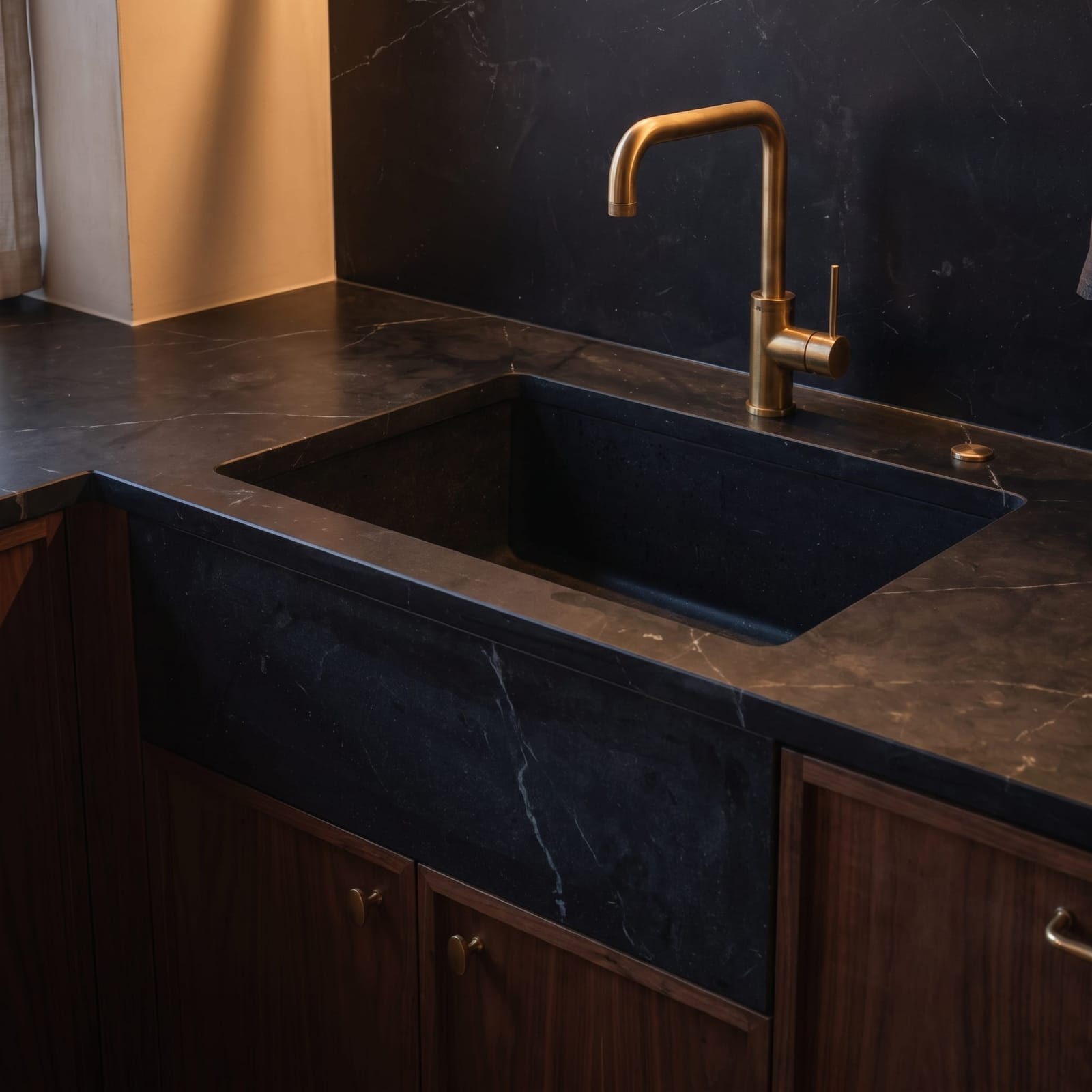
The cabinet pulls play a crucial role in this composition. The Franklin Brass Francisco Pulls in Champagne Bronze introduce a soft, satin-finished metal strip along the dark wood drawers. The champagne bronze color is less yellow than polished brass and warmer than satin nickel, offering a quiet, sophisticated metallic accent that bridges the gap between the dark wood and the black stone.
Soapstone and the Beauty of the Patina
If walnut provides the warmth, soapstone provides the drama. Soapstone is a metamorphic rock composed primarily of talc, dolomite, and magnesite. It is exceptionally dense and non-porous, making it impervious to stains, acids, heat, and chemicals. Unlike marble, which requires careful sealing and constant vigilance against lemon juice or wine, soapstone is virtually indestructible. You can place a hot pot directly from the stove onto its surface without fear of thermal shock.
But the true appeal of soapstone lies in its appearance. Untreated soapstone is a soft, light grey. When wiped with mineral oil or soapstone wax, it deepens to a rich, charcoal black or deep forest green, highlighting the fine white quartz veins that spider across the slab. This matte, velvety finish has a tactile quality that is entirely different from the glossy, cold surface of polished granite or quartz. It feels soft to the touch—almost warm—inviting the hand to rest on its surface.
Over time, soapstone develops a natural, uneven patina. High-use areas near the sink and prep stations will naturally darken from skin oils, while edges may soften and collect minor scuffs. Rather than viewing these changes as damage, they should be embraced as the biography of the kitchen. A soapstone counter in its tenth year is a rich, textured surface that tells the story of the meals prepared upon it.
Beneath the soapstone counter sits the Bocchi Classico Farmhouse Sink in Matte Black. By selecting a farmhouse sink in a matching matte black fireclay, the basin integrates completely into the countertop line, preventing the visual interruption that a white ceramic or silver stainless steel sink would create. The flat, exposed apron front adds a subtle architectural block to the cabinet run, grounding the wet prep area.
Layering Metal and Utilities: The Brass Accent
In a kitchen dominated by walnut and soapstone, the plumbing fixtures and hardware must be chosen with care. They cannot be purely utilitarian; they must function as jewelry for the room, drawing the eye and providing points of warmth.
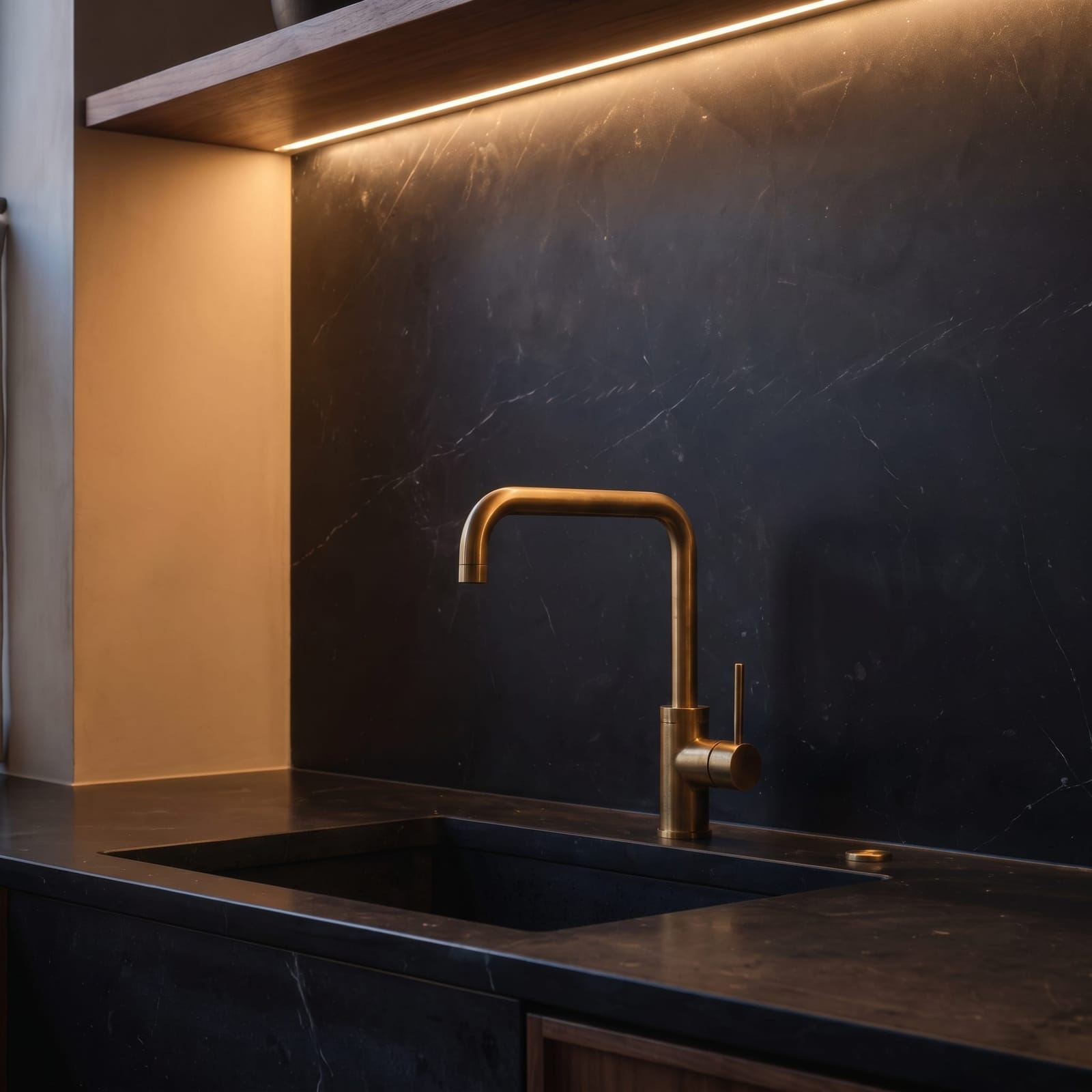
The Kraus Oletto Single-Handle Faucet in Brushed Brass stands as a sculptural element at the center of the sink area. Its clean, L-shaped profile and 90-degree bend echo the geometric lines of the cabinetry, while the warm brushed brass finish catches the light. The single-handle design and pull-down sprayer collar are modern conveniences housed in a form that feels timeless and refined.
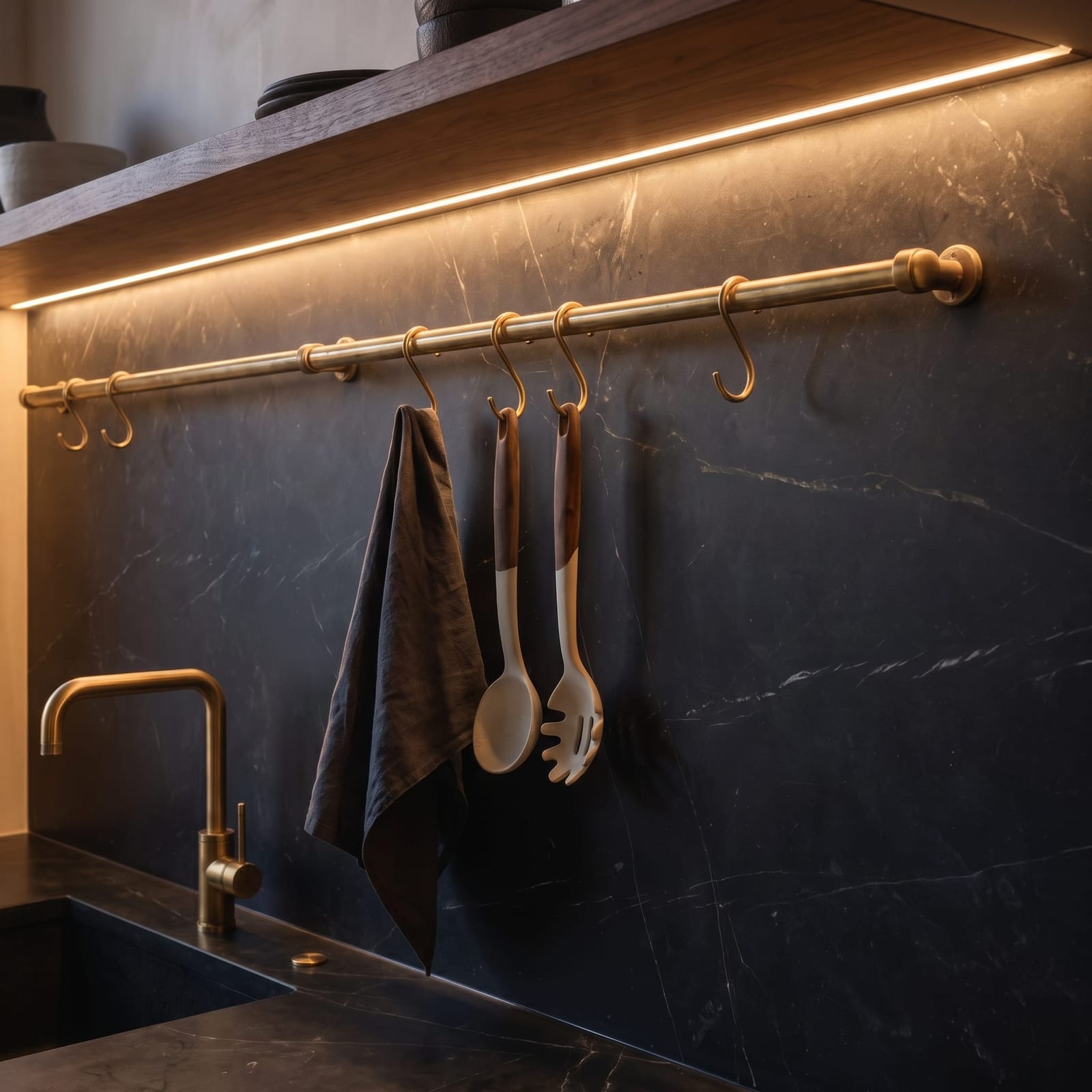
Mounted on the backsplash wall behind the sink is the House of Hampton Custom Pot Rail. Made of unlacquered brass, this rail will slowly oxidize, shifting from a bright gold to a deep, dark bronze over years of exposure to kitchen steam and handling. The brass S-hooks hold frequently used culinary tools—scissors, small copper pans, and the August Grove Annistyn Dish Cloth. This hanging arrangement breaks up the flat expanse of the dark backsplash, introducing a layer of functional texture and a sense of dynamic prep activity.
The rail performs a subtler compositional function as well. It introduces a strong horizontal line at eye level that interrupts the vertical emphasis of the cabinet doors and the downward pull of the apron sink. This horizontal gives the eye a resting point and draws attention to the backsplash zone—the soapstone slab that runs from counter to upper cabinet—turning what might otherwise be a dark, featureless plane into a curated display wall. The items that hang from the rail are not decorative objects. They are working tools, and their presence signals that this kitchen is used, loved, and alive.
Softening the Workspace: Cafe Curtains and Teak Wood
A dark kitchen filled with wood and stone can begin to feel overly masculine or heavy if not balanced with soft, organic materials. The addition of textiles and wood prep surfaces introduces a crucial layer of comfort.
The window above the sink is dressed with the Gracie Oaks Browerville Cafe Curtain. Made from a semi-sheer linen blend in a natural oatmeal shade, the curtain filters the incoming daylight, softening the harsh sun and casting a warm, diffused light across the soapstone counters. The cafe style—covering only the lower half of the window—allows light to enter from the top while providing privacy at eye level. The relaxed rod-pocket drape and natural slub texture of the linen provide a soft, tactile counterpoint to the hard edges of the stone and wood cabinetry.
On the counter, a thick Teakhaus Edge-Grain Teak Cutting Board sits permanently beside the prep zone. Teak’s high natural oil content makes it exceptionally resistant to moisture and staining, while the edge-grain construction protects knife blades. Visually, the golden-brown teak wood brings a different timber register into the room, lighter than the walnut cabinetry, adding depth to the wooden elements.
Designing for the Evening Hours
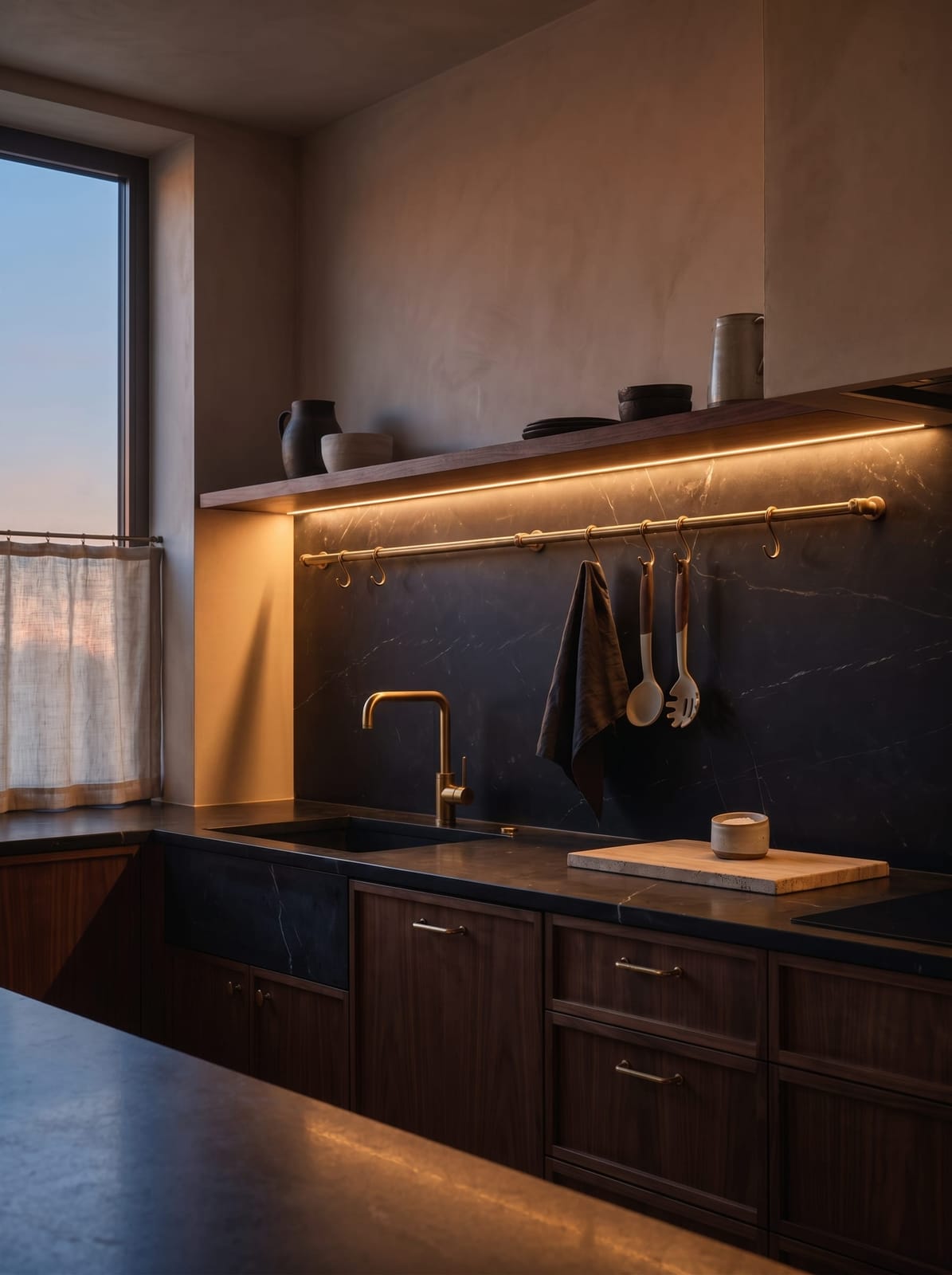
The true test of a moody walnut kitchen is how it behaves when the sun goes down. As the natural daylight through the linen cafe curtain fades, the room shifts character entirely. Under-shelf LED lighting, set to a warm 2700K color temperature, washes down the soapstone backsplash, catching the white quartz veins and casting soft shadows beneath the pot rail. The unlacquered brass faucet and S-hooks catch the glow and return it to the room as warm, golden points—small fires distributed across the dark landscape of the kitchen.
The walnut cabinet doors, which in daylight revealed their full grain complexity, now compress into a single, deep brown field. The soapstone, which during the afternoon held a matte charcoal quality, darkens further to near-black, making the white veining more pronounced by contrast. The linen cafe curtain, backlit by streetlight or porch light, becomes a translucent screen, softening the boundary between the kitchen and the world outside.
This transformation is not accidental. Every material in this kitchen was chosen not only for how it looks on the day of installation but for how it will look in five years, in ten, in twenty. The walnut will deepen. The soapstone will develop an uneven, geological patina where the cook stands most often. The unlacquered brass will darken at the touchpoints—around the faucet handle, at the S-hook joints, along the rail where hands grip it to hang a towel—while the untouched lengths retain a brighter tone, creating a natural gradient that maps the habits of the household.
The teak cutting board will accumulate fine knife marks across its surface, a topography of meals. The linen towel will soften with every wash, its charcoal fibers relaxing into a lighter, more textured grey. Even the cafe curtain will shift: the sun-facing side fading slowly while the kitchen-facing side retains its original oatmeal warmth.
This is the quiet contract that organic materials offer. They do not remain static. They do not require replacement when they show wear. They enter a slow, collaborative relationship with the people who use them, absorbing the evidence of daily life and returning it as character. A kitchen built from walnut, soapstone, and brass is not a showroom. It is a workshop—warm, darkening, and permanent—designed for the long hours between the setting of the table and the clearing of the plates.
Sources & Details
Explore the complete source list for this room, from the anchor pieces to the smaller finishing details.
Source note: Some links in this source list may be affiliate links, which means we may earn a commission at no extra cost to you. As an Amazon Associate I earn from qualifying purchases.
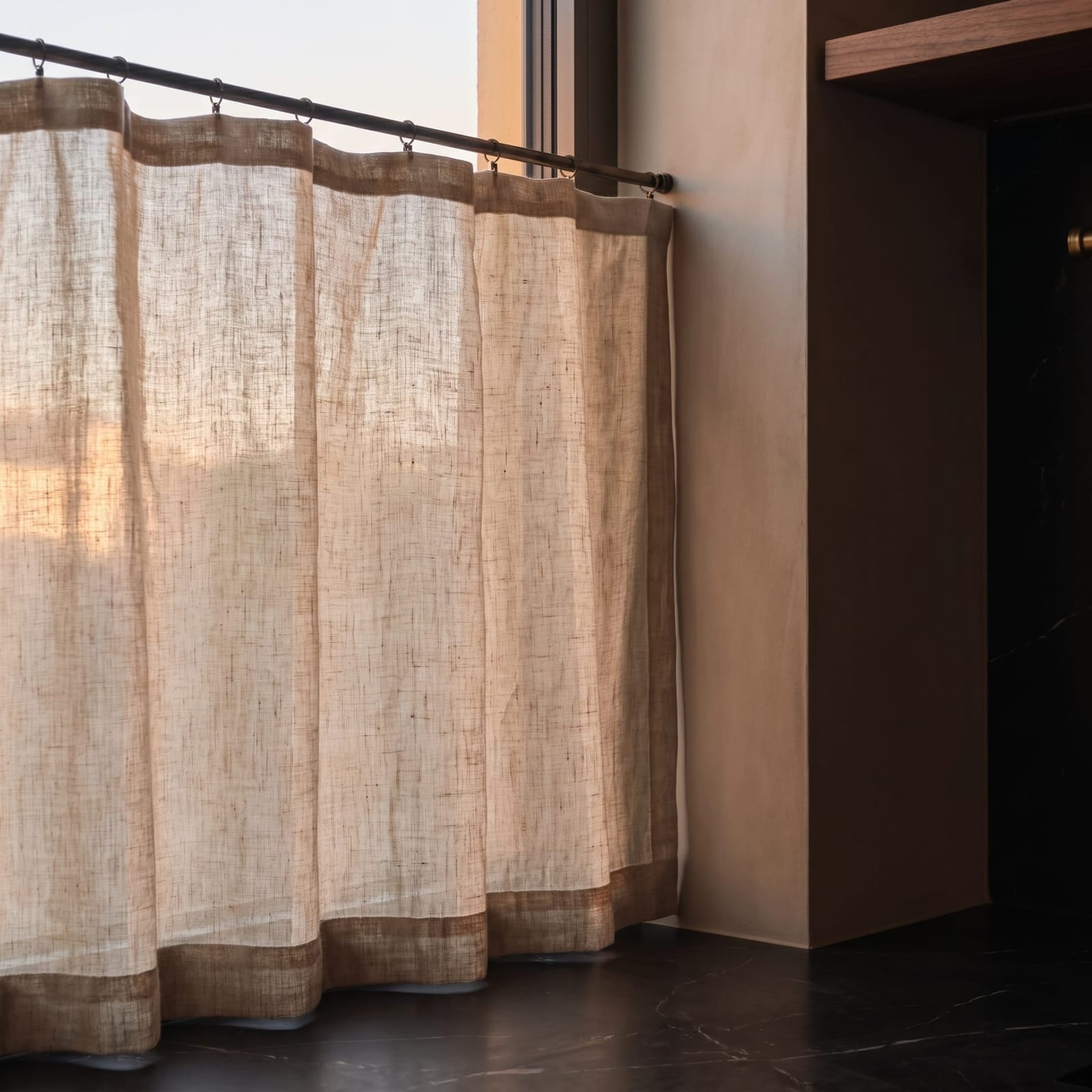
Semi-Sheer Linen Cafe Curtain
Semi-sheer linen cafe curtain tiers in natural oatmeal/beige with rod pocket.
Captures the soft natural flax weave, the light filtering, and the relaxed kitchen drape.
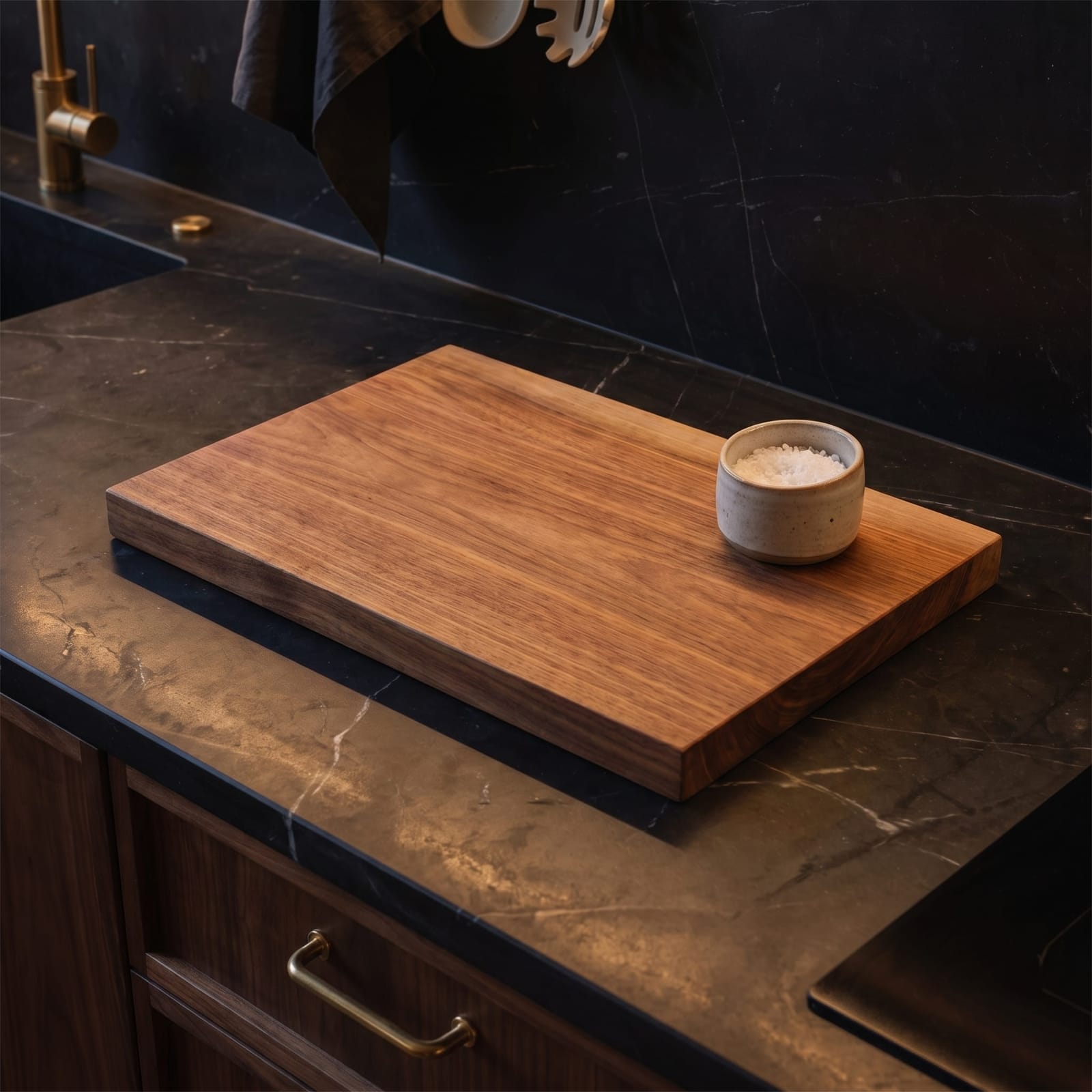
Rectangular Edge-Grain Teak Cutting Board
Thick rectangular edge-grain teak wood cutting board with eased edges.
The solid edge grain blocks and rich golden-brown teak wood tones replicate the cutting board sitting on the soapstone counter.
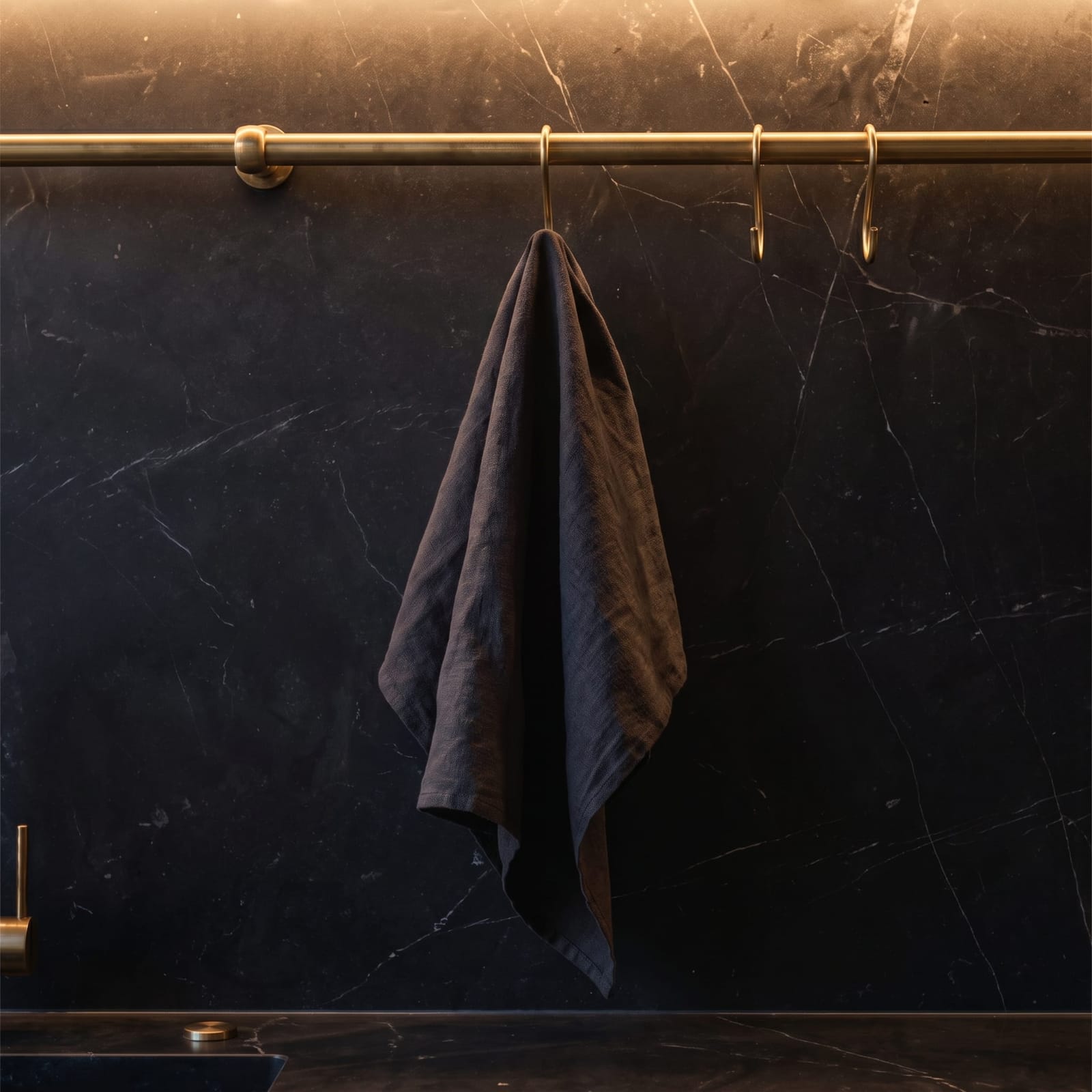
Pure Linen Charcoal Kitchen Towel
100% pure linen charcoal grey kitchen dish/tea towel.
Replicates the rich charcoal/black tone, relaxed pre-washed linen texture, and casual drape of the hanging towel.
Frequently Asked Questions
What is the appeal of pairing walnut cabinets with soapstone countertops?
The combination of walnut and soapstone is a classic study in warm and cool organic tones. Walnut wood contains deep, rich grain patterns with amber and reddish-brown undertones, which prevent a dark kitchen from feeling clinical or cold. Soapstone, on the other hand, is a dense, non-porous natural stone that ranges from dark charcoal to deep black-green, often featuring subtle white veining. The matte texture of soapstone absorbs light rather than reflecting it, creating a soft, velvety surface that complements the low-luster grain of walnut. Together, they create an earthy, grounded palette that feels both historic and contemporary.
How do you care for and maintain soapstone countertops in a kitchen?
Soapstone is completely non-porous, meaning it is impervious to chemicals, acids, and heat. Unlike marble or granite, it will not stain from red wine, lemon juice, or hot pans. However, because soapstone is soft, it is susceptible to minor scratches. You can easily remove light scratches by sanding the area with fine-grit sandpaper and applying a thin coat of mineral oil or soapstone wax. Many homeowners choose to treat their soapstone with mineral oil to accelerate the natural darkening process and bring out the white veining. Alternatively, you can leave it untreated to develop a soft, uneven charcoal patina over time.
What color should you paint walls in a moody kitchen with walnut cabinets?
In a moody kitchen, the wall color should work to unify the cabinets and countertops. Painting the walls in a soft, muted charcoal, dark olive, or a deep slate grey integrates the black soapstone and walnut cabinets into a single, cohesive envelope. If you prefer some contrast, look to warm off-whites, plaster pinks, or light taupes that mimic the color of natural stone or raw plaster. Avoid bright, cool whites or primary hues, which create a harsh contrast that disrupts the organic, enveloping quality of the kitchen design.
How do you choose the right brass finish for a walnut and soapstone kitchen?
For a moody, organic kitchen, unlacquered brass or brushed brass is the strongest choice. Unlacquered brass is a living finish that does not have a protective sealer. Over time, it oxidizes and reacts to touch, water, and air, developing a dark, warm patina that coordinates beautifully with the aging patterns of wood and stone. Brushed brass offers a similar warmth but with a more consistent, low-luster finish that does not show fingerprints easily. Avoid high-shine polished chrome or polished brass, which feel too artificial and clinical against the matte surfaces of walnut and soapstone.
What are the benefits of a wall-mounted brass rail in a kitchen?
A wall-mounted brass kitchen rail serves both an aesthetic and functional purpose. Functionally, it keeps frequently used tools—like copper pots, wooden spoons, scissors, and linens—within arm's reach of the prep area, freeing up drawer space. Aesthetically, it introduces a dynamic line of warm metal against the wall. The items hanging from the rail add layers of texture, color, and a sense of 'ordered chaos' that makes a kitchen feel lived-in and professional rather than staged. Over time, the unlacquered brass rail develops a rich, dark patina that adds historic character to the space.
Why choose a matte black farmhouse sink over stainless steel or white fireclay?
A matte black farmhouse sink—particularly one made of premium fireclay or composite granite—blends seamlessly with dark soapstone countertops, creating a continuous, uninterrupted counter line. This keeps the focus on the walnut cabinetry and brass hardware rather than interrupting the layout with a bright white or silver basin. Matte black sinks are highly resistant to scratching, staining, and impact, and the matte finish absorbs light, maintaining the kitchen's soft, moody atmosphere.
How do you style cafe curtains in a kitchen without making it look dated?
The key to styling modern cafe curtains is material choice and mounting hardware. Opt for high-quality, semi-sheer natural linen or flax rather than stiff synthetic fabrics or lace. The linen should be left unlined and unpleated, with a simple rod pocket or clip rings, allowing it to drape in soft, organic folds. Mount the curtain rod at the window's midpoint or slightly lower using a thin brass rod that matches the cabinet hardware. This keeps the look clean and architectural while filtering natural daylight and providing privacy at eye level.
Are edge-grain teak cutting boards durable enough for daily prep?
Yes, teak wood is exceptionally durable and highly suited for cutting boards. Teak contains high natural oil content and silica, making it naturally resistant to moisture, bacteria, warping, and scarring. Edge-grain construction—where wood strips are glued side-by-side with the edge grain facing upward—provides a sturdy, resilient cutting surface that is gentle on knife blades. A thick teak board placed permanently on the counter serves as a warm wooden work station that softens the hard stone countertops.