Some rooms are designed for morning light. This is not one of them.
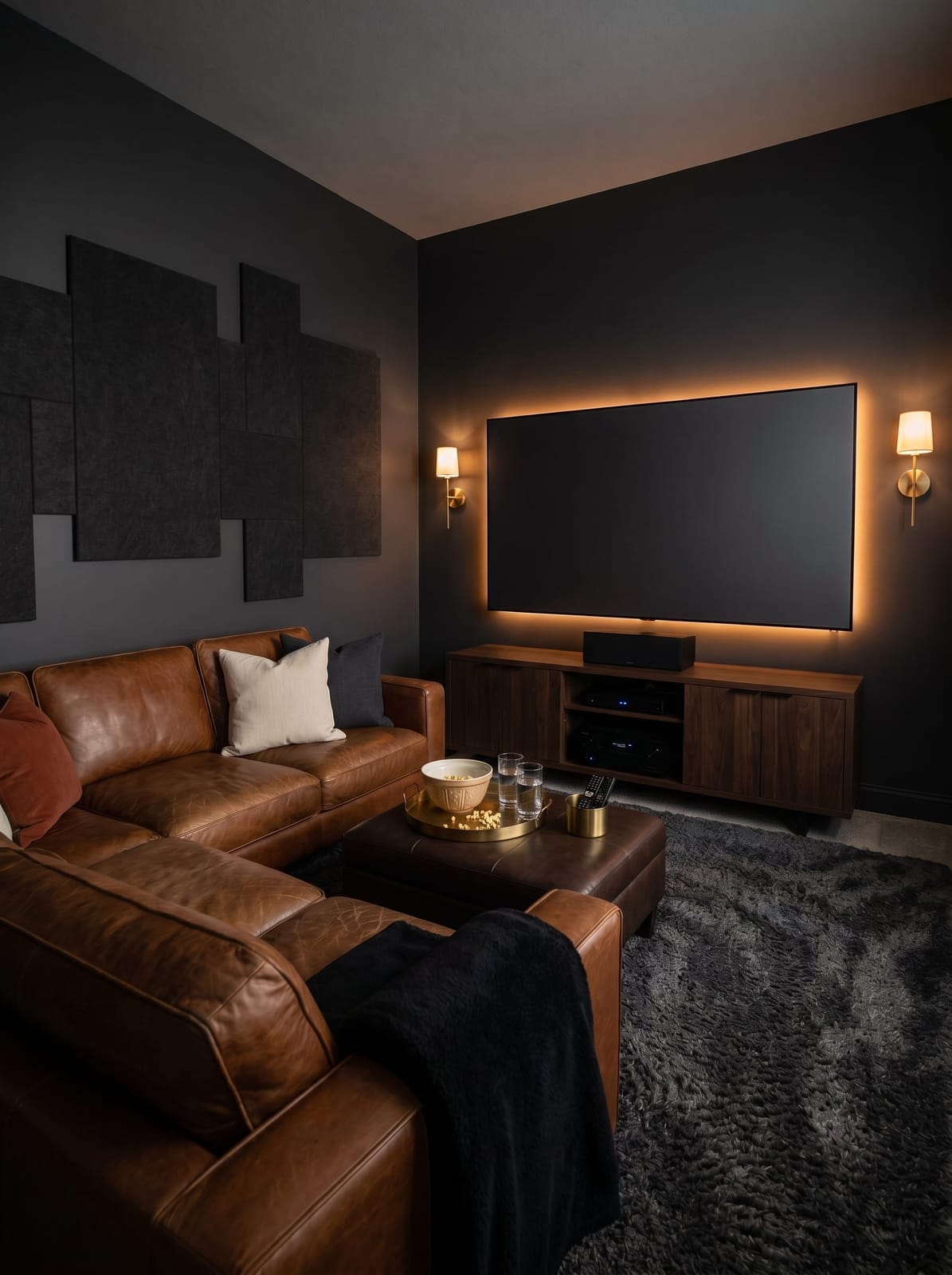
A dark media room belongs to the hours after the sun drops — the slow Tuesday evening, the Friday night that stays home, the weekend afternoon when the curtains stay closed. It is a room that does not apologize for its shadows. The walls are deep charcoal, absorbing light rather than reflecting it. The leather is cognac, holding the glow of a brass sconce the way a river holds the last warmth of evening. Grey felt panels line the wall in quiet geometric patterns, softening sound into something close to stillness. Everything in the room has been chosen to bring you closer to whatever you are watching, listening to, or simply sitting with in the dark.
This is not a living room with a television in it. It is a room designed around the experience of watching — and around the particular comfort of feeling enclosed rather than exposed. Most dark media room ideas stop at the paint color. This guide covers what comes after: the materials, the acoustic logic, the lighting decisions, and the practical tradeoffs that determine whether a dark room feels cinematic or just dim.
Why Dark Walls Work Harder Than You Think
The case for dark media room walls begins with how light behaves. A standard white or light-colored wall reflects a significant portion of the light that hits it. When a television screen casts light outward, those pale walls bounce it back into the room, washing out the image, reducing perceived contrast, and creating a low-level visual noise that can tire the eyes during long viewing sessions. A dark matte wall absorbs much of that reflected light, allowing the screen to hold more of its own contrast. Colors look richer. Blacks look deeper. The image appears to sit in space rather than compete with its surroundings.
But the benefit extends beyond the screen. Dark walls change the spatial atmosphere of a room. Boundaries feel softer, less defined. The ceiling seems to lower. Corners recede. The room contracts around its occupants in a way that feels not claustrophobic but protective — like the interior of a well-lined coat. In a culture that defaults to white walls and open plans, a dark media room is a deliberate inversion: a space designed for enclosure rather than expansion.
What to look for in paint
A matte or flat finish matters as much as the color itself. Eggshell, satin, and semi-gloss surfaces all reflect light at wider angles, which can create distracting sheen on the walls when the screen is bright. A true flat or matte finish absorbs light more evenly and reduces those secondary reflections that pull the eye away from the picture.
For color, deep charcoal, slate, and dark graphite tend to be the most versatile choices for media rooms. They pair naturally with warm woods, leather, and brass without pushing the room toward a theatrical black-box look. Pure black can feel oppressive under any light that is not the television itself. A warm charcoal — one with subtle brown or taupe undertones — gives the walls enough warmth to prevent the room from reading as cold, even when the screen is off.
The ceiling is worth considering too. A ceiling painted in the same dark tone as the walls can reduce light bouncing off a pale surface and washing back down toward the screen. If painting the entire ceiling feels too heavy, even a darker neutral — a few shades deeper than white — can help.
Cognac Leather Against Charcoal: The Warming Anchor
Every dark room needs a source of warmth, and in this room, it is the leather.
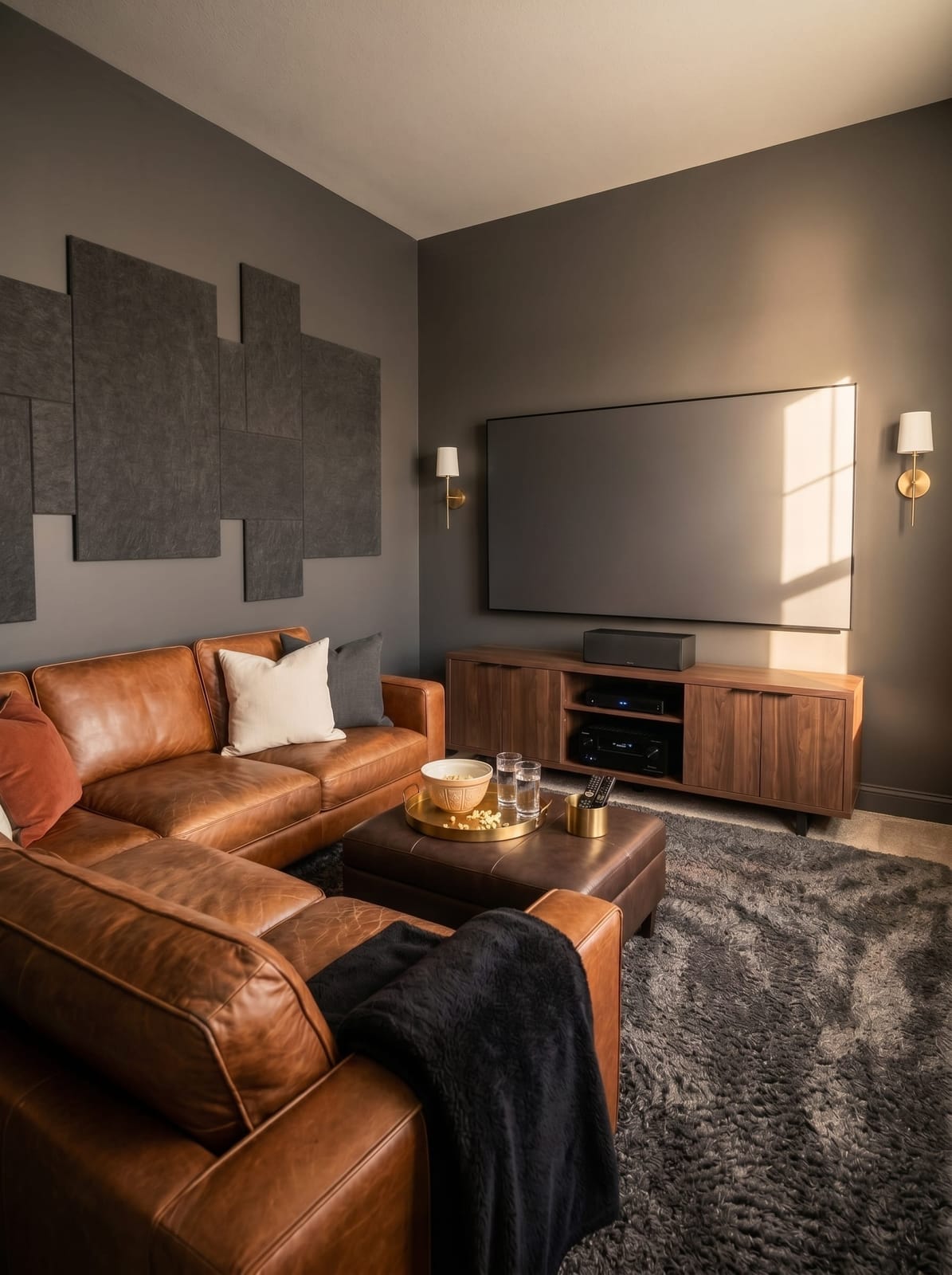
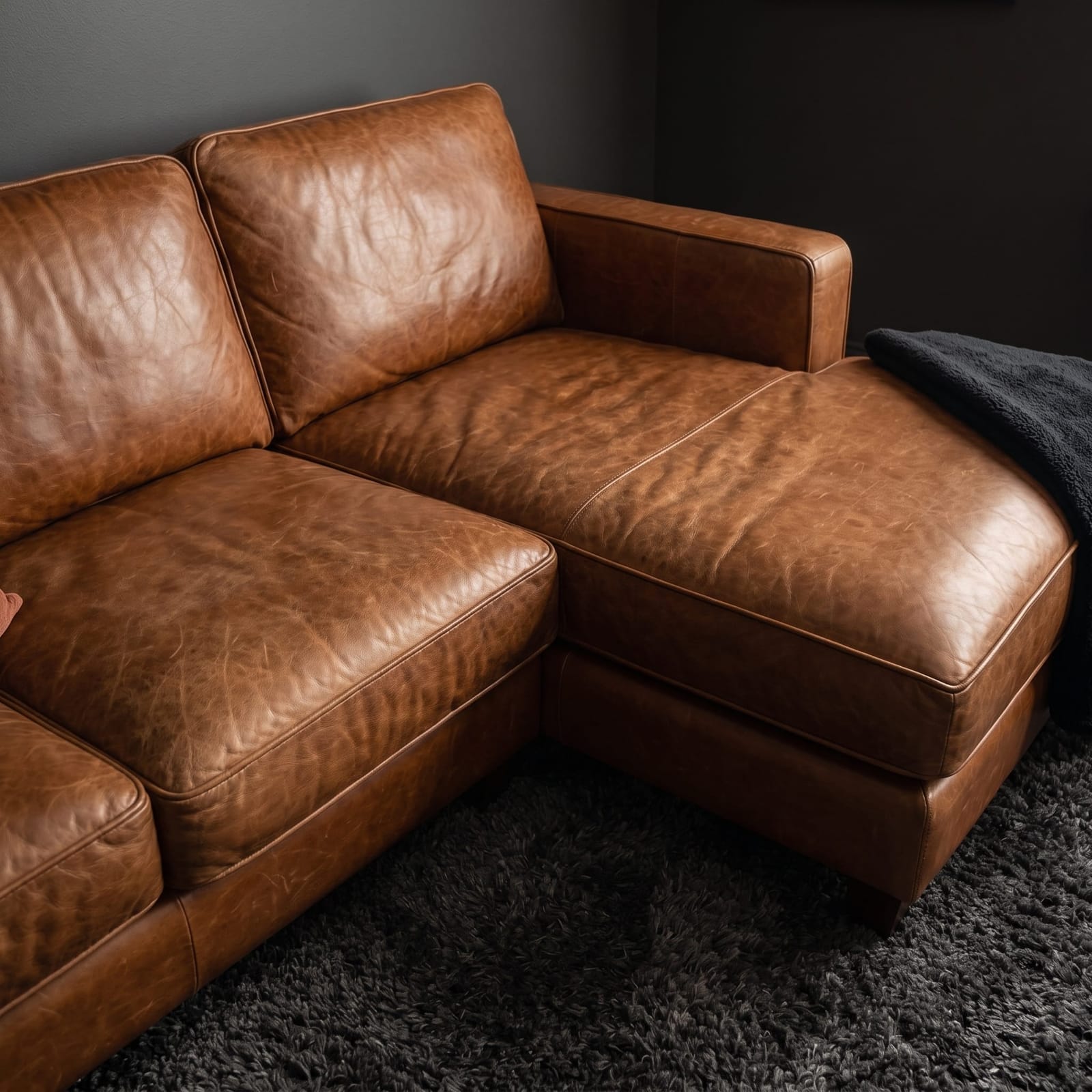
A warm cognac leather sectional against charcoal walls creates the kind of contrast that is felt before it is analyzed. The deep amber of full-grain leather holds light with a slow, internal glow — not reflective the way polished metal is reflective, but absorbing some of the light and returning the rest warmed, softened, subtly altered. Against a wall that absorbs nearly everything, the leather becomes the room’s primary source of chromatic warmth. It radiates. The room pivots around it.
The color relationship matters. Cognac and charcoal are not complementary in the technical sense, but they occupy opposite emotional registers — one warm, saturated, and organic; the other cool, neutral, and receding. The tension between them is what gives the room its character. Neither material dominates. The walls enclose; the leather answers.
Full-grain leather is also a material that improves with use. Over months and years, it develops a patina: a slow accumulation of wear and friction that darkens armrests, softens seat creases, and maps the postures of the people who sit in it. In a room designed for repeated, daily use, this aging is not deterioration. It is biography. A five-year-old cognac sectional is more interesting than the one that arrived on delivery day.
At the center of the seating arrangement, a square chestnut leather ottoman serves as a cushioned coffee table. It echoes the warmth and material language of the sectional while keeping the central floor space soft and forgiving — a practical choice in a room where people recline, stretch, and put their feet up. The leather on the ottoman ages alongside the sofa. Over time, the two pieces converge into a shared patina that makes them feel like they have always belonged together.
The Walnut Media Console: Low, Long, and Grounded
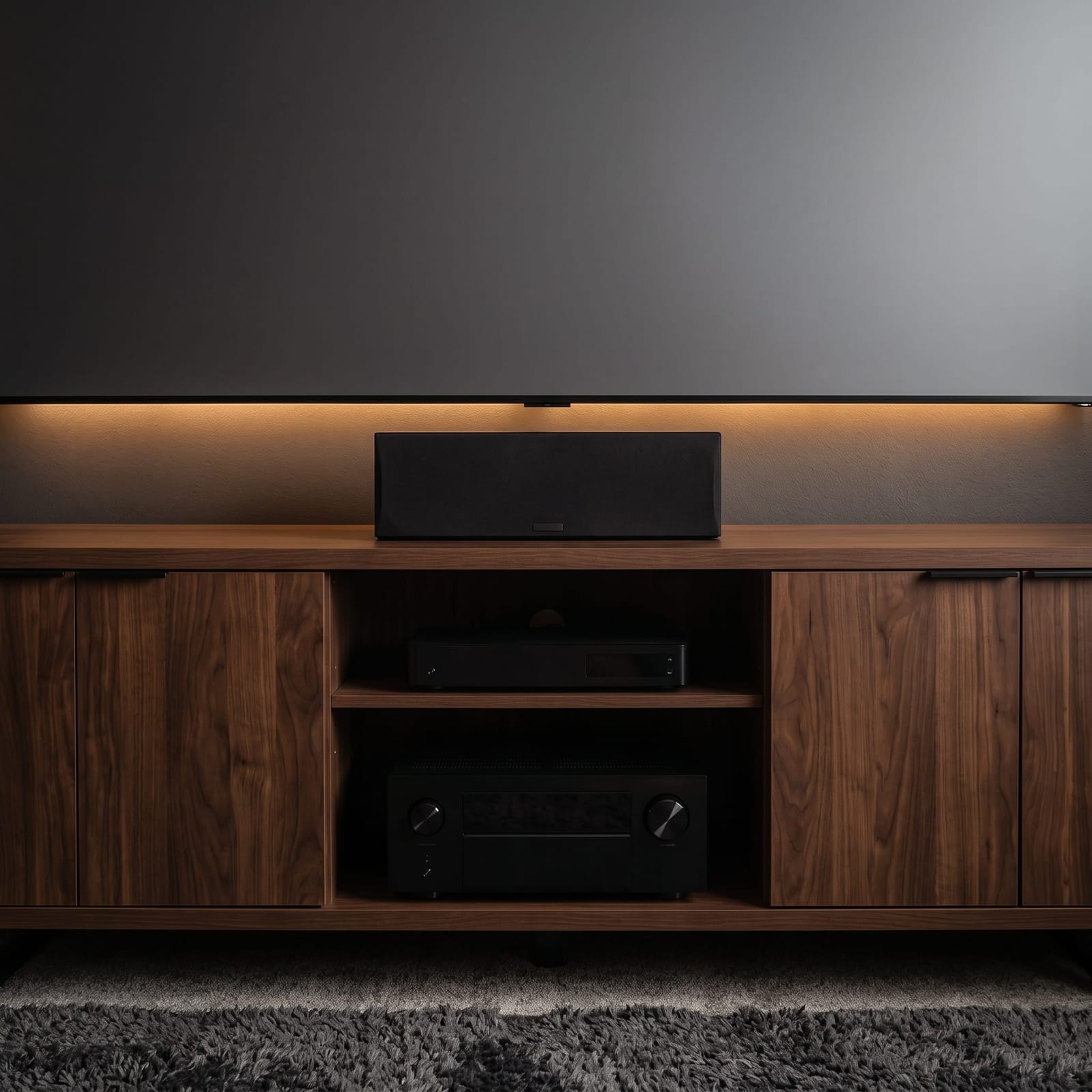
Against the far wall, beneath a wall-mounted television, a low walnut media console establishes the room’s horizontal anchor. Walnut is the right wood for a moody media room because of what it does not do: it does not brighten the room, it does not compete with the leather, and it does not introduce a cool tone that would fight the warmth of everything around it. Its grain is dark and dense, carrying reddish-brown and chocolate undertones that coordinate with cognac leather without matching it.
The proportions of the console matter. A long, low credenza — roughly 70 inches or wider — creates a grounding horizontal line beneath the television, preventing the screen from appearing to float in empty charcoal space. The visual weight of the console anchors the screen to the room. Without it, a wall-mounted television above a bare floor reads as a waiting room. With the right console, it reads as architecture.
Closed side cabinets with simple, handleless doors conceal the infrastructure that every media room accumulates: streaming devices, cable boxes, gaming consoles, and the persistent tangle of cords that connects them. An open center bay or slatted back panel provides a place for equipment that generates heat — receivers, amplifiers, anything that runs warm during extended use.
A note on heat and ventilation
Electronics in an enclosed cabinet generate heat, and heat without airflow shortens the life of the equipment. When choosing or planning a media console, leave a few inches of clearance around heat-generating devices. An open back panel, ventilation slats, or a slatted rear section allows warm air to rise and escape rather than pooling inside the cabinet. This is a planning decision, not a design compromise — the right console handles it without any visible sign that ventilation was a consideration.
Acoustic Panels: What They Do and What They Do Not
This is the section that most moody media room guides get wrong. Grey felt acoustic panels on the wall behind or flanking the screen are not decorative filler. They serve a specific function. And that function is not soundproofing.
Felt panels absorb sound reflections inside the room. When sound from speakers hits a hard, flat surface like drywall, it bounces back, creating secondary reflections that can blur dialogue, muddy music, and produce a hollow, reverberant quality that makes the room feel larger and less intimate than it is. Acoustic felt — typically dense, compressed polyester or wool fiber — absorbs a portion of those mid-to-high frequency reflections at the point of first bounce, reducing the flutter echo that makes hard-walled rooms sound harsh.
What they do not do is stop sound from traveling through walls. Soundproofing — the structural isolation of a room from adjacent spaces — is a construction problem involving mass, decoupling, and sealed air gaps. Hanging felt panels on drywall does nothing to prevent bass or conversation from reaching the next room. If your concern is keeping sound inside the media room, felt panels are not the solution. If your concern is making the room sound better from the inside — cleaner, closer, more defined — they can help.
Placement and pattern
Mounting panels in a staggered geometric arrangement — some horizontal, some vertical, some overlapping slightly — serves two purposes. It maximises the surface area available for absorption by covering more of the wall at varying angles. And it creates a quiet, architectural pattern on the wall that adds visual depth without requiring artwork. In a dark room, grey or charcoal felt panels read as part of the wall rather than something hung on it. They disappear into the room’s envelope when the lights are low, and during the day they give the charcoal wall a dimensional texture that flat paint alone cannot provide.
Soft Surfaces: The Rug, the Ottoman, and What They Contribute
A high-pile charcoal shag rug anchors the seating area and extends the room’s material logic from the walls to the floor. The dense fibers create a soft, yielding surface underfoot that makes the transition from standing to sitting feel deliberate — you step onto something different, and the room changes register.
The rug also contributes to the room’s acoustic character. Upholstered furniture, thick rugs, and soft surfaces in general can absorb some reflected sound, reducing the overall sense of reverberation in a hard-floored room. The effect is modest — a rug is not an acoustic treatment — but in a room already lined with felt panels and leather upholstery, every soft surface contributes to the sense of enclosure and quiet that makes a media room feel immersive rather than echoey.
Choose a rug large enough that the front legs of the sectional sit on it — typically an eight-by-ten-foot size or larger for an L-shaped seating arrangement. This anchors the furniture grouping and creates a defined zone within the room. A rug that stops short of the sofa floats in space and makes the seating area feel unfinished.
The leather ottoman at the center of the rug reinforces the same logic: a soft, warm surface where a glass or metal coffee table would introduce a hard, reflective element that works against the room’s absorptive character. The ottoman asks nothing of the room acoustically. It simply refuses to add another hard surface to a room that does not need one.
Sconces, Bias Lighting, and the Art of Evening Comfort
Lighting in a dark media room is not about illumination. It is about navigation, atmosphere, and managing the contrast between the screen and the surrounding walls.
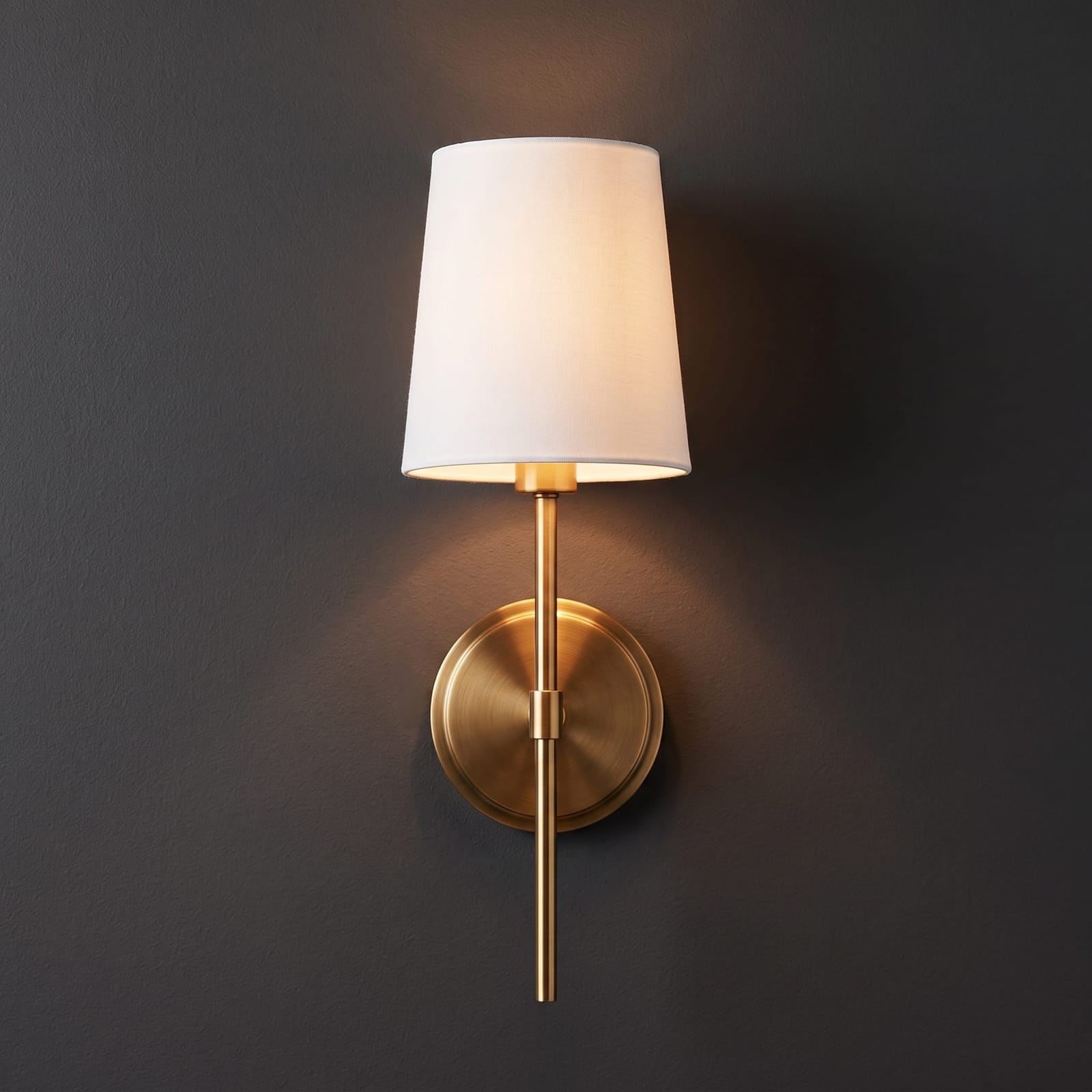
Satin brass wall sconces with tapered white fabric shades, mounted on either side of the screen wall, achieve this balance. The shades direct light both upward toward the ceiling and downward along the wall, creating soft pools of indirect warmth that make the room navigable without flooding it with brightness. The brass stems introduce a metallic warmth that reads against the dark felt panels like quiet jewellery — present, warm, and restrained. The sconces are not there to light the room. They are there to give the eye somewhere to rest when the screen is off.
Behind the television, a strip of warm LED bias lighting provides a different kind of comfort. By placing a soft glow behind the screen, bias lighting reduces the stark contrast between the bright rectangle of the display and the absorbing dark of the surrounding wall. This may help make extended viewing sessions feel more comfortable in the evening, especially in a room where the walls are deliberately dark and the ambient light is deliberately low. A color temperature around 2700K to 3000K matches the warm tone of the brass sconces and the leather, keeping the room’s palette consistent even in its smallest light sources.
What to avoid: recessed ceiling downlights, which create harsh shadows and screen reflections. Cool-white LED strips, which fight the warm palette. Overhead fixtures of any kind, which flatten the room’s atmosphere and undo the immersive quality that the dark walls and low sconces work to create.
All light sources in a media room benefit from being dimmable. A room that looks right at full brightness during the day will feel overpowering at night. A dimmer turns two or three fixtures into a flexible system that adjusts to the hour and the mood.
How to Keep a Dark Room From Feeling Cold
A dark media room fails when it feels like a black box — technically correct but emotionally empty. The difference between a cold dark room and a warm one comes down to the material palette, not the wall color.
Layer warm woods. Walnut on the console, walnut or oak on a side table, a wood tray on the ottoman. Wood grain absorbs light differently than paint or fabric, and its warm undertones register even in low light.
Use warm metals sparingly. Satin brass or brushed gold — on the sconces, on a small tray, on a picture frame — catches and redistributes whatever light exists in the room. A few small brass elements warm the space without adding visual noise. Avoid chrome, polished nickel, or stainless steel, all of which introduce a cool register that fights the palette.
Keep textiles in warm or neutral tones. A draped wool throw over the arm of the sectional. A pair of linen cushions in oatmeal or warm stone. The textiles should disappear into the palette rather than announcing themselves. In a dark room, a bright white throw pillow becomes the loudest object in the space.
Mind the light bulb. Every visible light source — sconces, bias strip, table lamp — should sit in the 2700K to 3000K range. A single cool-white bulb will make the cognac leather read as yellow and the walnut look grey. Color temperature consistency matters more in a dark room than in any other room in the house, because there is less ambient light to average out the differences.
What These Materials Ask of You
The materials in this room are chosen for durability, but they are not maintenance-free. Here is what each surface needs.
Full-grain leather. Wipe with a dry or lightly damp cloth for routine cleaning. Condition every six to twelve months with a leather-specific conditioner to keep the surface supple and prevent drying, especially in rooms with low humidity. Avoid harsh chemical cleaners, which can strip the finish. Spills should be blotted immediately, not rubbed. The patina that develops over time is part of the material’s character — it is not a flaw.
Walnut console. Dust regularly. Wipe with a soft, slightly damp cloth as needed. Avoid placing hot equipment directly on the wood surface without a pad or riser — sustained heat can affect the finish over time. If the console has a lacquered or oiled finish, follow the manufacturer’s care instructions for reapplication.
Felt acoustic panels. Dust or vacuum occasionally with a brush attachment. Most dense felt panels resist staining, but spills should be blotted promptly. They do not require reapplication, coating, or regular maintenance. They generally need little routine upkeep beyond dusting or gentle vacuuming.
Shag rug. Vacuum on a low setting to prevent pulling the fibers. Spot-clean stains with a gentle cleaner. Professional deep cleaning once a year helps maintain the pile and remove trapped dust. Rotate the rug periodically if one section receives more foot traffic than others.
Brass sconces. If the finish is lacquered or PVD-coated, wipe with a soft dry cloth. If the brass is unlacquered, it will develop a natural patina over time — a gradual mellowing that may actually suit the room’s warm, aged character. Follow the manufacturer’s finish care guidance.
Sources & Details
Explore the complete source list for this room, from the anchor pieces to the smaller finishing details.
Source note: Some links in this source list may be affiliate links, which means we may earn a commission at no extra cost to you. As an Amazon Associate I earn from qualifying purchases.
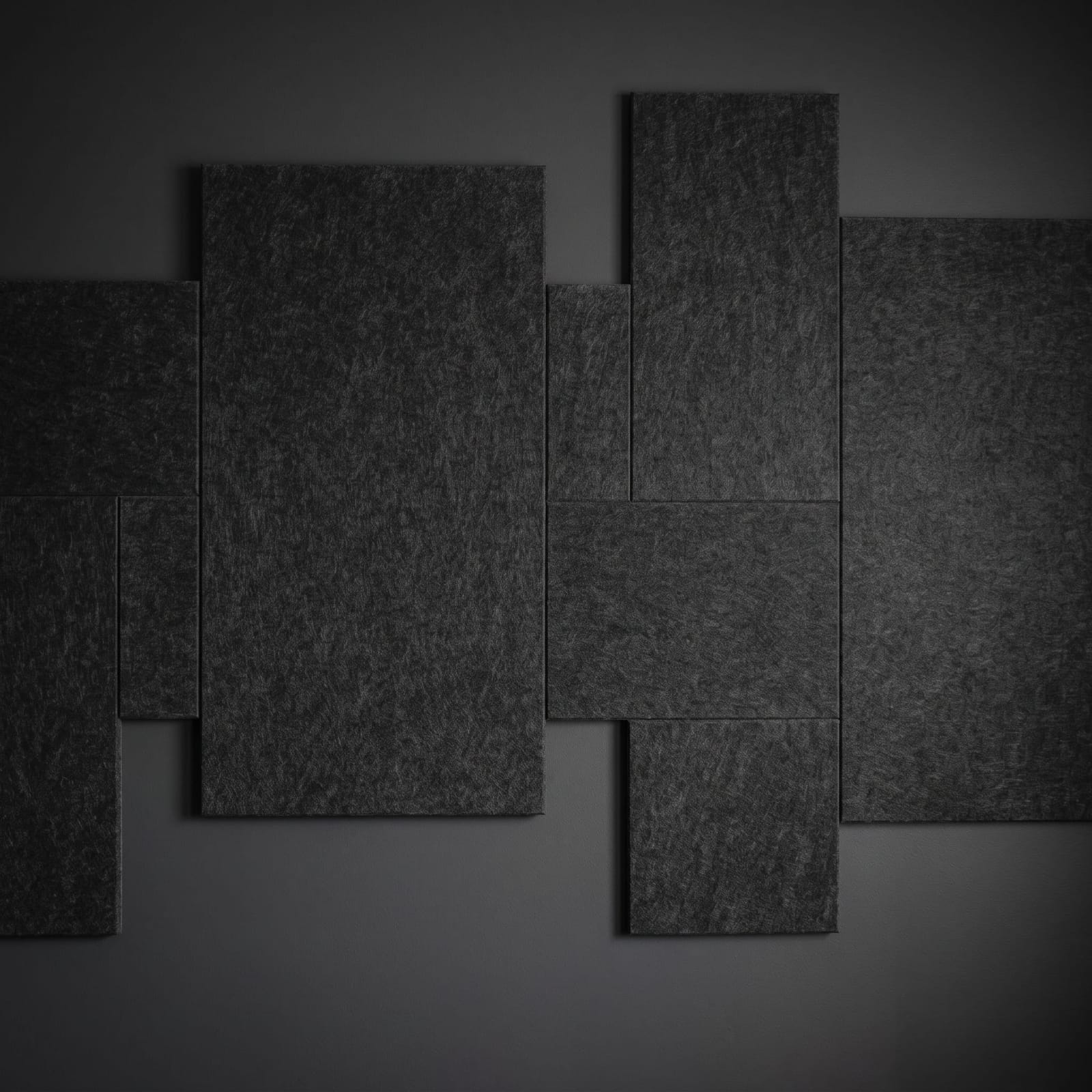
Grey Felt Acoustic Panels
48" x 24" x 0.4" self-adhesive high-density felt sound dampening panels in grey.
Geometric felt panels dampen echoes in the media room while introducing quiet charcoal-grey textures to the walls.
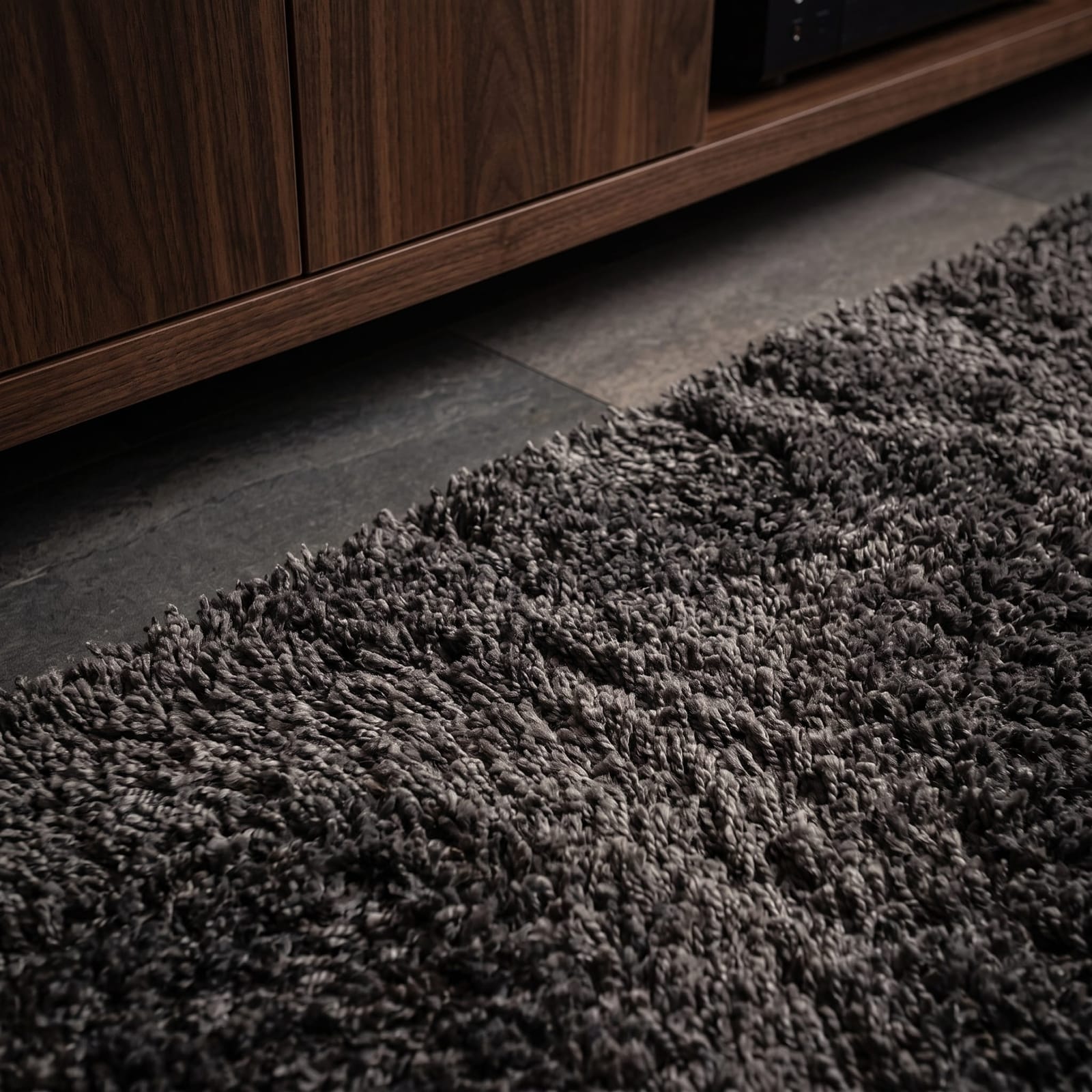
Hand-Woven Charcoal Shag Rug
Hand-woven thick pile charcoal gray area rug.
A plush, high-pile charcoal shag rug creates cozy floor padding and helps absorb low-frequency sound.
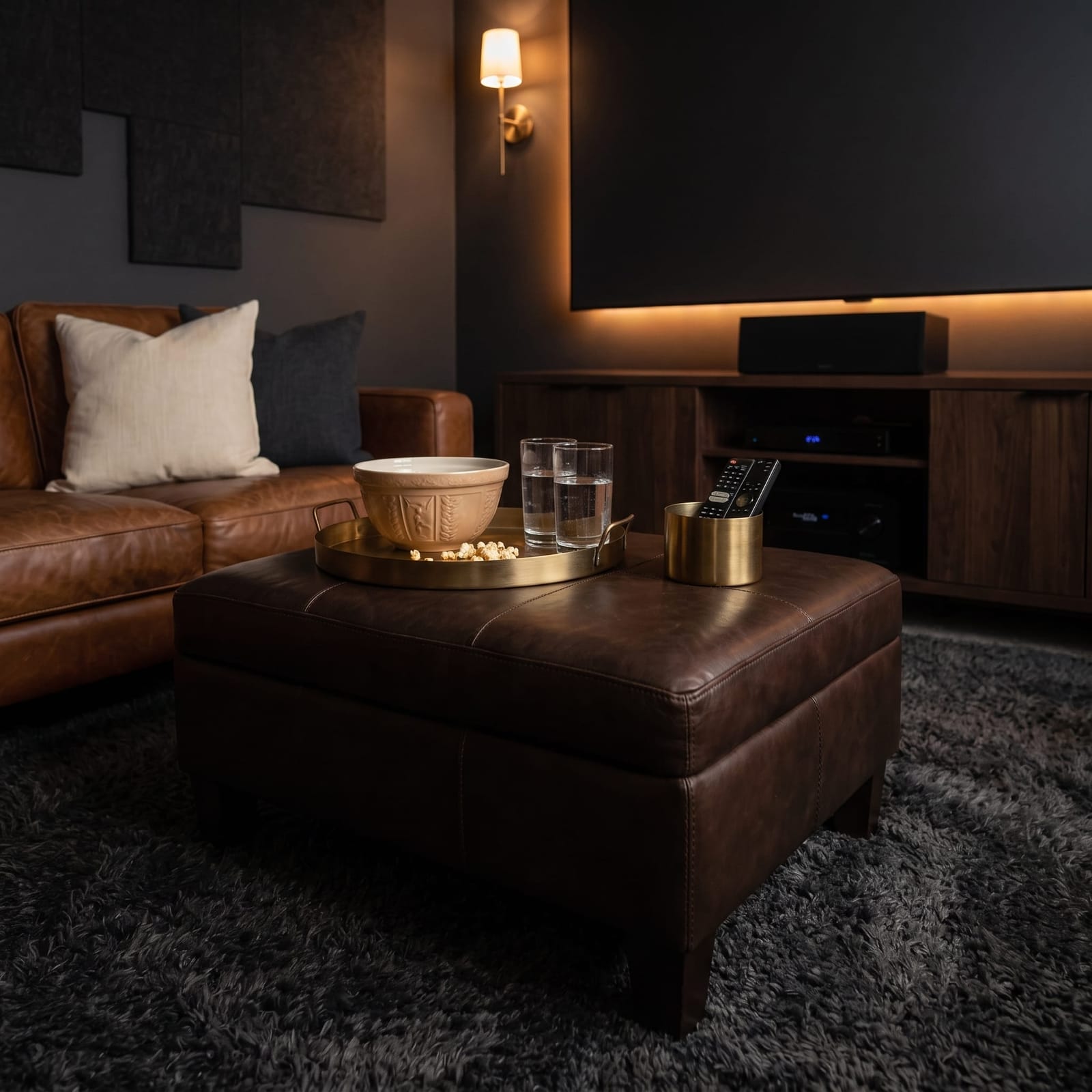
Square Chestnut Leather Ottoman
35-inch square genuine leather upholstered ottoman in chestnut brown.
A square leather ottoman serves as a cushioned coffee table, keeping the central floor space soft and kid-safe.
Frequently Asked Questions
Do acoustic panels soundproof a media room?
No. Acoustic felt panels absorb sound reflections inside the room, which can reduce flutter echo and may help dialogue and music sound cleaner. They do not block sound from traveling through walls, floors, or ceilings. Soundproofing is a structural construction issue involving mass, decoupling, and sealed air gaps — a different problem entirely from internal sound quality.
What color walls are best for a dark media room?
Deep charcoal, slate, and dark graphite in a matte or flat finish tend to work best. They absorb reflected screen light without pushing the room toward a theatrical black-box look. Warm charcoals — those with subtle brown or taupe undertones — prevent the room from feeling cold when the television is off. Avoid pure matte black unless the room is very large, as it can feel oppressive in smaller spaces.
How do you keep a dark media room from feeling cold?
Material warmth, not wall color, is the answer. Cognac or warm brown leather, walnut wood, satin brass accents, and warm-toned textiles like oatmeal linen and wool throws introduce organic warmth that reads against the dark walls. Every light source should be in the 2700K to 3000K range. Avoid cool metals like chrome or polished nickel, cool-white LEDs, and bright white textiles — all of which fight the warm palette.
Is cognac leather a good choice for a media room?
It is one of the strongest choices. Cognac leather provides the chromatic warmth that dark-walled rooms need, is relatively easy to wipe down, and can age with a patina that deepens its character over time. Full-grain leather is more durable than bonded or faux alternatives and develops surface depth rather than deteriorating. The tradeoff is that leather can feel cool on first contact in winter — a draped throw at the armrest solves this without compromising the material palette.
What lighting works best around a television?
Avoid overhead fixtures and recessed ceiling downlights, which create screen reflections and harsh shadows. Instead, use wall sconces with opaque or fabric shades on either side of the screen, casting light up and down rather than forward. A warm LED strip behind the television — set to 2700K to 3000K — can reduce the harsh contrast between a bright screen and a dark wall. All sources should be dimmable and set to a warm color temperature.
How do you hide media equipment without overheating it?
Use a media console with closed side cabinets for visible storage and an open or slatted rear section for ventilation. Leave a few inches of clearance around any equipment that generates heat — receivers, amplifiers, and gaming consoles all need airflow. An open back panel or ventilation slats in the cabinet allow warm air to rise and escape. Route cables through the wall or use a paintable cord cover to keep the composition clean.
Do rugs help a media room feel quieter?
They can contribute modestly. A thick rug — especially a high-pile shag — adds a soft, absorptive surface to the floor that can reduce some reflected sound in a hard-floored room. The effect is not dramatic on its own, but combined with upholstered seating, felt wall panels, and soft textiles, it contributes to the overall sense of quiet and enclosure that makes a media room feel immersive rather than echoey.
How often should you condition a leather sectional?
Every six to twelve months, depending on the climate and how dry the room gets. Use a conditioner formulated specifically for full-grain leather. Apply with a soft cloth, allow it to absorb, and buff gently. This keeps the surface supple and helps prevent cracking, especially in rooms with low humidity or central heating. Routine care extends the life of the leather and supports the gradual development of a natural patina rather than premature drying.