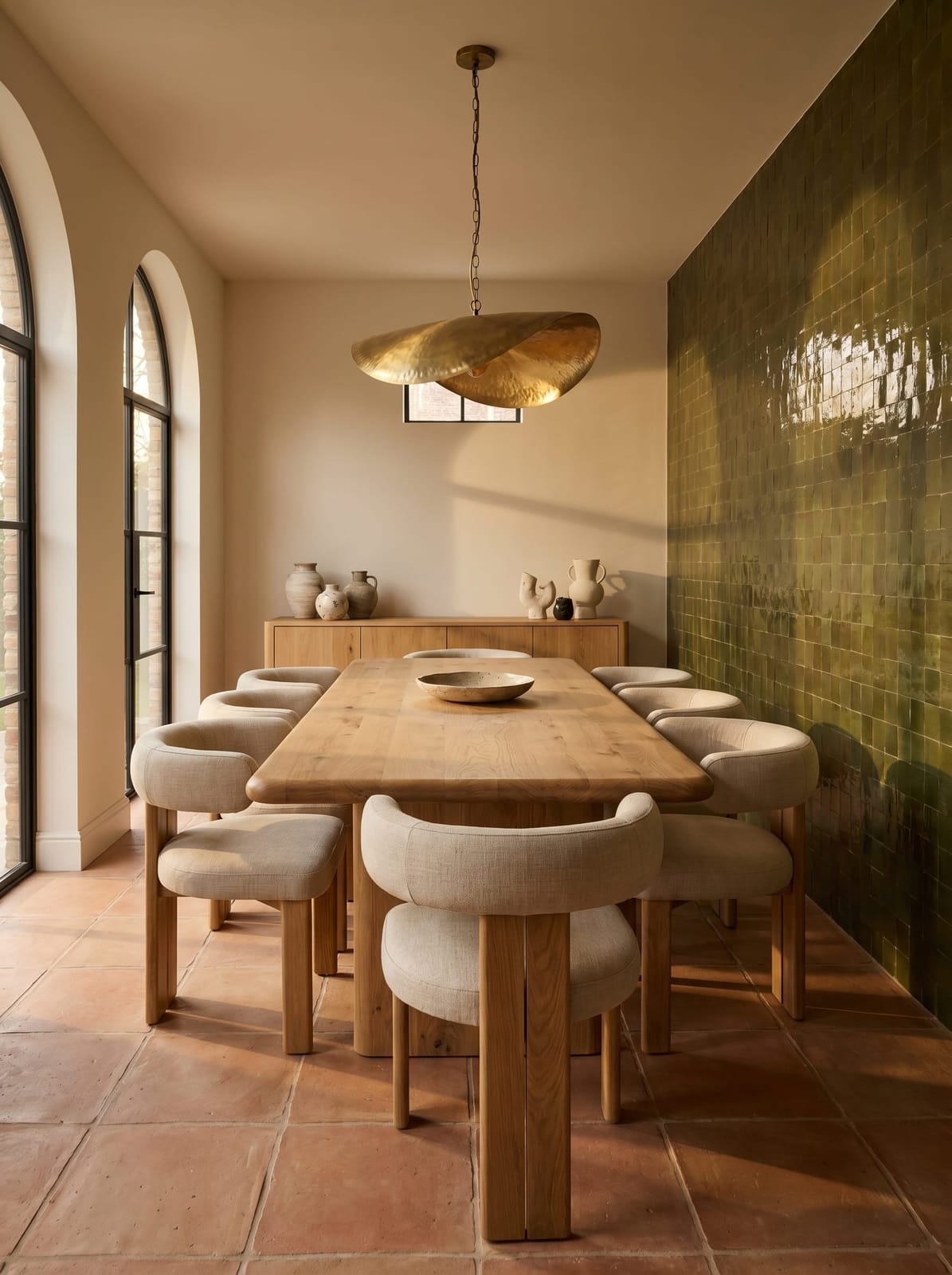
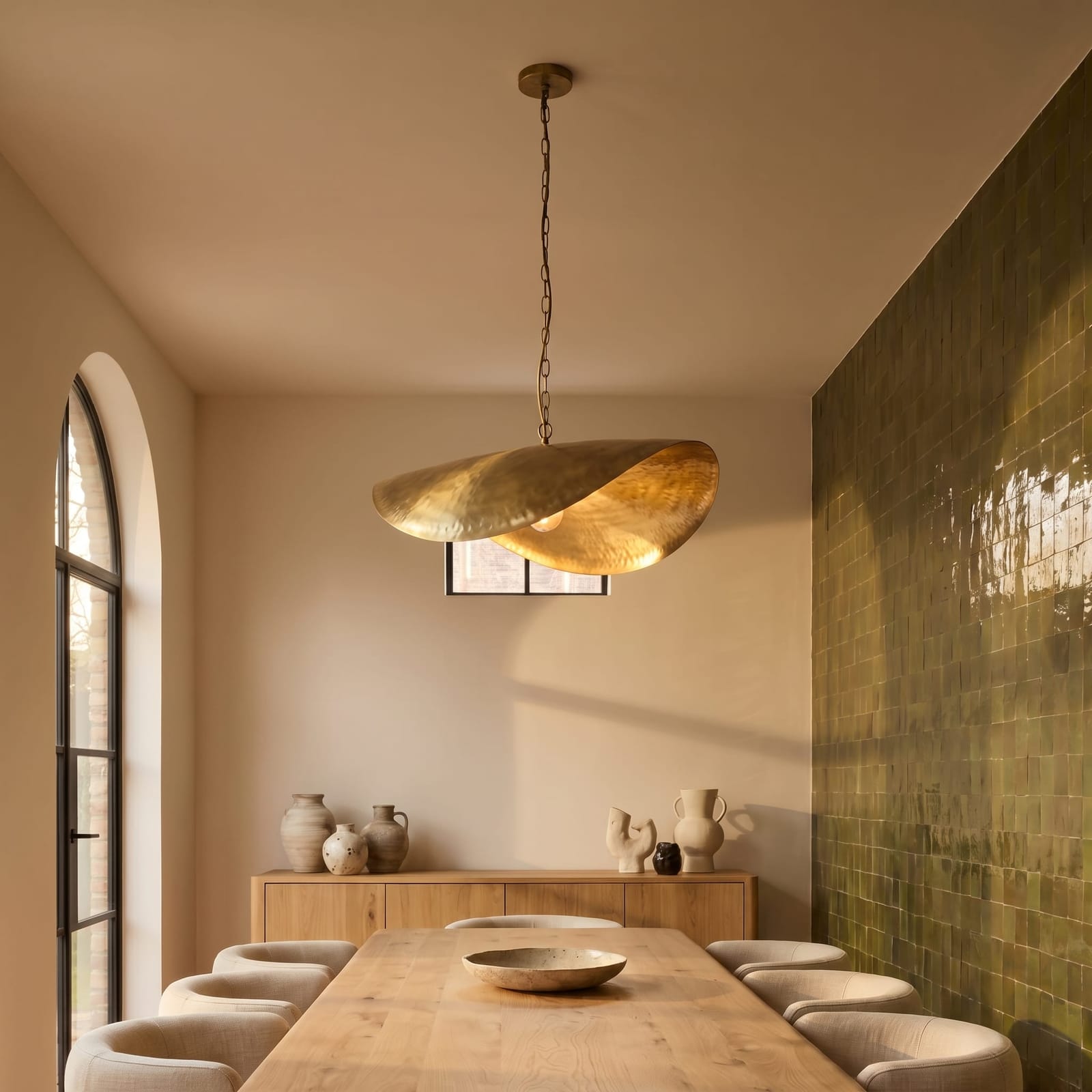
There is a particular kind of dining room that refuses to perform the role of occasional showpiece—the room used twice a year, dressed in its finest linen, then sealed behind closed doors until the next holiday. It is not that room. The olive zellige oak dining room is built for the Thursday-night pasta, the Sunday-morning coffee that stretches into lunch, the impromptu gathering that begins with a bottle of wine and ends three hours later in candlelight. It is a room where every surface invites touch, where the materials themselves set the mood, and where the architecture of the table—its weight, its curve, its grain—signals that this is a place worth lingering.
The design strategy is deceptively simple: clad the back wall in glossy, hand-glazed Moroccan zellige tiles the color of crushed olive leaves. Lay the floor in handmade Mexican Saltillo clay. Place a sculptural oak table at the center, surround it with barrel-back linen chairs, and hang a single, wavy brass pendant directly above. The room needs nothing else. The materials do the decorating.
The Glossy Hearth: Olive Green Zellige
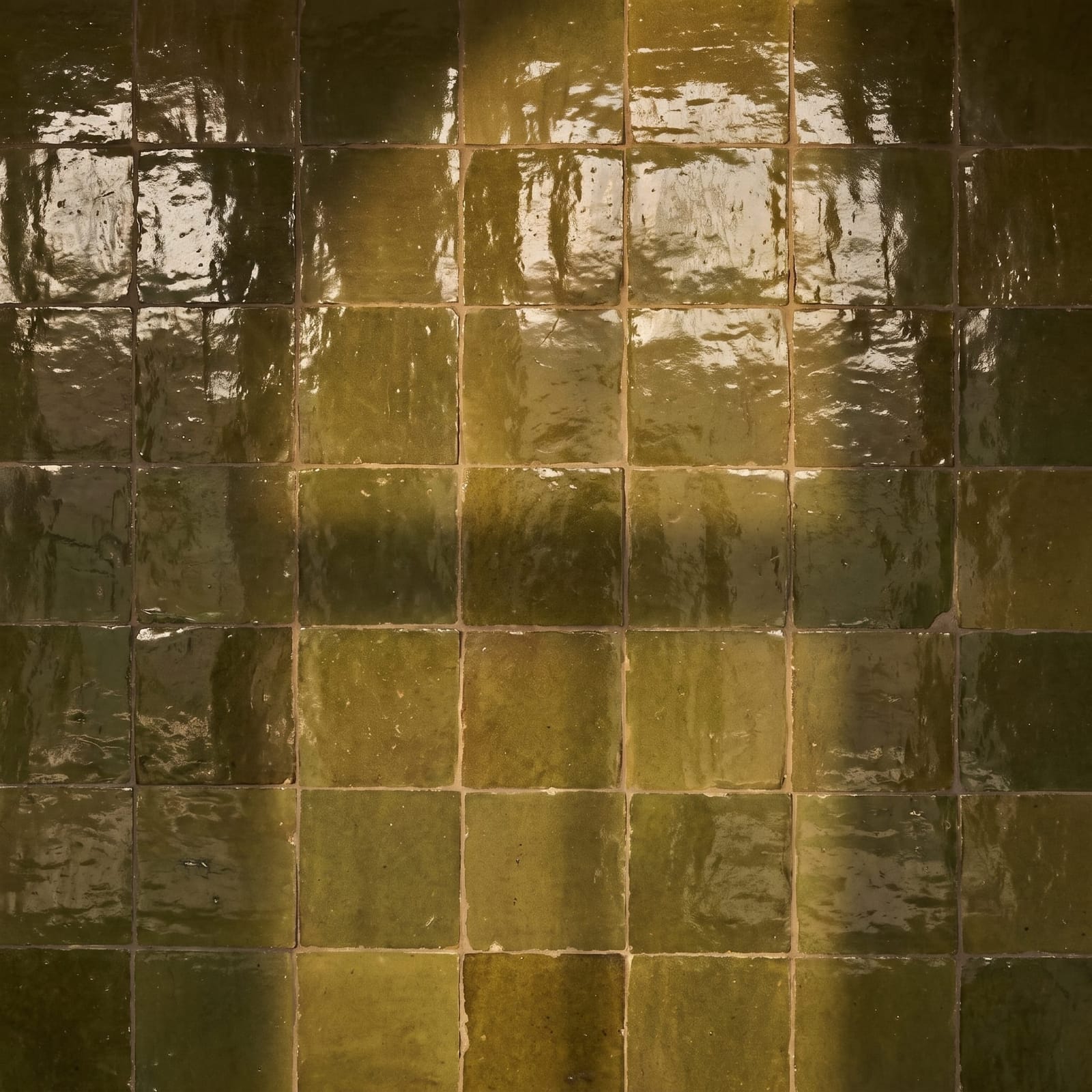
The visual anchor of the room is the accent wall clad in Olive Zellige 4”x4” Handmade Clay Tile from Riad Tile. Zellige—from the Arabic word for “polished stone”—is a form of hand-cut mosaic tile whose origins trace to tenth-century Fez, Morocco, where master artisans in the ancient medina developed the craft of shaping, glazing, and chiseling individual tesserae from slabs of local clay. The technique has been passed down through generations of maâlems (master tilemakers), and the process remains essentially unchanged: raw clay is mixed with water, pressed into molds, dried, dipped in mineral-rich glazes, and fired in wood-burning kilns.
Because every tile is shaped, cut, and glazed by hand, no two pieces are identical. Each four-by-four-inch square features small imperfections—undulating surfaces, pitted glazes, slightly chipped edges, and variation in olive green tones from light moss to deep forest. These variations are not flaws; they are the signature of a material that has been alive in the kiln. The glossy surface catches daylight at slightly different angles, scattering reflections across the wall rather than bouncing them in a single flat plane. During the day, sunlight streaming through the window bathes the dining room in a soft, shimmering warmth. In the evening, the low glow of the pendant light catches the undulated tiles, reflecting cozy, sparkling highlights across the wall—a quiet firework of texture.
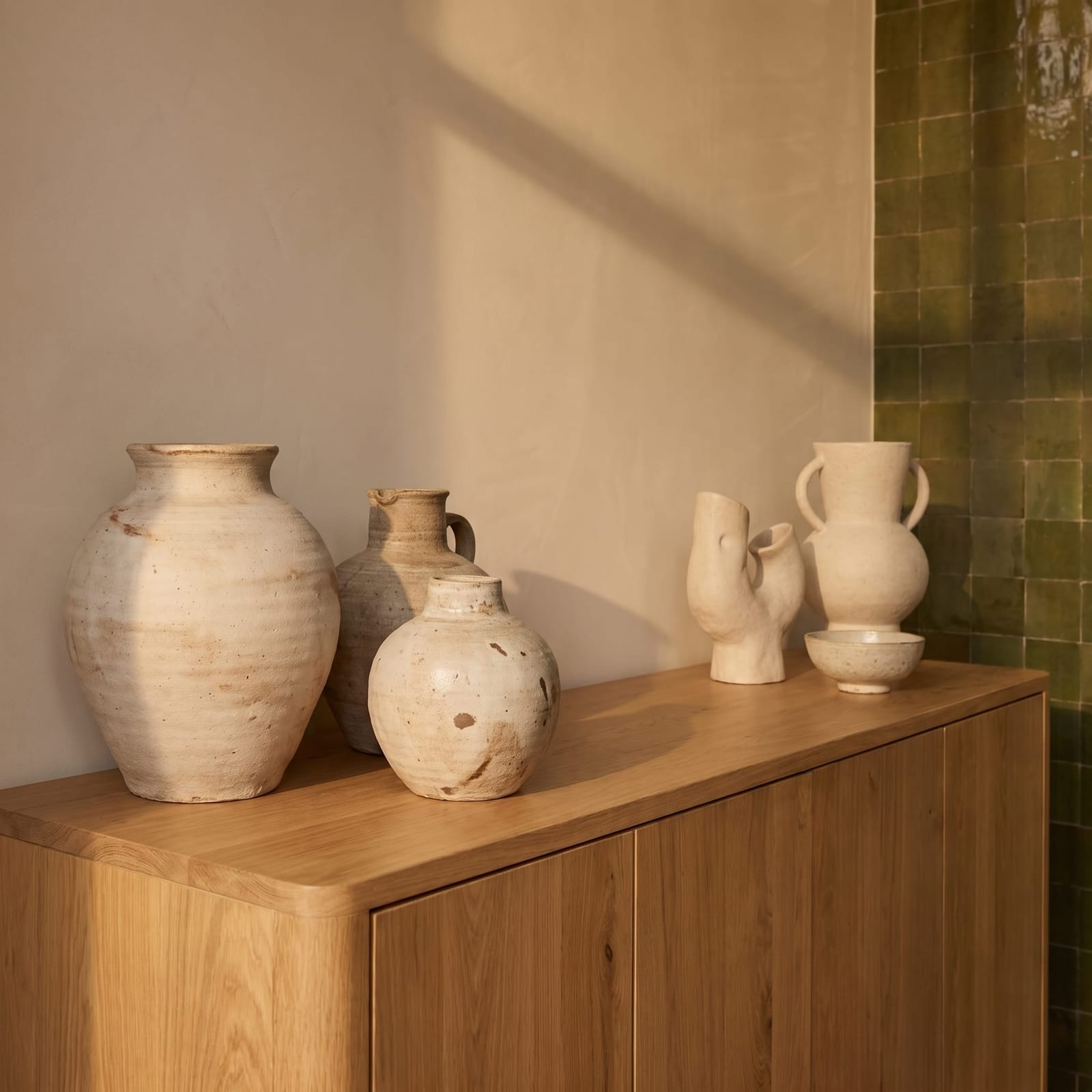
Placed against this green clay backdrop, the Terra 72” Natural White Oak Solid Wood Credenza from Crate & Barrel stands out with its clean, waterfall frame. Measuring seventy-two inches wide by eighteen inches deep and thirty inches tall, the credenza is crafted from FSC-certified solid white oak with a natural finish applied entirely by hand—each piece hand-sanded, hand-joined, and hand-finished. The waterfall silhouette means the oak panels curve seamlessly from the top surface down to the floor without a visible joint, creating a monolithic block of natural grain. The flat-front doors feature integrated finger grooves rather than hardware, keeping the facade architecturally clean, while the ivory ceruse finish settles into the grain, highlighting the oak’s natural cathedral patterns. Inside, adjustable shelves and cord-management cutouts make the piece as functional for hiding a turntable as for stacking dinner plates.
Resting on the credenza, the Mable 3 Piece Cream Ceramic Table Vase Set from AllModern adds a quiet trio of matte, sandy earthenware shapes that stand out against the glossy green tile background. Standing up to seven and a half inches tall, the three round vessels—each a slightly different proportion—are fitted with felt stoppers at the base to protect the oak surface. Grouped off-center, they create an asymmetrical still life that softens the credenza’s geometric lines.
The Dining Centerpiece: The Virage Table
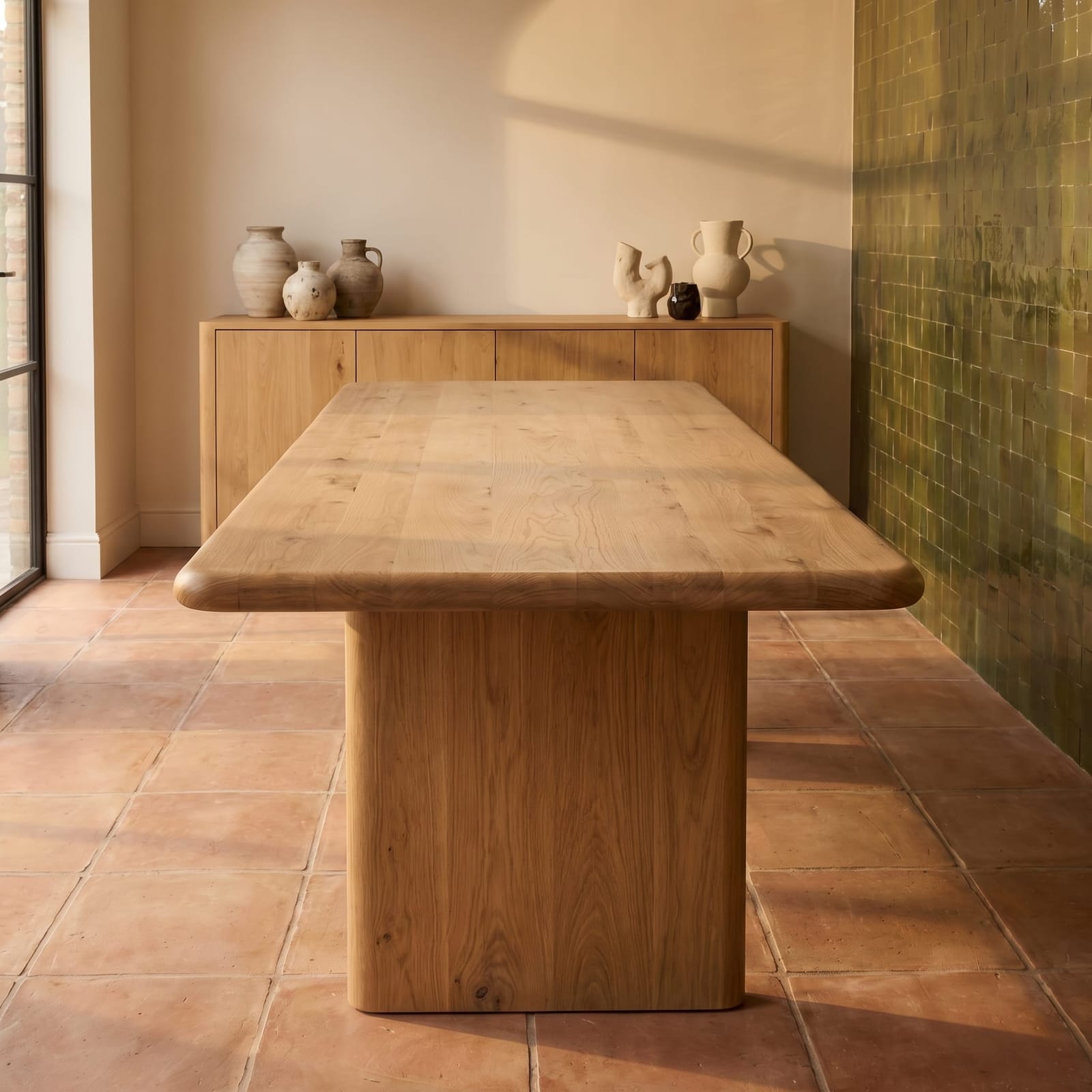
In the center of the room stands the Virage 96” Curved Natural Oak Wood Dining Table from Crate & Barrel. Measuring ninety-six inches wide, forty-four inches deep, and thirty inches tall, the table seats six to eight diners comfortably. It is constructed from FSC-certified solid oak, oak veneer, and kiln-dried engineered wood—a layered construction that prevents warping while preserving the visual warmth and tactile honesty of real wood grain.
The Virage’s silhouette is defined by curves. The tabletop features rounded bullnose corners that form a sleek pill or capsule shape, eliminating sharp edges that would interrupt the room’s organic flow. Below, rather than standard square legs, the table is supported by opposing barrel-curved supports—chunky, semicircular oak pillars that create a bold sculptural presence. These half-round legs give the table a grounded, architectural weight, anchoring the center of the room with a sense of permanence while providing generous leg room for end-of-table seating. The natural oak finish is enhanced with a light cerusing that settles into the grain, giving the surface a soft, silvered depth that reads warmer in natural light and cooler under evening fixtures.
Resting in the center of the oak tabletop is the Handmade White Ceramic Centerpiece Bowl by Spain-based pottery studio PotteryProps on Etsy. Measuring twenty-three centimeters in diameter and seventeen centimeters tall, the footed stoneware bowl is elevated on a sculptural pedestal base that lifts it above the table surface, creating visual hierarchy where a flat dish would read as an afterthought. The hand-thrown body features an irregular, organic rim and a porous, sandy white glaze with visible brushstrokes—bringing a wabi-sabi element of handmade craft to the precise geometry of the oak table. It is a bowl made for seasonal fruit, for a handful of garden stems, for the kind of casual, unfussy abundance that defines a table built for daily life.
A Gathering of Textures: The Upholstered Dining Chairs
Surrounding the oak dining table are the Bethea Upholstered Dining Chairs in Effie Linen from Joss & Main. These chairs are selected for their combination of geometric structure and plush, lingering comfort.
Each Bethea chair stands thirty-three and a half inches tall, with a seat width of seventeen inches and a seat height of twenty and a half inches—proportions that align the dining surface comfortably at elbow level with the thirty-inch-tall Virage table. The frame is constructed from kiln-dried solid and manufactured wood, ensuring dimensional stability through seasons of humidity change. The thick natural oak cylinder legs run flush with the outer frame, their warm honey tone echoing the barrel-curved pillars of the Virage table and the waterfall edges of the Terra credenza—a visual thread that ties the room’s wood elements into a single material family.
The upholstery is a neutral, oatmeal-colored performance linen—stain-resistant, cleanable with a dry solvent-based treatment, and engineered to withstand the realities of daily use with a weight capacity of two hundred and fifty pounds. The barrel-back shape cradles the body in a gentle curve, providing ergonomic support that encourages guests to sit longer, lean back, and linger over a second glass. Against the hard, reflective surfaces of the zellige tiles and terracotta floors, the soft linen upholstery introduces a tactile counterpoint—a layer of Scandinavian quiet in an otherwise Mediterranean room.
Underfoot Character: Saltillo Terracotta Floor Tiles
The room is grounded by square GBI Tile & Stone Saltillo Red 12” x 12” Natural Ceramic Floor Tiles from Lowe’s. These are not machine-extruded reproductions. They are handmade clay tiles that have been produced in Mexico for over fifty years using traditional methods: natural clay is shaped by hand, air-dried in the open—not kiln-fired like modern ceramics—and left to develop the organic variations in tone and texture that no factory process can replicate.
Each tile measures twelve inches square and fourteen millimeters thick—a substantial weight underfoot that you can feel through the soles of your shoes. The coverage is point-nine-one square feet per piece, and the rustic, unpolished matte finish features organic variations in orange-red and gold tones, with occasional mineral markings and clay inclusions that map the geology of the riverbed where the clay was sourced.
The Saltillo tiles introduce an earthy foundation that anchors the room to the ground. The warm red clay tones pair naturally with the white oak furniture above, while the grid layout of the twelve-inch squares provides a geometric counterpoint to the organic contours of the curved table and barrel-back chairs. The raw, textured finish underfoot establishes a relaxed, lived-in mood—signaling that this is a room built not for careful occasions but for active daily life, for bare feet on warm clay, for the kind of casual hospitality where a dropped crumb is a sign that the meal was good.
Sculptural Illumination: The Lilypad Pendant Light
Hanging directly above the Virage dining table is the Lilypad Metal and Glass Pendant Light by Brigette Romanek from Crate & Barrel. This sculptural light fixture serves as the room’s crowning focal point—a piece designed not merely to illuminate but to float.
Romanek is an award-winning Los Angeles-based interior designer and founder of Romanek Design Studio, whose client roster reads like a film credit scroll: Beyoncé and Jay-Z, Gwyneth Paltrow, Demi Moore, Laura Dern, Kelly Rowland. She has been consistently recognized on Architectural Digest’s AD100 list and was named an Elle Decor Titan in 2024. Her first book, Livable Luxe, published in 2023 with a foreword by Gwyneth Paltrow, articulates a design philosophy rooted in what she calls “exhale” spaces—rooms that make you pause and breathe the moment you enter.
The Lilypad pendant is a direct expression of that philosophy. Its hand-sculpted cast aluminum shade, finished in burnished brass, mimics the organic, wavy form of a lilypad floating on still water. The shade’s undulating edge introduces a soft, fluid contour that breaks up the straight lines of the walls and ceiling, while its hand-textured surface catches light from multiple angles—glowing like a golden sculpture during the day, casting a warm, pooled ambient light down onto the dining table at night. At the center sits a milk glass globe with an acid-etched interior that filters light warmly and diffusely, eliminating harsh shadows. The fixture accommodates bulbs up to forty watts incandescent or four watts LED, and includes multiple rod lengths—eighteen, twelve, six, and three inches—allowing precise height adjustment for ceilings of varying proportions. It is compatible with a dimmer switch, which means the room’s atmosphere can shift from bright midday lunch to intimate candlelit dinner with a single gesture.
Earthy Modern Hospitality
The success of the olive zellige oak dining room relies on a careful equilibrium of material opposites. The high-gloss zellige tiles and burnished brass pendant provide the room’s shiny, reflecting highlights—surfaces that catch the sun, scatter ambient light, and shimmer with warmth. These glossy elements are counterbalanced by the matte, absorbing textures: the cerused white oak of the credenza and table, the air-dried Saltillo floor tiles, the performance linen chairs, and the sandy, porous ceramic pottery. Neither family of material dominates. The glossy surfaces energize; the matte surfaces calm. The result is a room that feels simultaneously vibrant and restful.
The color palette operates within a tight, warm range: glossy olive green, warm natural oak, sandy cream, soft oatmeal, and rustic brick-red. There is no cool blue, no clinical white, no chrome. Every surface reads as warm, as earthen, as alive. The room’s geometry follows the same principle: the curved table legs answer the barrel-back chairs; the waterfall credenza edges echo the organic rim of the centerpiece bowl; the wavy brass pendant replies to the undulating zellige wall below it. Straight lines exist—the tile grid, the credenza front, the table edge—but they are always softened by a curve nearby. The effect is a room that breathes.
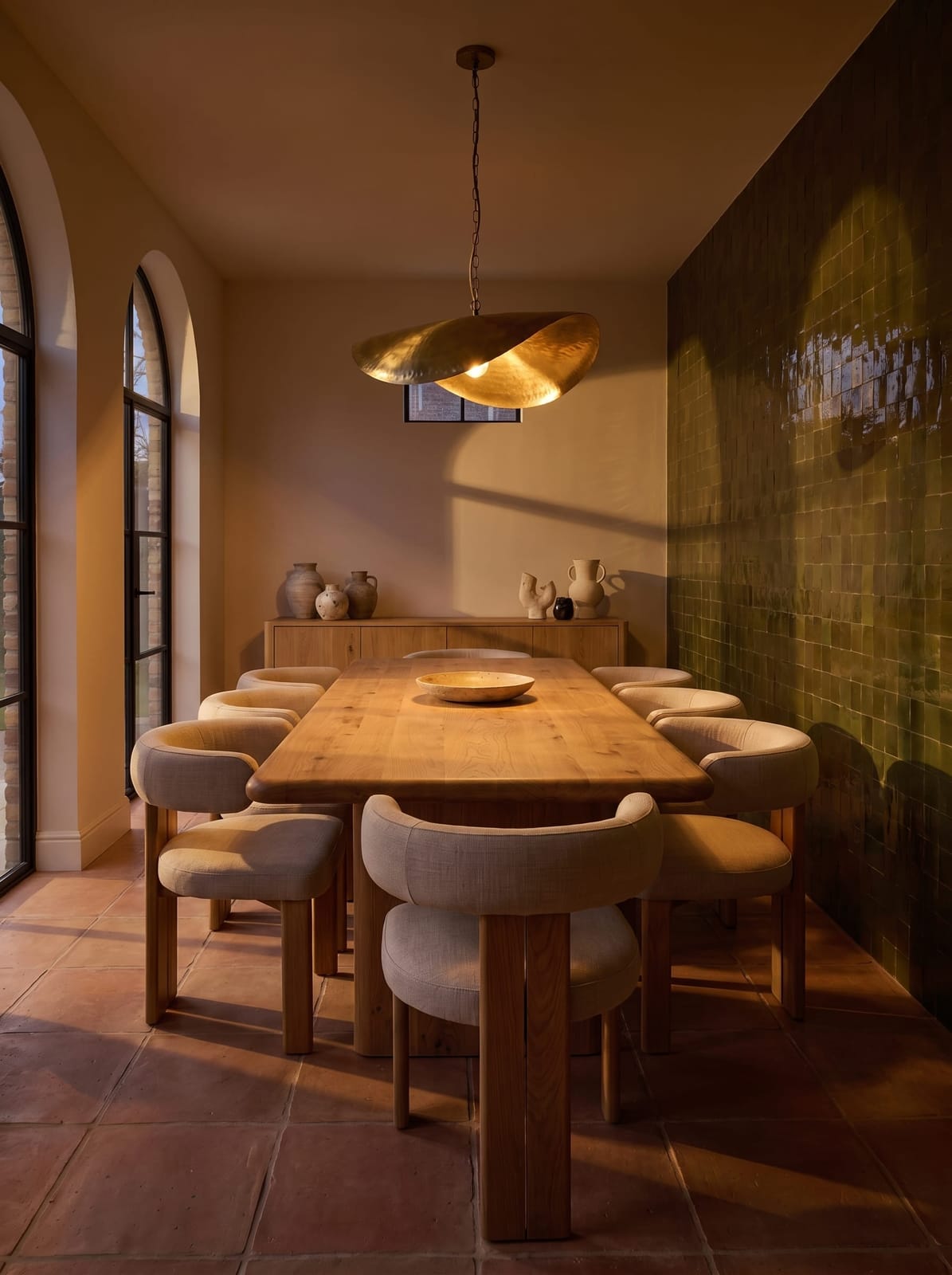
Dusk at the Hearth
As afternoon light thins and the sun drops below the window frame, the dining room undergoes its daily transformation. The olive zellige wall, bright and shimmering at midday, deepens to a dark, saturated moss. Each tile’s glaze, which scattered light in a dozen directions an hour ago, now catches the warm amber glow of the pendant in concentrated points—tiny sparks embedded in the clay, as though the wall itself were gently lit from within.
The Virage table’s cerused oak surface shifts from its daytime silver-gold to a deep, honeyed warmth. The grain lines, highlighted by the ceruse, stand out in sharper relief under the low, directional light of the Lilypad pendant. The milk glass globe casts a soft, circular pool of illumination on the tabletop—bright enough to read a menu, warm enough to make faces across the table look candlelit. The burnished brass shade above throws a faint golden halo on the ceiling, a secondary glow that lifts the room’s perceived height.
The barrel-back chairs, their oatmeal linen now catching threads of amber light along their curved edges, look softer, more inviting. The Saltillo tiles underfoot, which read as bright terra-rosa at noon, deepen to a dark, saturated brick—the color of old clay pots left in the sun for decades. The cream ceramic vases on the credenza absorb the ambient light, softening from bright ivory to a warm, candlelit parchment. The footed centerpiece bowl, its irregular rim catching a thin line of gold from the pendant above, glows quietly at the center of the table.
It is the hour when the room feels most itself—not a showcase, not a stage, but a hearth. A room built for the weight of a heavy oak table, for the warmth of clay underfoot, for the quiet shimmer of hand-glazed tiles catching the last light of the day. A room where the materials age honestly, where the brass will patinate and the oak will deepen and the Saltillo tiles will wear smooth along the paths most traveled. A room that does not ask to be admired. It asks you to sit down.
Sources & Details
Explore the complete source list for this room, from the anchor pieces to the smaller finishing details.
Source note: Some links in this source list may be affiliate links, which means we may earn a commission at no extra cost to you. As an Amazon Associate I earn from qualifying purchases.
Olive Green Glazed Zellige Tile
4x4 inch square glazed moroccan zellige terracotta wall tile in glossy olive green with natural shade variations.
The industry-standard square olive green glazed zellige tile, perfectly matching the color range, high gloss, and pits of the accent tile wall.
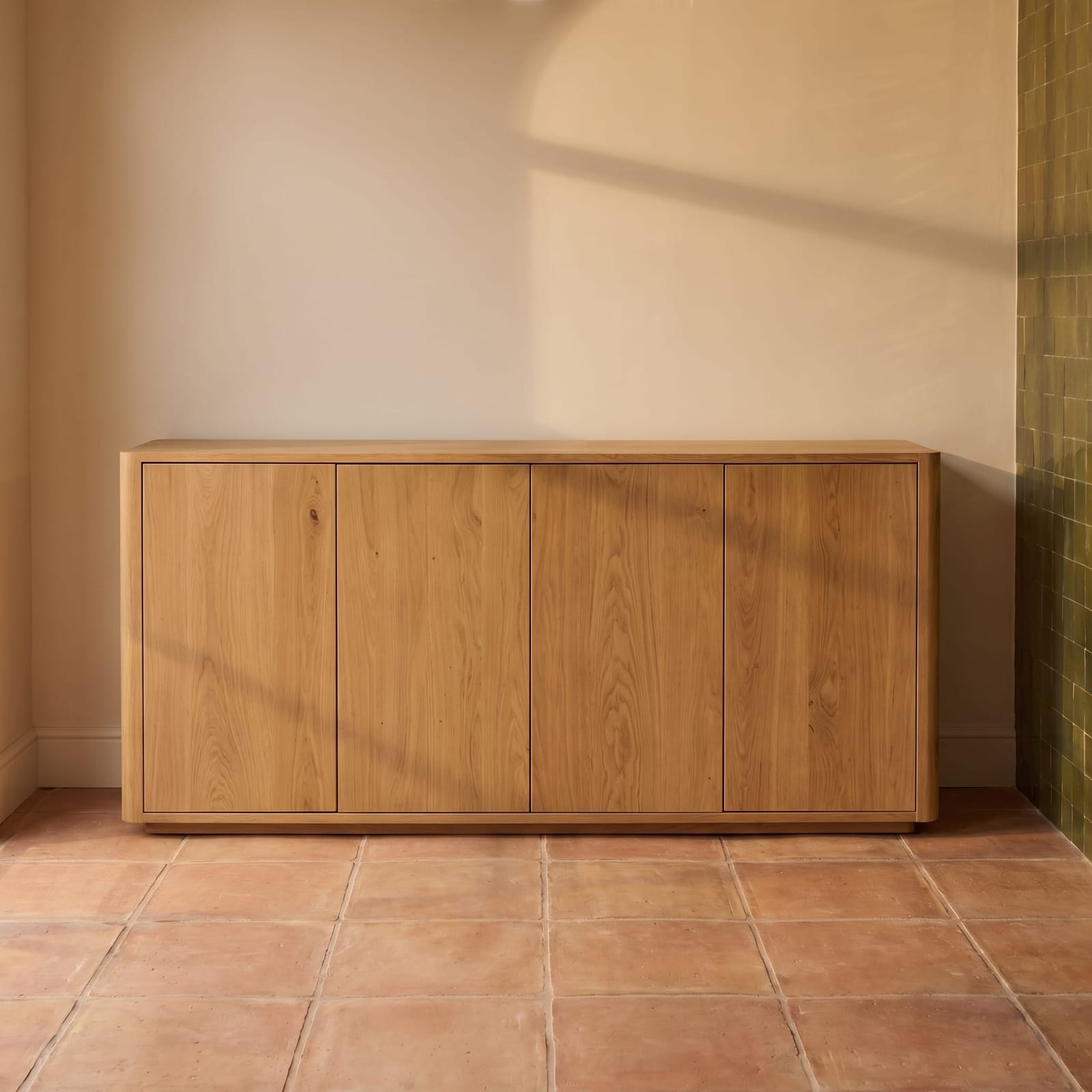
Waterfall Natural Oak Sideboard Credenza
Modern natural white oak 4-door sideboard credenza with rounded waterfall frame and recessed finger pulls.
The rounded waterfall oak frame, smooth oak grain panels, and clean 4-door handle-less styling match the sideboard on the back wall flawlessly.
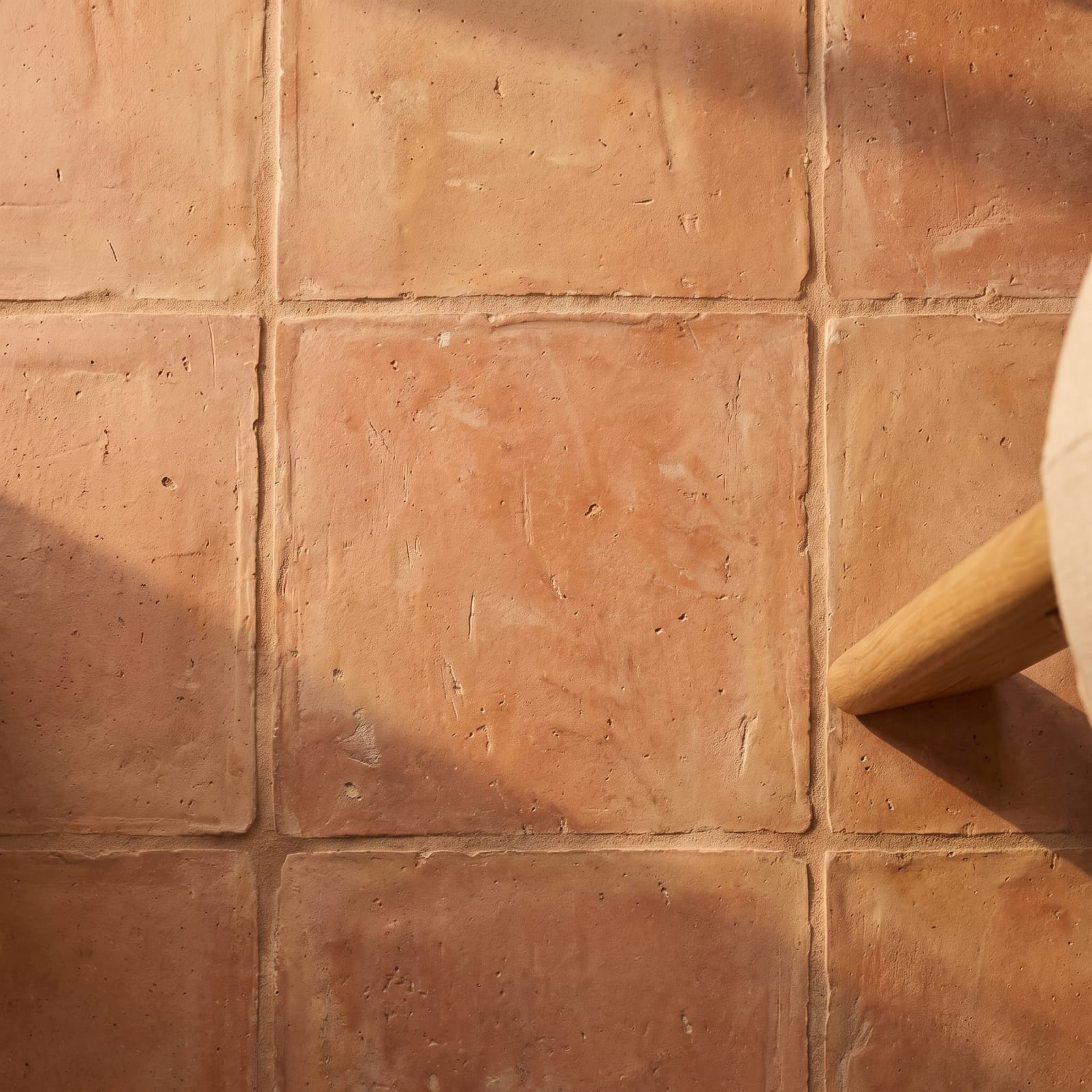
Saltillo Red Ceramic Floor Tile
Authentic square 12x12 inch red/orange clay Mexican saltillo terracotta floor tile.
Represents an authentic Mexican hand-made terracotta floor tile with organic color shifts, matching the rustic clay flooring in the dining room.
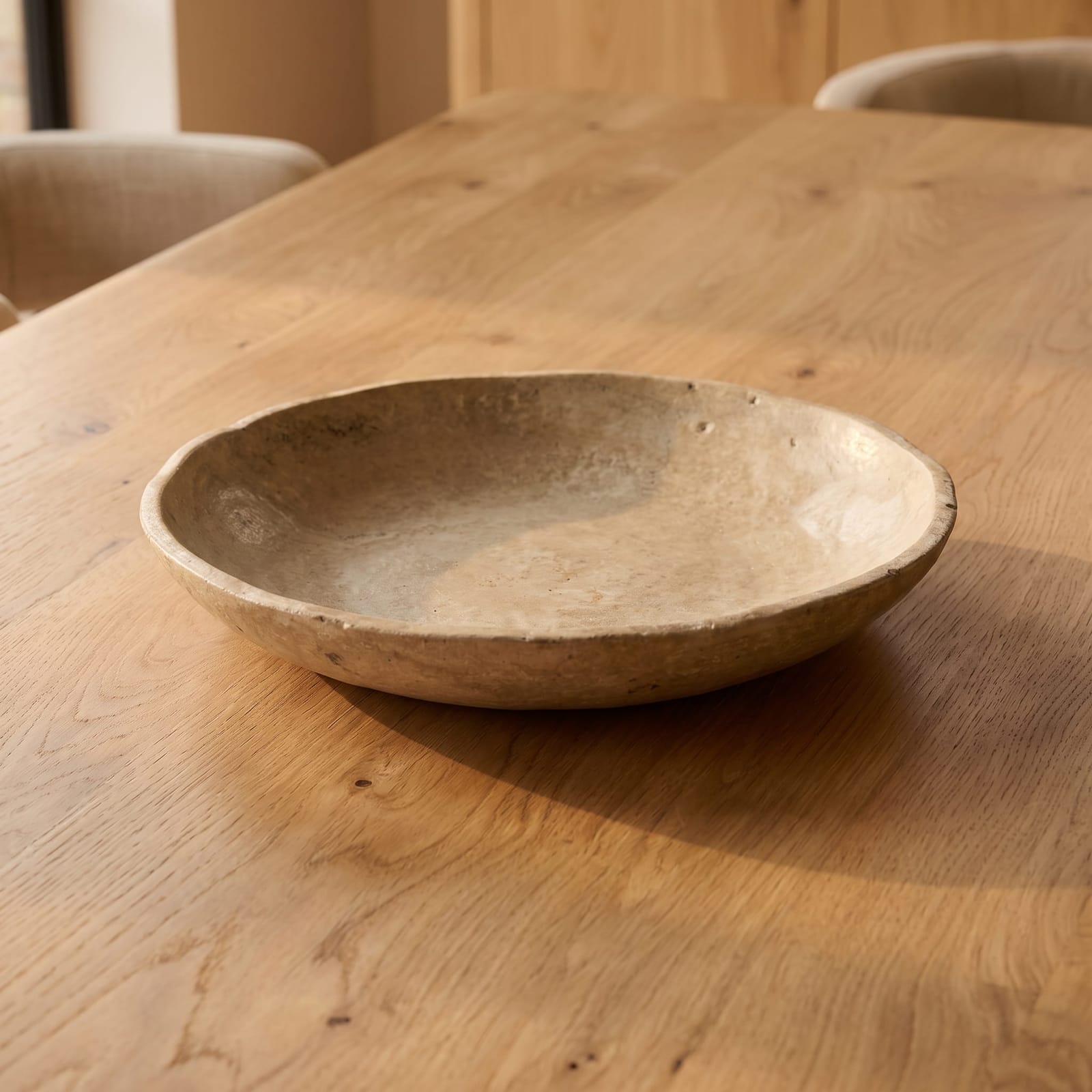
Handcrafted Footed Ceramic Bowl
Organic handcrafted matte white/beige ceramic centerpiece bowl with an irregular footed base and brushstroke glazing.
Perfect match for the organic rim line, porous sandy ceramic finish, matte white glaze, and elevated footed base of the centerpiece bowl.
Frequently Asked Questions
Why is an olive green zellige tile wall an effective backdrop for a dining room?
A glossy olive green zellige wall introduces organic texture, depth, and character that paint or wallpaper cannot achieve. Hand-cut and hand-glazed Moroccan terracotta zellige tiles feature undulated surfaces and subtle shade variations. When light hits the glossy finish, it reflects in multiple directions, scattering a shimmering, dynamic glow throughout the dining space. The earthy olive green hue grounds the room, providing a rich, natural backdrop that contrasts beautifully with natural white oak wood furniture and warm clay tones.
What are the benefits of the Lilypad pendant light designed by Brigette Romanek?
The Lilypad pendant light represents a sculptural statement that elevates the dining room's visual rhythm. Designed by Brigette Romanek for Crate & Barrel, it features a hand-sculpted cast aluminum shade with a burnished brass finish and a milk glass globe with an acid-etched interior for soft, diffused light. The wavy, organic silhouette mimics a floating lilypad, introducing fluid curves that soften the rectilinear lines of the dining table and credenza. The textured brass canopy catches both natural and electric light, throwing a warm glow down onto the table surface.
How does the Virage dining table legs influence the room's aesthetic?
The Virage curved natural oak wood dining table features chunky, barrel-curved supports rather than standard straight legs. These sculptural half-round pillars anchor the table frame with a heavy, grounded presence and visual solidity. The table's pill-shaped bullnose edges and curved legs soften the architectural layout, creating a flow that encourages movement around the dining space while showcasing the beauty of FSC-certified natural white oak grain with light cerusing that highlights the grain patterns.
Why is Joss & Main's Bethea chair in Effie Linen suitable for a modern organic dining space?
The Bethea dining chair features a curved barrel backrest, a circular padded seat with a height of twenty and a half inches, and thick natural oak cylinder legs flush with the frame. Upholstered in Effie Linen performance fabric, it offers a soft, oatmeal-toned tactile contrast to the hard zellige tiles and timber table. Performance linen is stain-resistant and durable, making it functional for daily dining. The barrel-back shape cradles the body, supporting up to two hundred and fifty pounds, encouraging guests to linger at the table for long conversations.
What makes the Terra credenza by Crate & Barrel a premium storage solution?
The Terra credenza is constructed from FSC-certified solid white oak with a natural finish applied by hand, featuring a waterfall silhouette with rounded corners that curve seamlessly down to the floor. Measuring seventy-two inches wide by eighteen inches deep, the handle-less flat-front doors with integrated finger grooves keep the facade clean, showcasing the vertical wood grain enhanced by ivory ceruse. Its interior features adjustable shelves and cord-management cutouts, making it highly versatile for storing dinnerware or hiding media equipment.
What is Saltillo terracotta floor tile, and how should it be maintained?
Saltillo tile is a handmade clay floor tile traditionally crafted in Mexico for over fifty years. The tiles are shaped from natural clay, air-dried rather than kiln-dried like modern ceramics, giving each tile unique orange-red tones, mineral markings, and organic textures. At fourteen millimeters thick, they provide substantial weight and warmth underfoot. Because raw clay is highly porous, Saltillo tiles must be thoroughly sealed with a penetrating sealer to prevent staining and water absorption. Regular cleaning should be done with a pH-neutral cleaner, avoiding acidic detergents.
How does a footed centerpiece bowl elevate dining table styling?
A raised, footed centerpiece bowl—like the handmade white ceramic bowl by PotteryProps—creates height and visual hierarchy on the tabletop. Measuring twenty-three centimeters in diameter and seventeen centimeters tall, the elevated base lifts decor off the table surface and prevents the setup from looking flat. The Spanish-made stoneware bowl features a porous, sandy clay texture and an irregular organic rim, bringing a wabi-sabi element of handmade imperfection that contrasts with the clean, smooth oak dining table.
How do you style a credenza with cream ceramic vases without cluttering it?
Styling a sideboard works best when using the 'rule of threes' or grouping items in varying heights. The Mable three-piece cream ceramic vase set by AllModern, standing up to seven and a half inches tall, provides a pre-curated trio of varying round shapes and heights with felt stoppers that protect the oak surface. Displaying them together off-center on the credenza creates a balanced, asymmetrical composition. The matte, sandy textured cream earthenware finish grounds the oak top, layering beautiful organic shapes without requiring multiple unrelated accessories.