A good appliance garage should do more than hide a coffee machine. The cabinet, doors and work surface need to support the way the appliances are actually used, refilled and cleaned.
An appliance garage coffee station works best when it is planned around the appliances first: their footprint, how they open, where they plug in and how much clear work surface the routine needs. Pocket or retracting doors can keep the opening clear while the station is in use, but the finished cabinet still has to be checked against the exact appliance and hardware specifications.
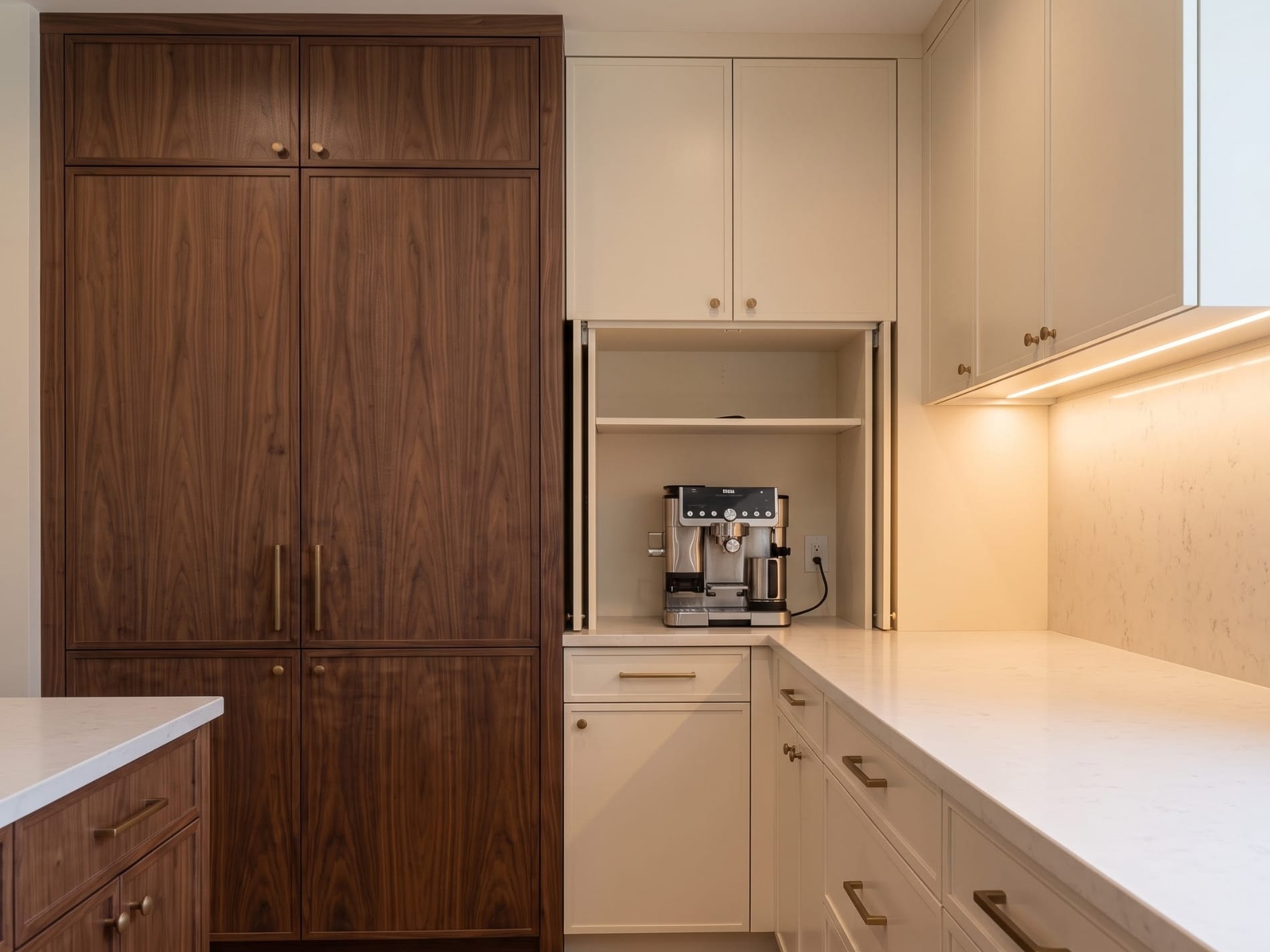
An appliance garage coffee station can take several architectural forms: a full-height oak cabinet wall, a narrower pocket-door garage, open work niches, or a traditional pantry wall. Each configuration requires distinct clearances and structural planning; the finished opening dimensions and operating requirements must always derive from the actual appliances and door hardware you intend to install.
Start with the appliances, not the cabinet
The easiest mistake is to design a beautiful empty niche and work out the appliances later. Reverse that order.
List what genuinely needs to stay in the station every day. In a dedicated daily morning setup, that typically centers on an espresso machine, a kettle, and a toaster. Those three objects do not use the counter in the same way. The espresso machine needs access around its controls and removable parts. A gooseneck kettle needs a clear lift path and somewhere convenient to refill it. A toaster is low, but its slot and controls still need to remain easy to reach.
That is why the useful measurement is not just the width of each appliance when it is sitting still. Check the complete operating envelope: the space needed to fill, open, remove, clean and move the appliance as the manufacturer intends.
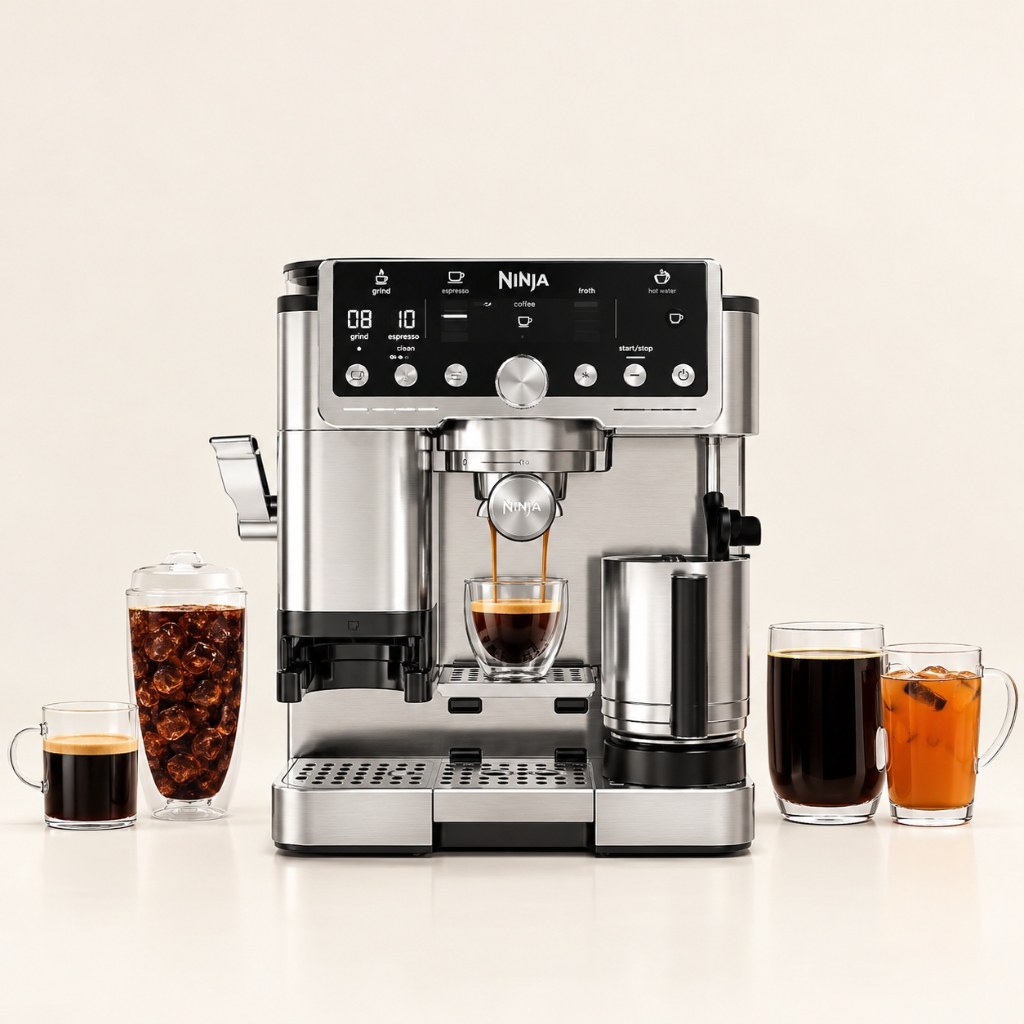
For the featured espresso machine, the exact source is the Ninja Luxe Café Pro Series ES701. Ninja describes the ES701 as a four-in-one espresso and coffee system with an integrated grinder and tamper, so it has a more complex working footprint than a small capsule machine. The point is not that every coffee station needs a machine like this; it is that the cabinet should be planned around the machine you actually own rather than an imagined “standard coffee maker.”
Open niche or concealed appliance garage?
An open niche is the simplest version of the idea. Nothing has to move before the kettle or toaster can be used, and the work surface stays visually connected to the room. The tradeoff is obvious: the appliances remain visible.
A concealed appliance garage changes that relationship. Pocket and slide-in systems are designed so the fronts can move out of the working area when open. Hardware makers such as Hawa and Blum build systems where the doors disappear into side pockets, leaving the cabinet interior accessible while the zone is in use.
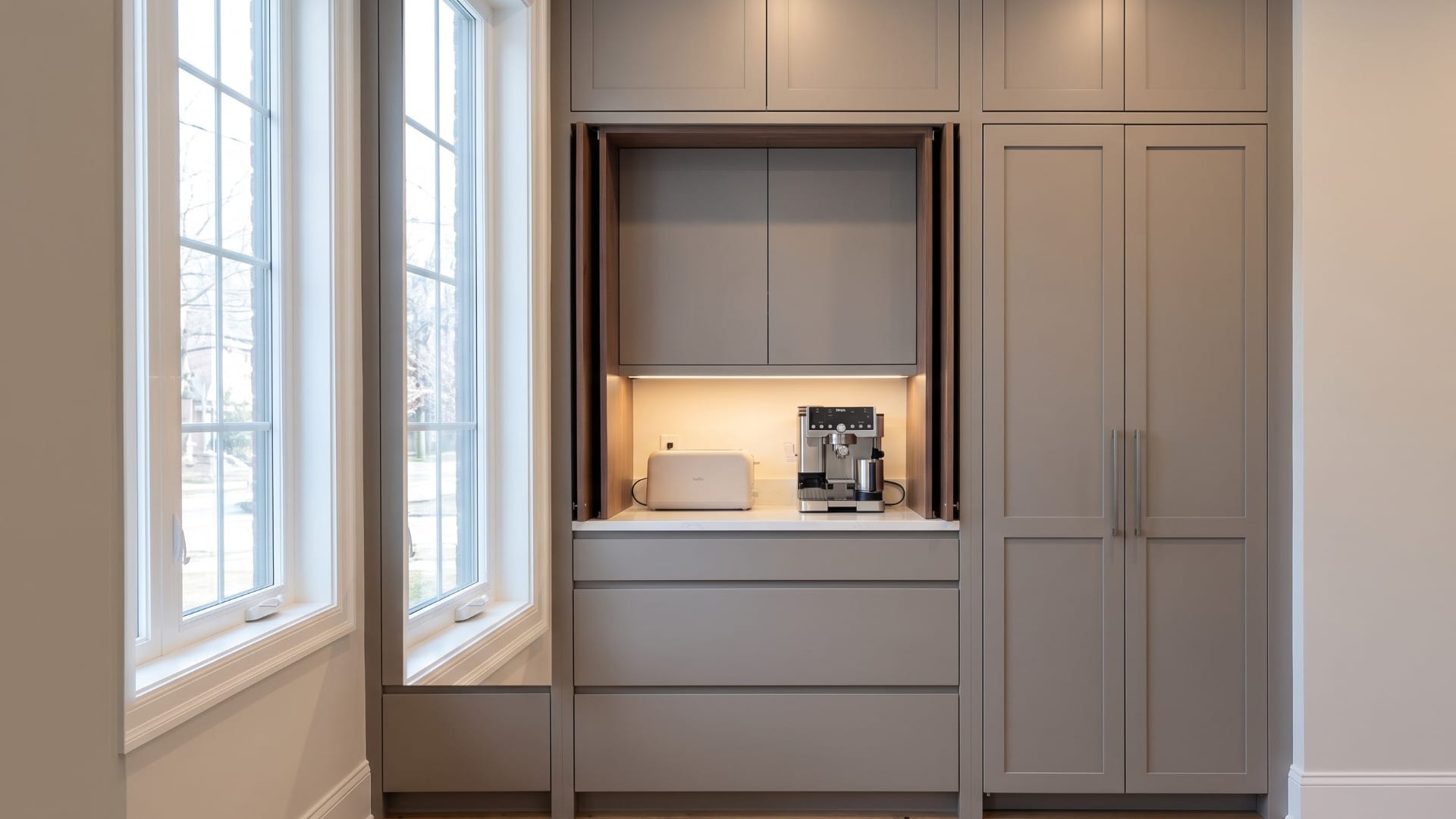
That can be especially useful for a coffee station because a door left projecting into the aisle quickly becomes annoying. But the clean closed elevation comes with a planning cost: the door mechanism and pocket occupy real cabinet space. The finished opening matters more than the nominal width of the cabinet box.
Neither approach is automatically better. If the appliances are used constantly and you like seeing them, an open niche may be the more honest solution. If the kitchen wall needs to read as one continuous run of cabinetry when the station is idle, a pocket-door garage can earn its complexity.
Build the coffee station around the routine
A useful coffee station has an order to it.
For one household, the sequence might be espresso machine first, kettle beside it, then an open patch of counter for a cup or small tray. For another, the toaster may be used every morning and deserves equal status. The arrangement should follow frequency rather than symmetry.
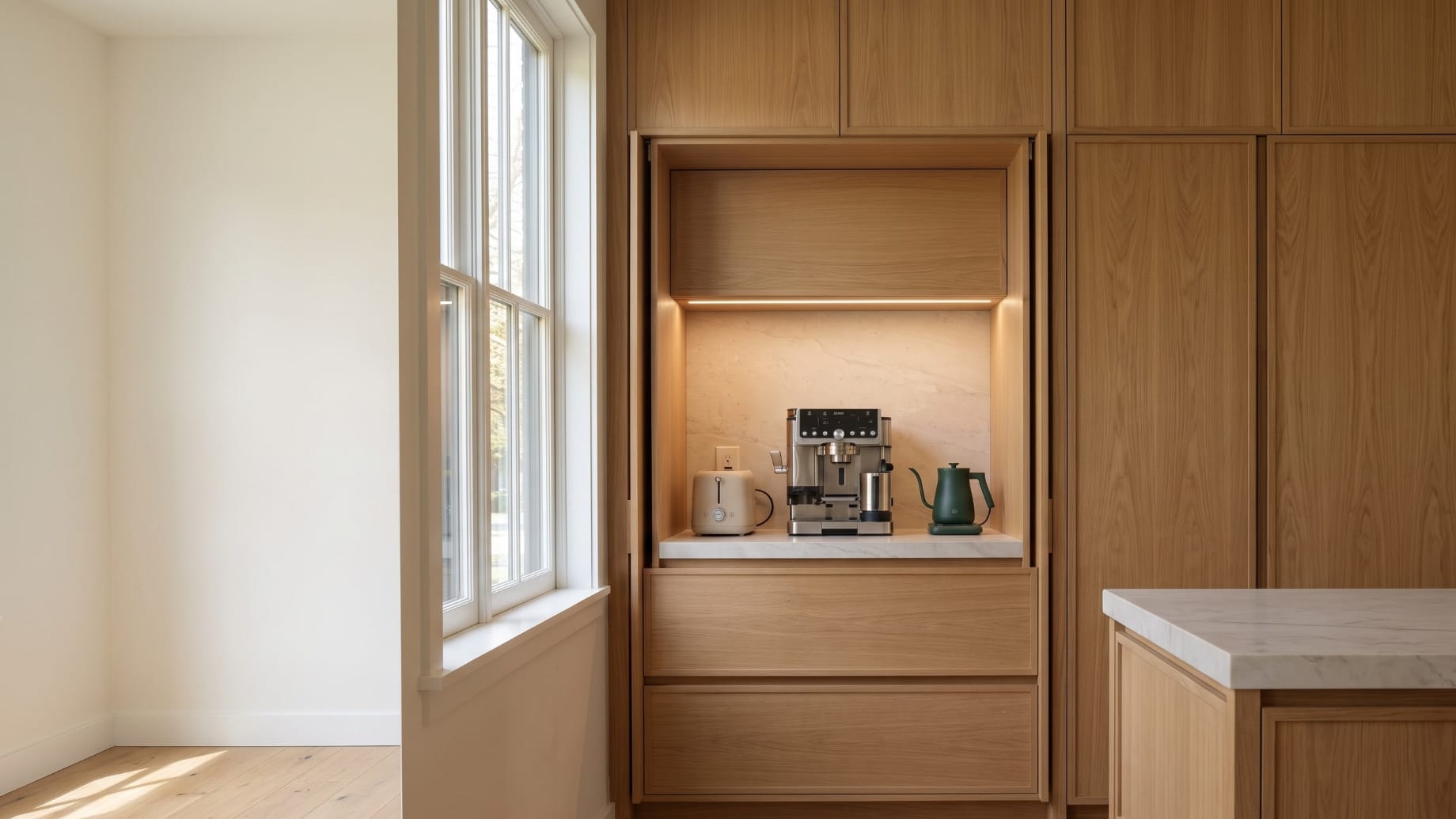
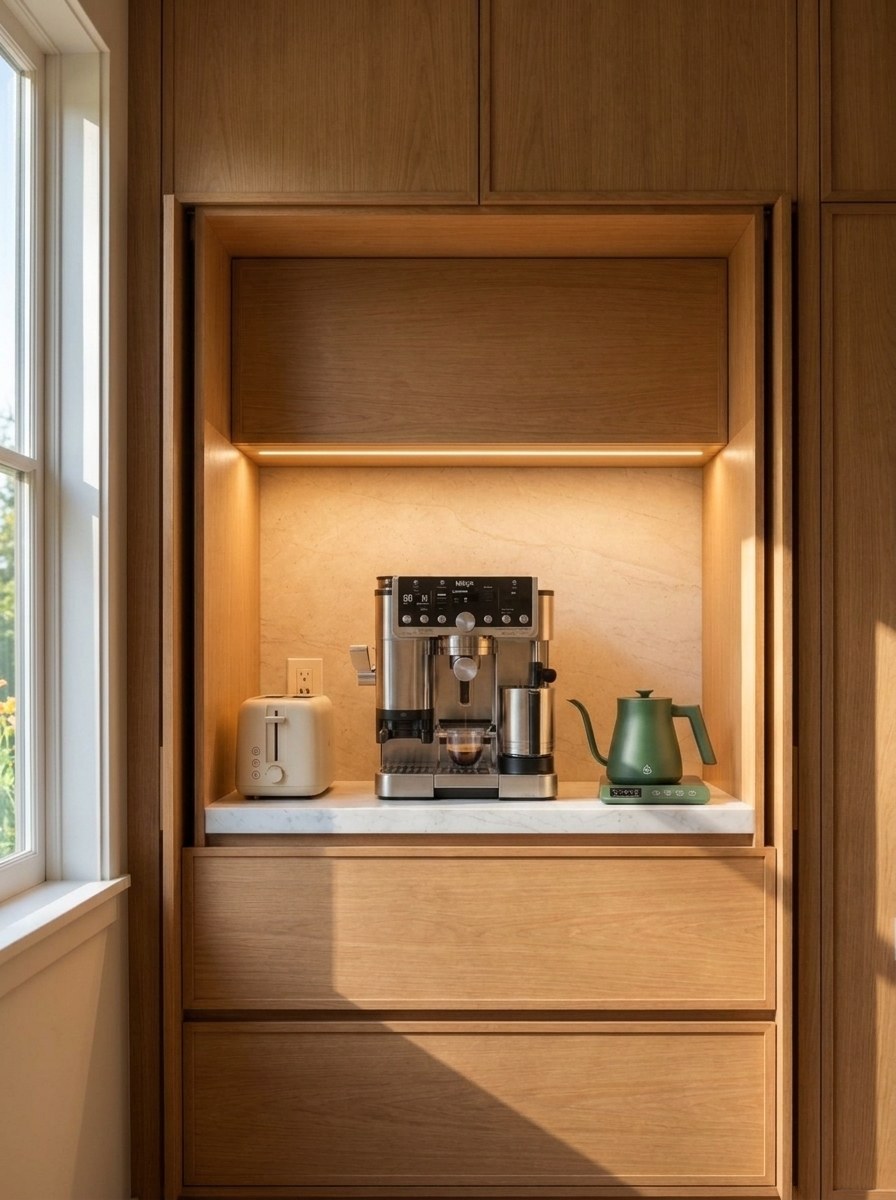
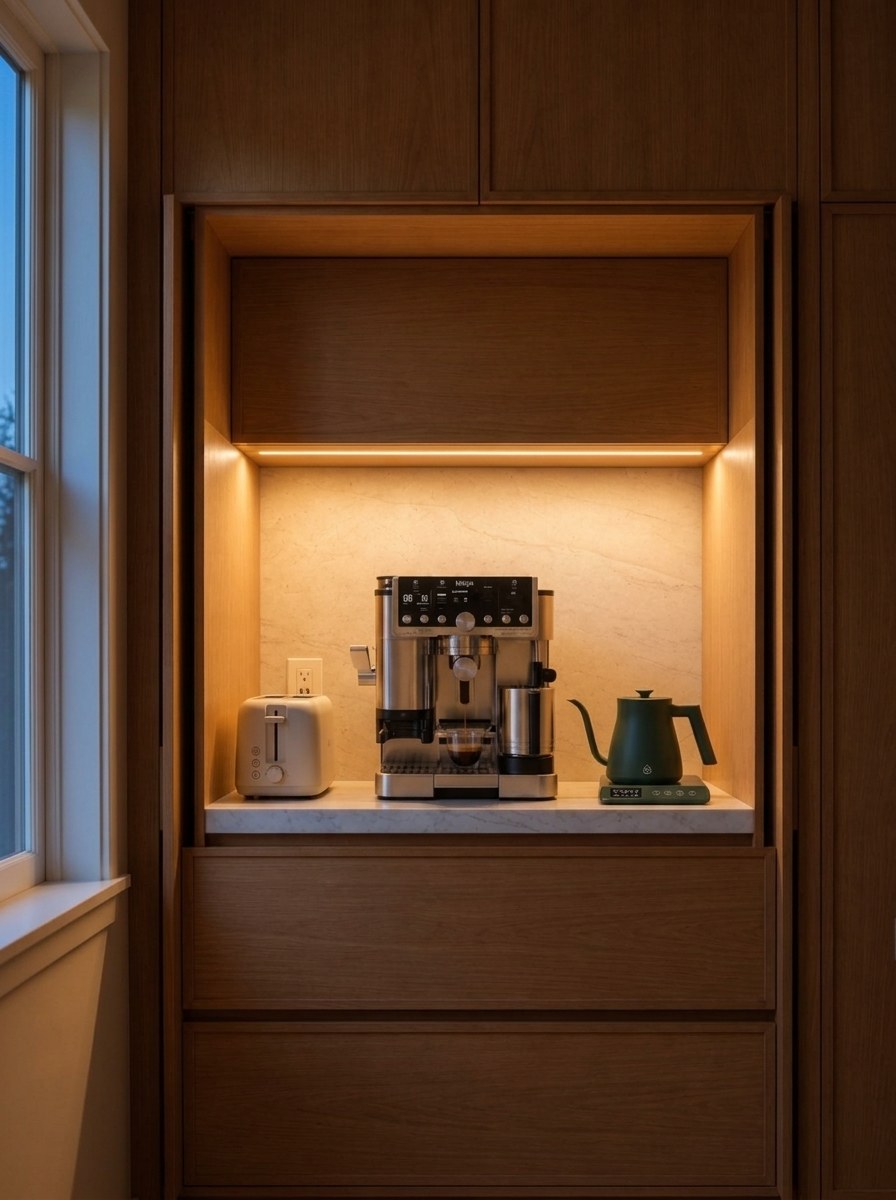
In an oak cabinet station, keeping the appliances readable as distinct objects maintains an uncluttered feel. Anchoring a stainless espresso machine in the center while flanking it with a compact toaster and gooseneck kettle preserves enough breathing room that the counter feels open and functional rather than overcrowded.
That open space matters. A niche filled edge-to-edge with machines may look impressive in architectural elevations, but it quickly becomes frustrating once a cup, a portafilter, a water jug or a plate enters the morning sequence.
The goal is not to hide the maximum number of appliances. It is to give the daily ones a permanent place without turning the worktop into storage.
Keep a real landing area
Treat some of the counter as working space rather than leftover space.
You need somewhere to put the thing you are making. That sounds obvious, but built-in coffee stations often lose their usable surface to jars, mugs, machines and decorative shelving before the cabinet is even finished.
In lighter painted pantries and wood-lined joinery alike, the most functional niches preserve an open patch of counter directly beside the primary machine. Whether positioned beneath floating shelves or integrated into a wider cabinet run, this landing zone is essential for working cleanly.
There is no universal number that suits every machine and every routine. Measure the actual equipment, then mock up the remaining clear surface before cabinetry is ordered. A few minutes with masking tape on an existing counter is more useful than estimating dimensions in the abstract.
Put storage where the routine can reach it
The appliance garage does not need to hold every coffee-related object.
Keep the items used during the first minute of the routine closest to the work surface. Less frequent supplies can move above or below. That might mean filters or tea nearby, with backup coffee, cleaning supplies and occasional serving pieces in a drawer or tall cabinet.
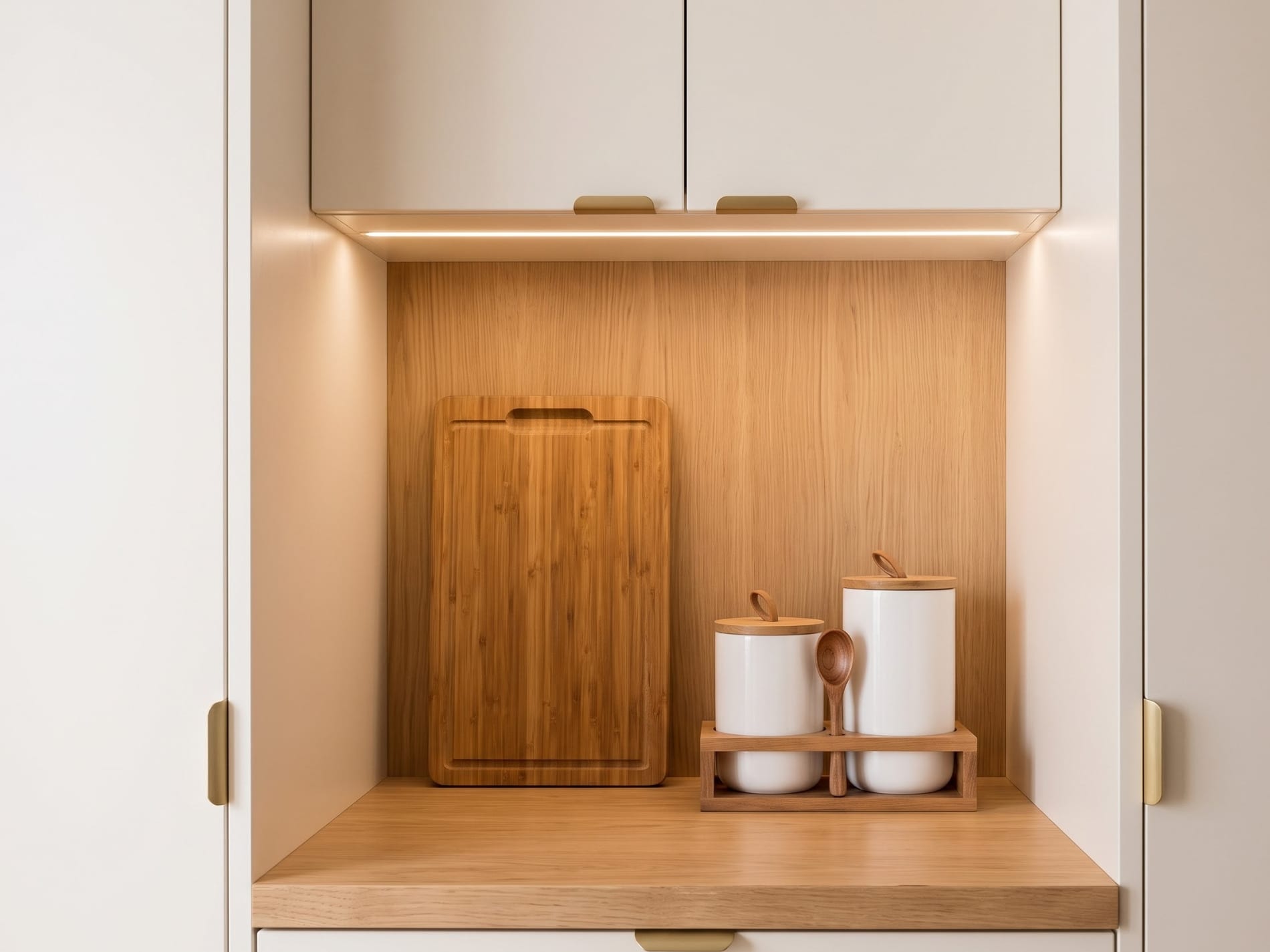
Integrating a dedicated work niche inside a larger run of pantry cabinetry allows the active coffee zone to remain accessible while tall closed doors conceal bulk supplies, backup glassware, and utilitarian accessories.
Upper shelves are useful only when they do not make the active zone harder to use. A shelf that looks perfectly balanced in an empty cabinet may become inconvenient if it blocks a machine lid or forces frequently used items too high. Again, the appliance should set the geometry.
Use lighting to make the niche work, not just glow
Integrated light can make an appliance garage easier to read, especially when the niche is deeper or the surrounding cabinetry is dark.
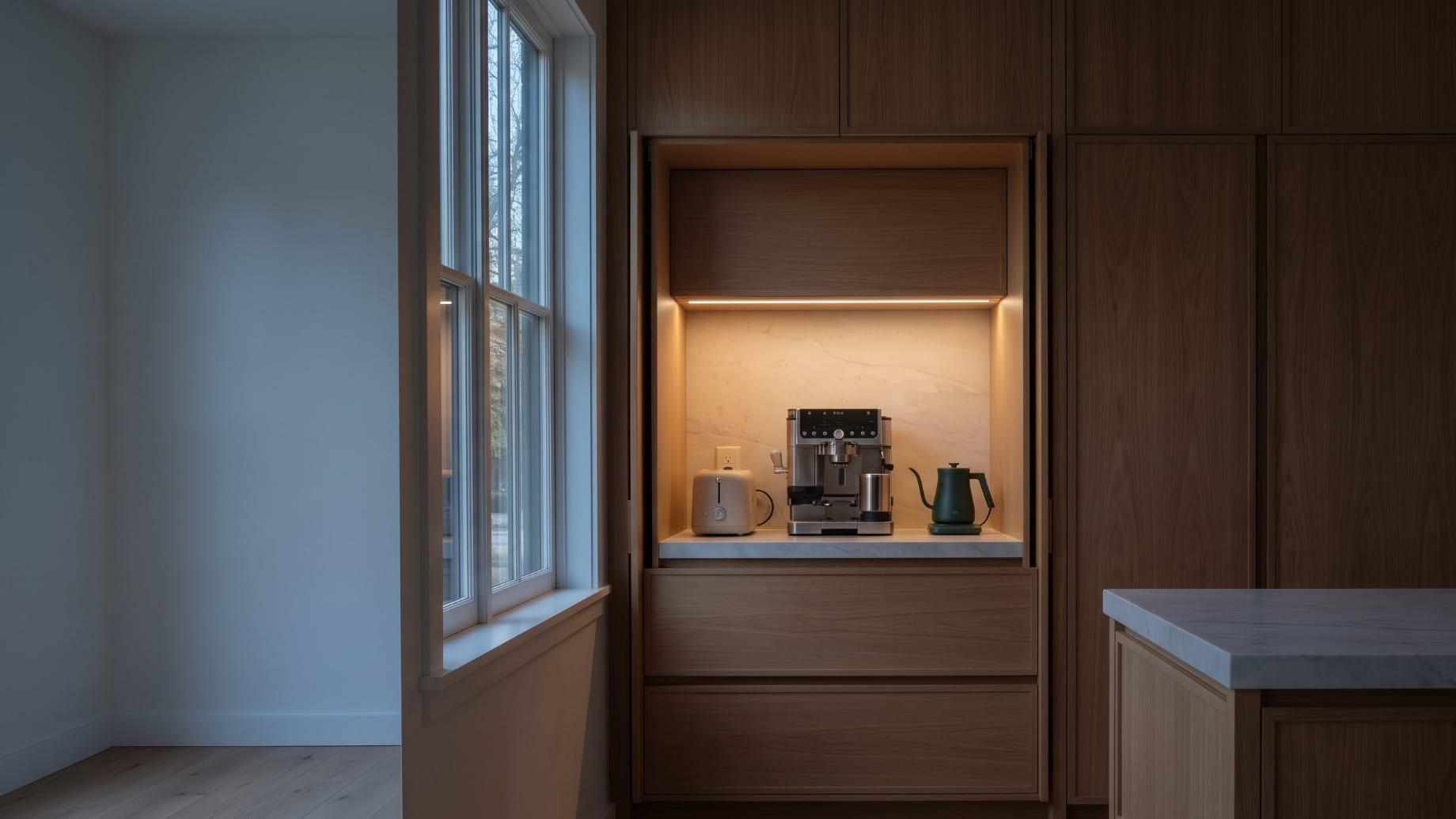
Effective task lighting sits directly above the counter so illumination reaches working controls, gauges, and cups rather than only washing the rear panel. In deeper or darker cabinetry, a concealed linear LED channel (2700K–3000K) cleanly delineates the prep surface from surrounding millwork.
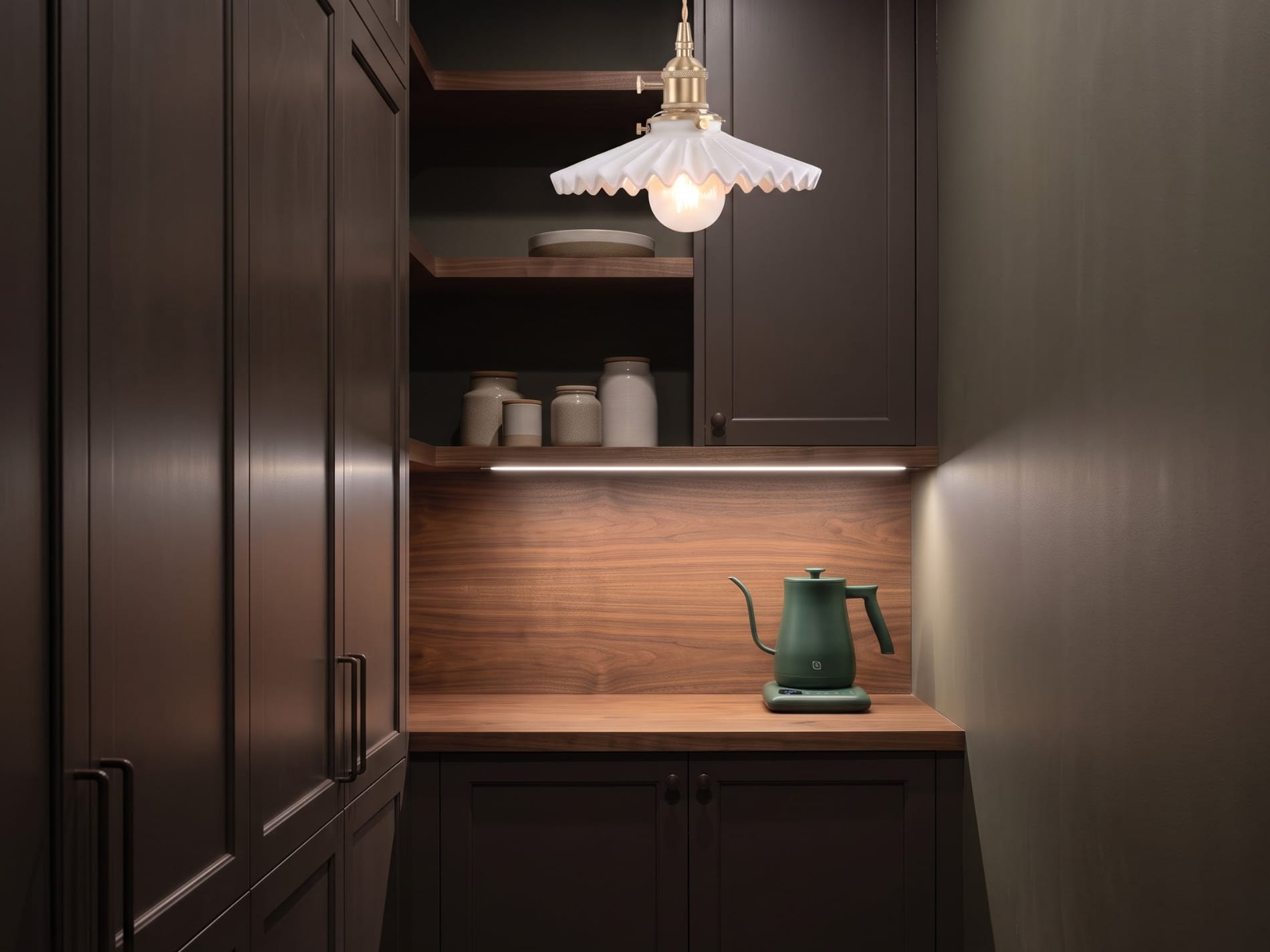
Keep the lighting plan practical. Drivers, diffusers, switching controls, and heat dissipation must be coordinated with the cabinet maker and electrician during framing to ensure safety and electrical code compliance.
Traditional pantry variation with warm tabletop accents
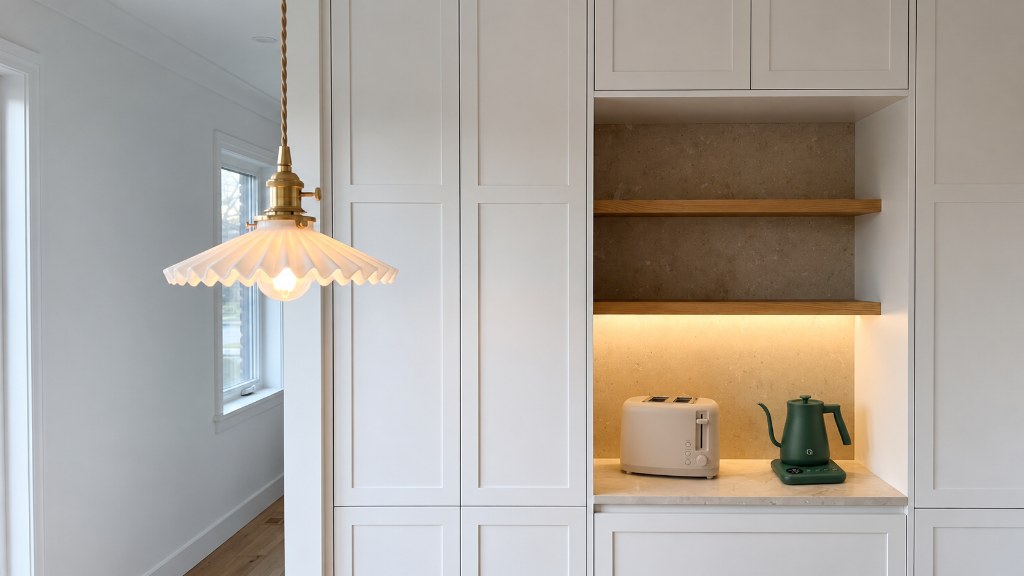
A painted pantry alcove offers a lighter, more traditional counterpoint to architectural oak millwork, balancing classic joinery details with modern tabletop equipment.
Interactive pantry view with product markers. Select any marker to view piece details and buying options.
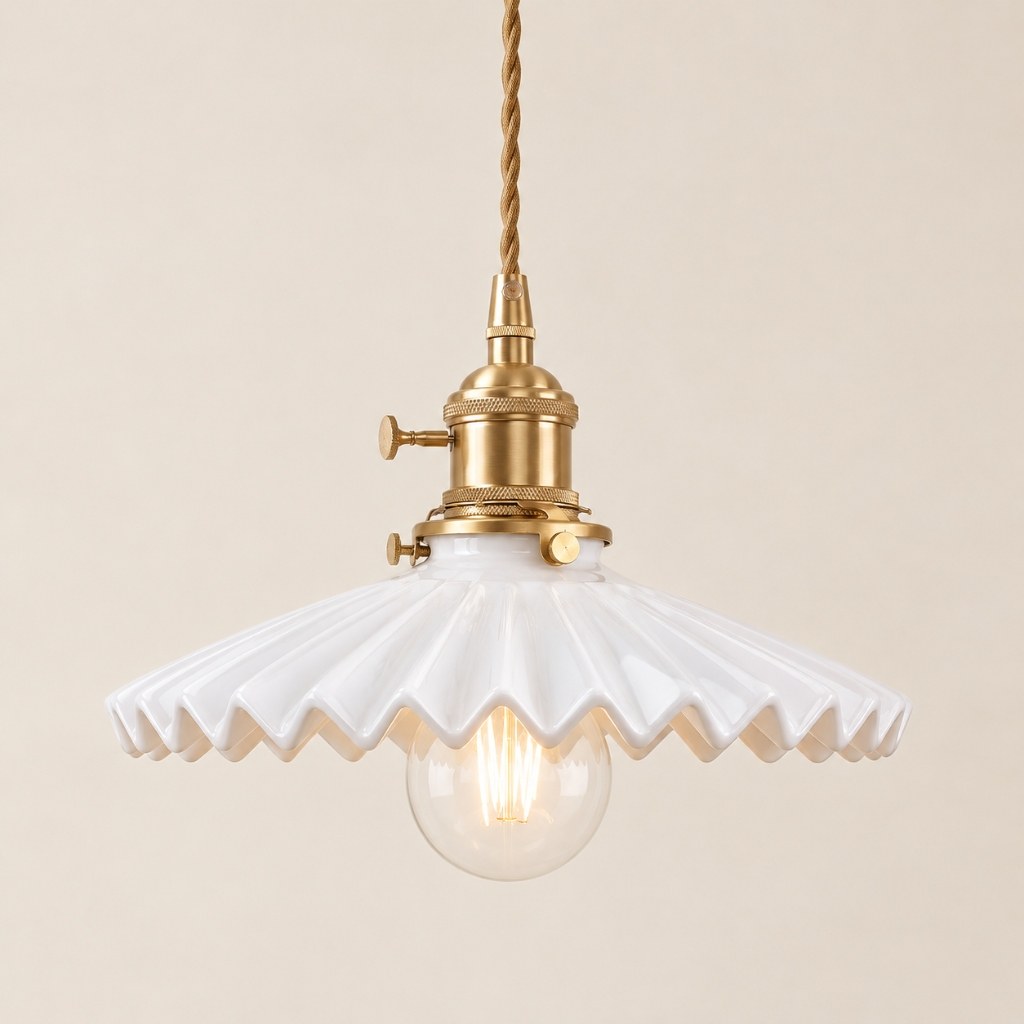
Shenmoyl White Pleated Ceramic Pendant Light
White pleated ceramic pendant with brushed brass hardware.
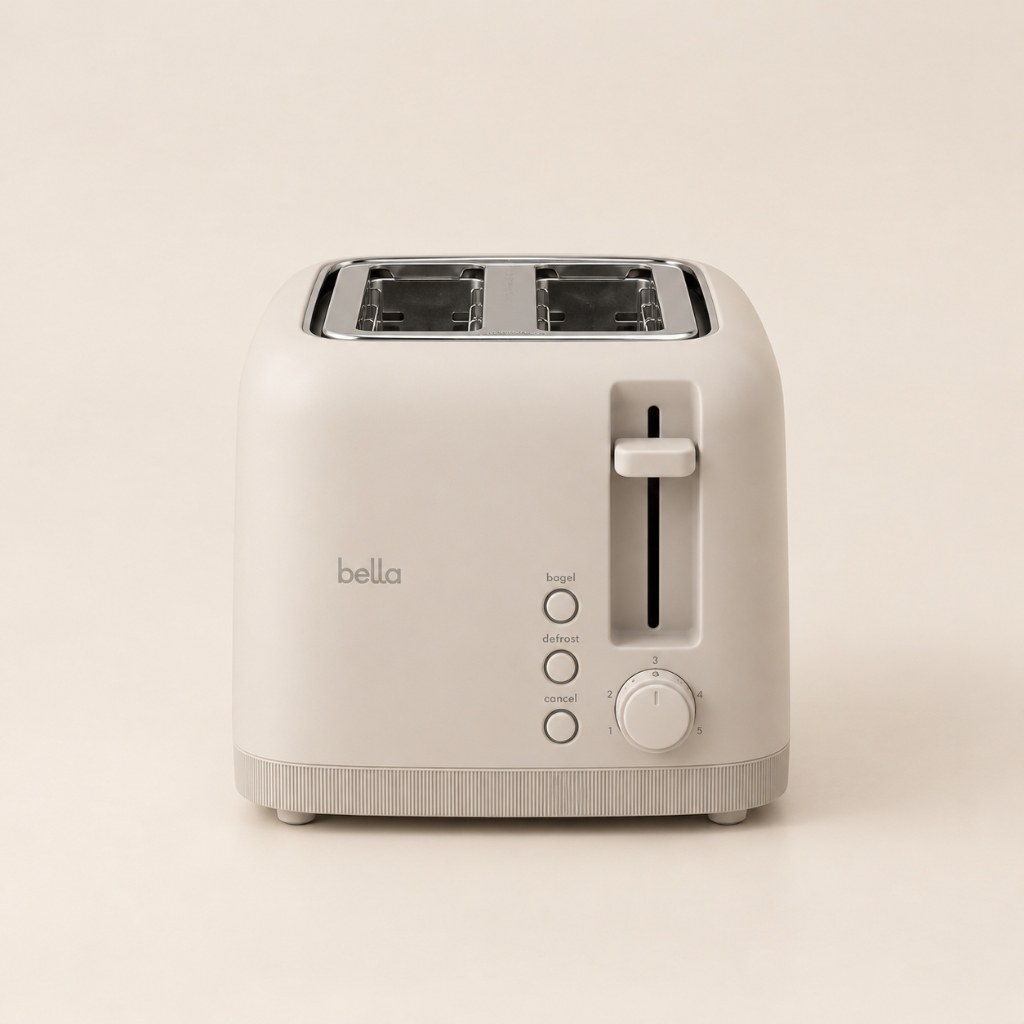
bella Fits-Anywhere™ Slim Toaster — Oatmilk
Slim-profile two-slot toaster in an Oatmilk matte finish for narrow counters.
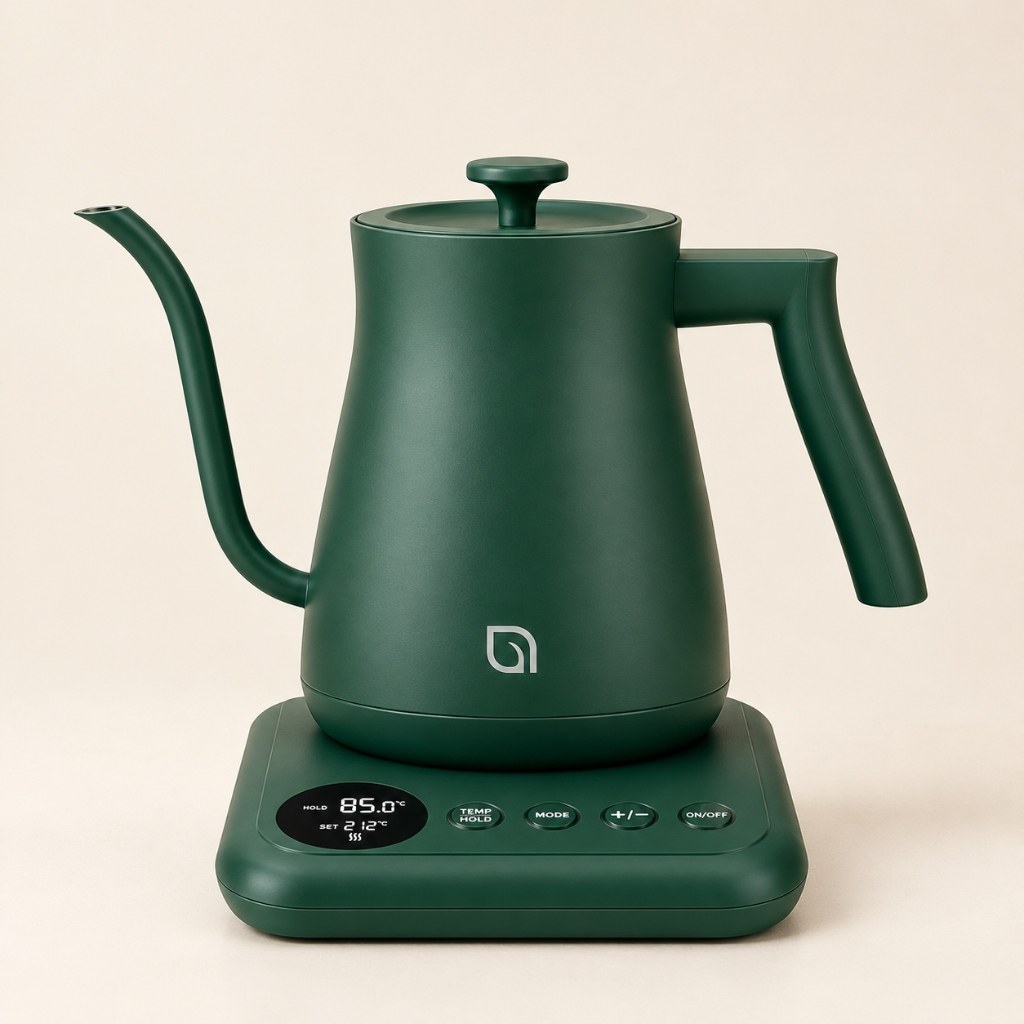
WILLOW ECO SERIES Gooseneck Electric Kettle
Deep forest-green pour-over kettle with 5 temperature presets.
The bella Fits-Anywhere Slim Toaster in Oatmilk keeps a low cream profile against the pale worktop. The WILLOW ECO SERIES Gooseneck Electric Kettle introduces the strongest color in the niche. Above them, the Shenmoyl white pleated ceramic pendant adds a smaller decorative light source with warm brass detail.
Selecting complementary finishes—such as a muted cream appliance finish and warm glazed ceramic lighting—softens the technical presence of countertop appliances and integrates them into traditional cabinetry.
What to measure before cabinetry is ordered
Before the final cabinet drawing is approved, check the real products and the real hardware together.
- Finished interior width, depth and height. Measure the usable opening after door pockets, tracks, shelves and trim are included.
- Appliance operating space. Check water tanks, lids, hoppers, levers, trays, handles and anything else that moves during normal use or cleaning.
- Plug and cable position. The machine can fit physically and still become awkward if the outlet or plug pushes it too far forward.
- Door movement. Confirm how far the fronts project, fold or slide when the station is open.
- Clear work surface. Decide how much counter needs to remain genuinely open after the daily appliances are placed.
- Removal and cleaning access. Make sure the equipment can be lifted or slid out without dismantling the cabinet.
- Manufacturer requirements. If an appliance specifies ventilation, steam release clearances, or minimum side margins, those specifications must take priority over visual preferences.
Plan every clearance around the exact equipment models, not generic appliance placeholders on a preliminary drawing.
Selected architectural pieces & equipment
Each piece featured in these layouts was selected for how its proportions and materials perform in a compact station:
- Ninja Luxe Café Pro Series ES701 — anchors the primary station with an integrated burr grinder and assisted tamper in a brushed stainless footprint.
- WILLOW ECO SERIES Gooseneck Electric Kettle — provides precise temperature control for pour-over routines while introducing matte color to wood-lined niches.
- bella Fits-Anywhere™ Slim Toaster (Oatmilk) — narrow two-slot profile specifically suited for shallow counters and tight appliance garages without sacrificing slot width.
- Shenmoyl White Pleated Ceramic Pendant Light — adds localized, warm decorative illumination over the niche worktop with solid brass fittings and a pleated shade.