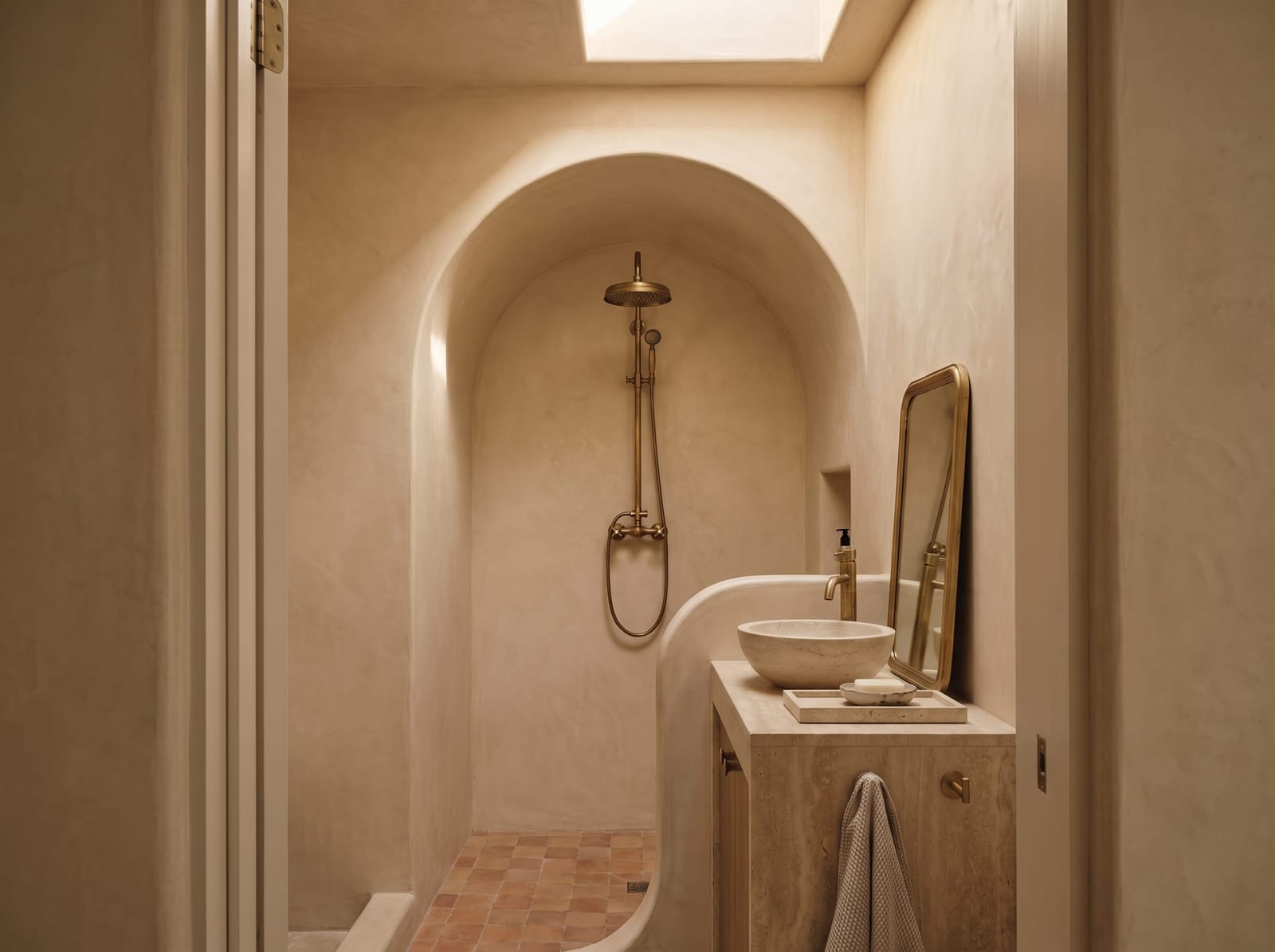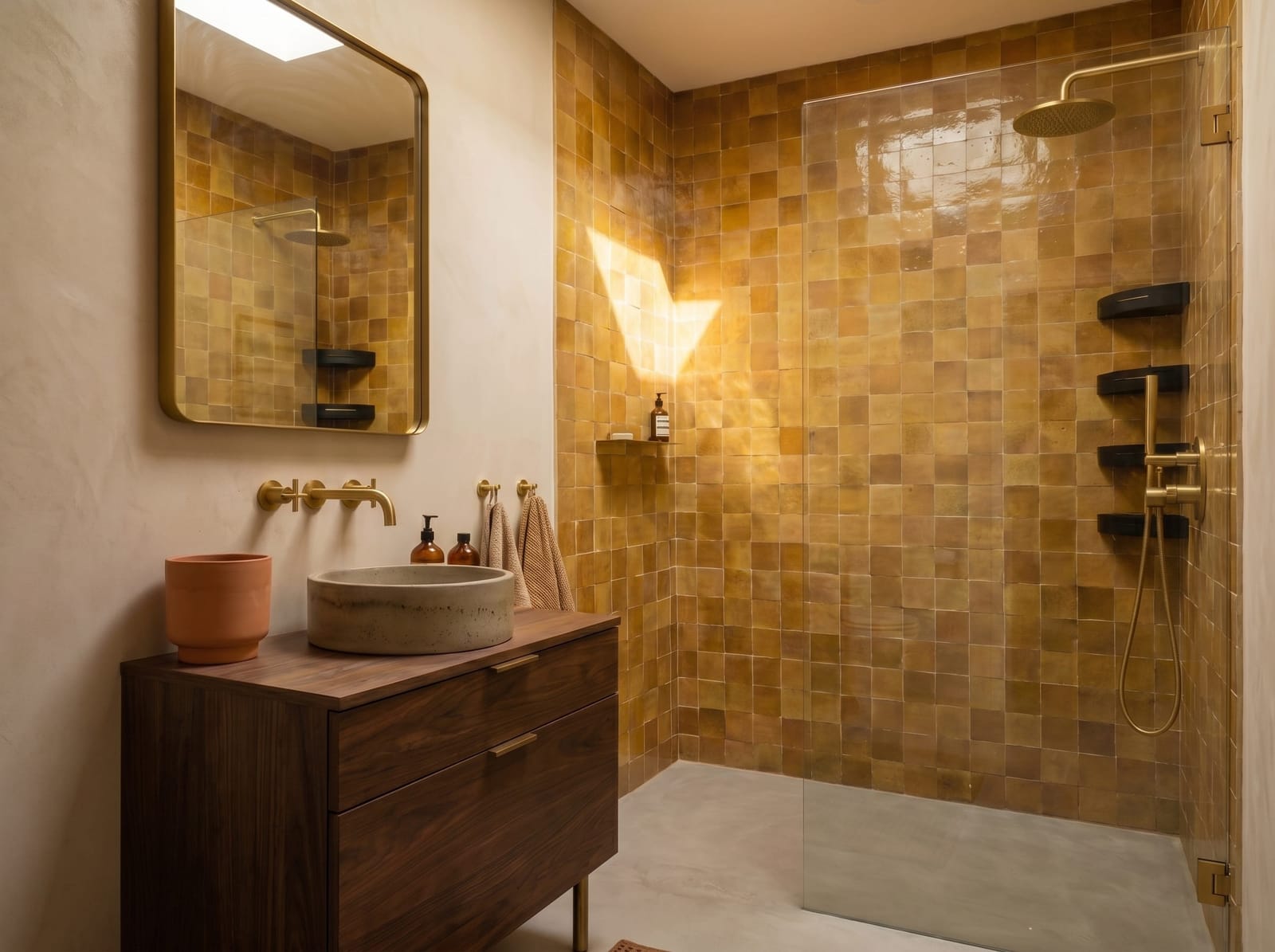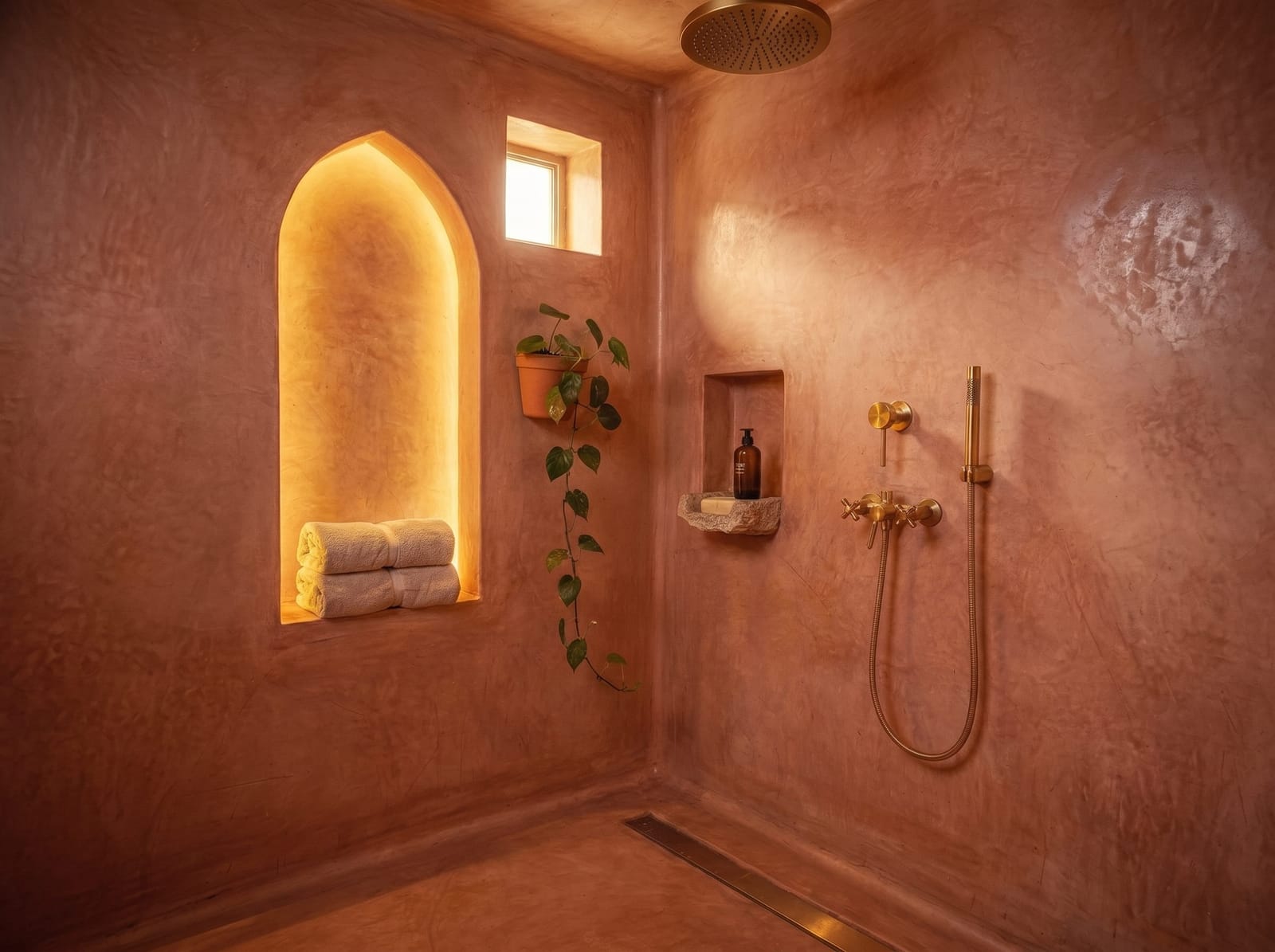
Most warm bathrooms get one material right and surround it with compromise. The terracotta tile goes on the floor, but the shower stays white subway. The brass fixture appears above a stock vanity cabinet. The arch gets painted onto a flat wall as a decorative outline rather than built as structure. The result looks warm in a photograph and generic in person.
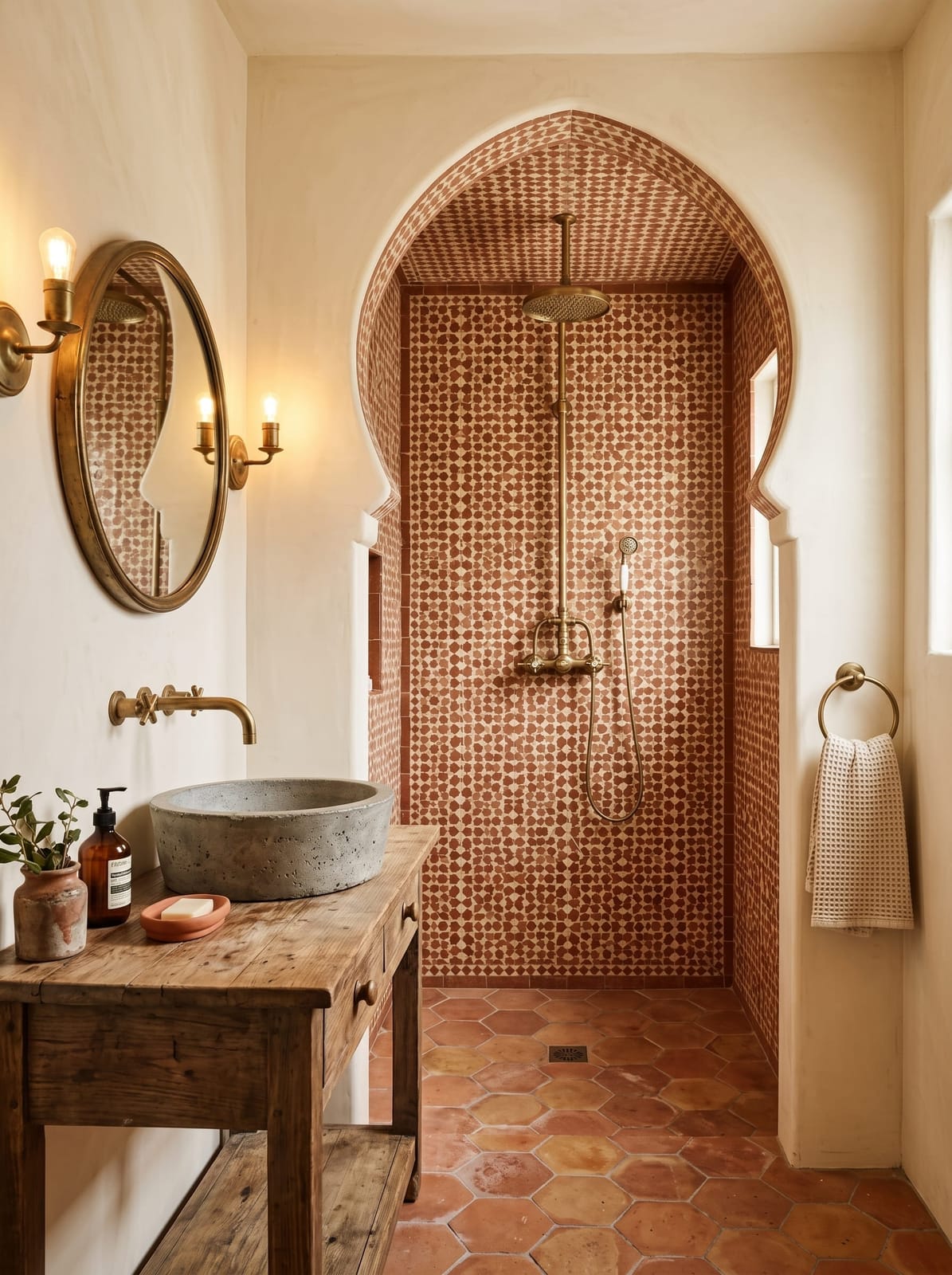
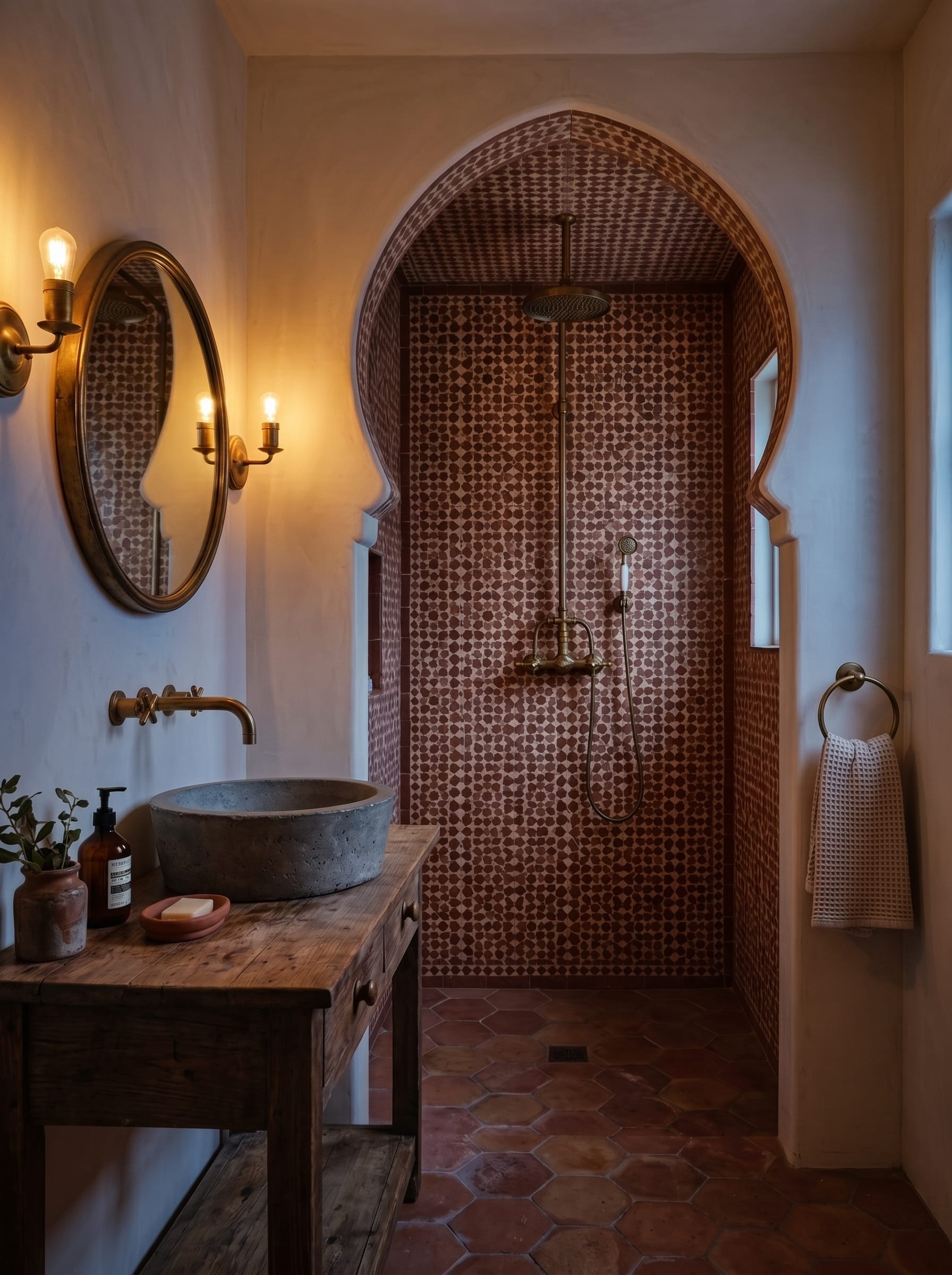
This bathroom does something different. It commits. The design treats the arch as architecture — a curved opening in the wall that frames the shower as a separate volume, lined floor to crown in handmade terracotta tile. Inside the alcove, a champagne-bronze shower system catches the light against the fired clay. Outside, a rustic wood console vanity stands freestanding against the plaster wall, holding a dark stone-style vessel sink whose cool mineral weight anchors the entire composition. An oval brass mirror and a bare-bulb sconce complete the vanity wall. Every material in the room is warm, textured, and honest about what it is.
That honesty is the point — and the subject of this guide. Terracotta is porous. Brass changes color over time. Wood near water needs attention. A dark matte vessel sink shows every water spot. These are not low-maintenance materials. They are high-reward materials, and the reward comes with a cost that most design boards leave out. This guide covers how to design a bathroom like this, and what these surfaces actually ask of you once they are installed.
Why This Bathroom Works
The visual logic depends on a few deliberate choices reinforcing each other.
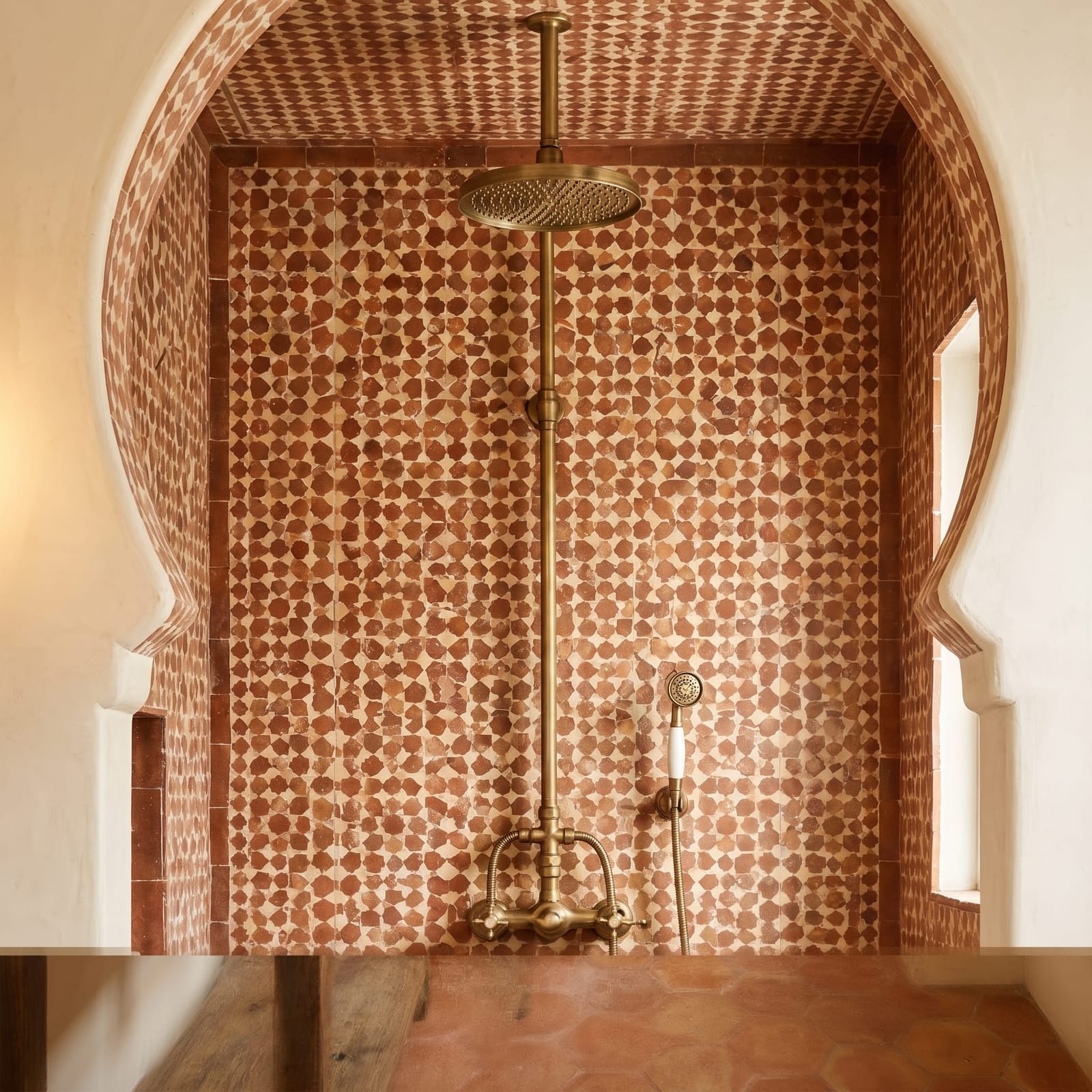
The arch creates a room within a room. Instead of a flat glass panel marking where the shower begins, a curved opening frames the wet zone as a separate architectural volume. You step through it. The terracotta wraps three walls inside. The shower becomes a destination, not a corner.
The tile is warm on every surface. Handmade terracotta — or zellige-inspired tile with similar color variation — lines the interior of the alcove in tones that shift from pale blush to deep sienna. The slight irregularity of each tile catches light at different angles, creating a surface that shimmers rather than sits flat. Under morning light the alcove glows warm and rosy. Under evening light it deepens toward brick and umber.
The brass reads as mineral, not metal. A champagne-bronze shower system stands against the terracotta — warm metal against warm clay, each material reinforcing the other. Both carry the suggestion of earth and oxide. The brass does not fight the clay — it belongs to the same tonal family.
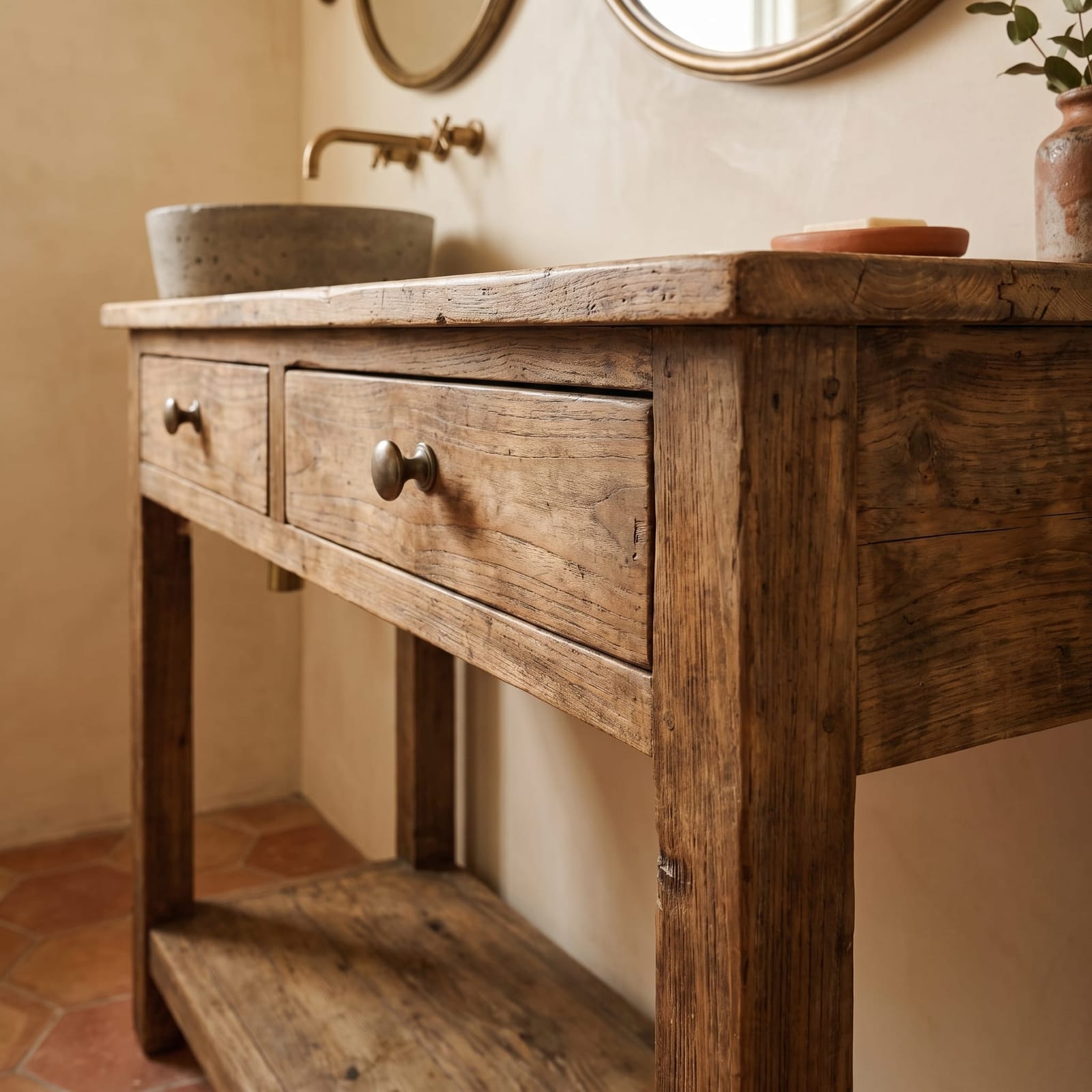
The vanity stays light and open. A freestanding wood console with visible legs keeps the floor plane open and the room feeling larger than it is. The furniture format — legs, drawers, slatted shelf — makes the bathroom read as a furnished room rather than a plumbed enclosure.
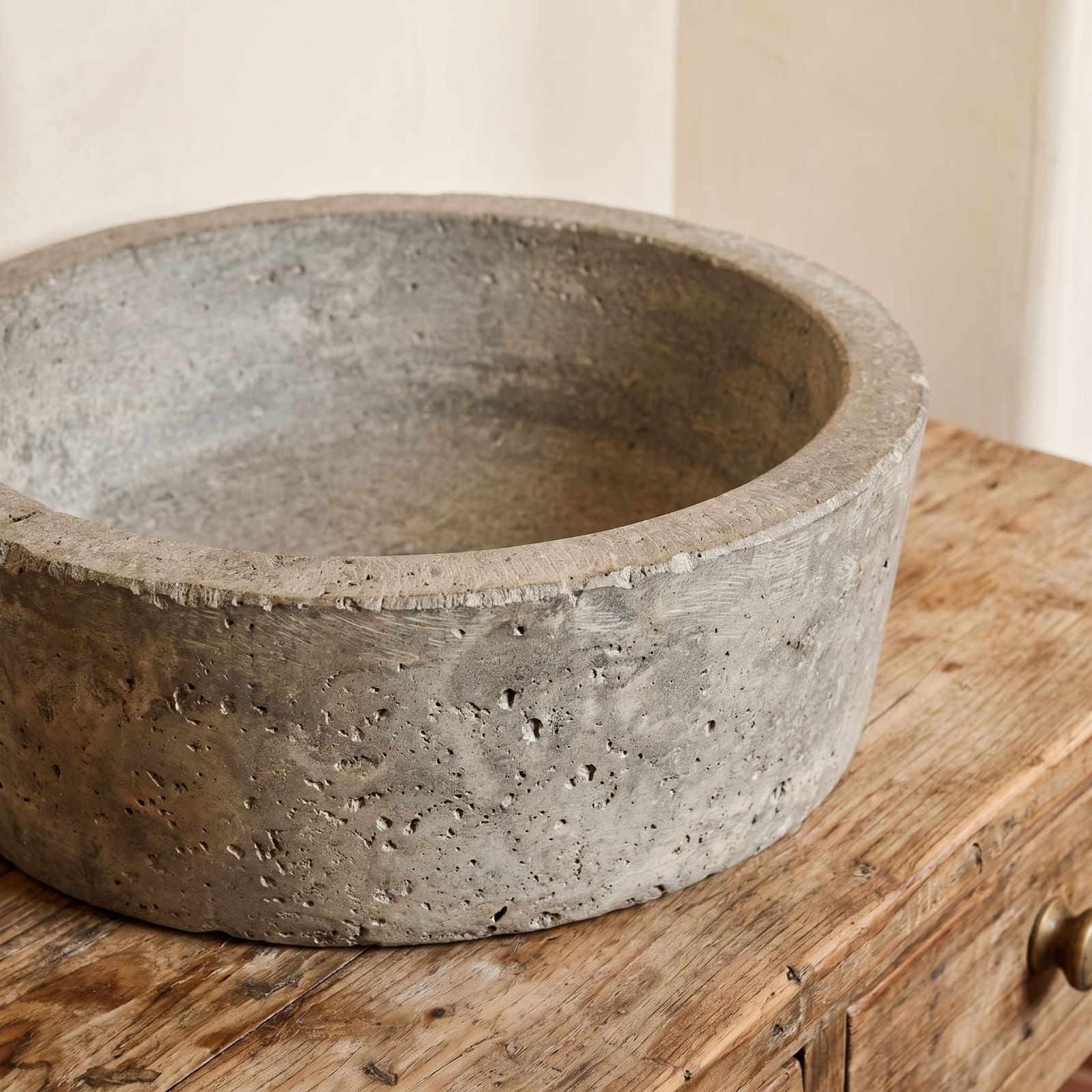
The vessel sink provides the cool anchor. In a room where every surface radiates warmth, the dark stone-style basin on the vanity top is the single cool-toned element. It grounds the palette the way a black ceramic vase grounds a neutral bedroom — one contrasting register that makes every warm tone around it feel more intentional.
The lighting matches the materials. A bare-bulb brass sconce with a warm filament sets the color temperature for the room. Under amber light, terracotta glows, brass recedes into warmth, and wood grain deepens. Under cool white light, all of those materials go flat. The bulb is not decoration. It is the final material decision.
Start with the Arch
The arch is the room’s emotional center. Its shape — a semicircular curve springing from two vertical jambs — is borrowed from architectural traditions that predate modern plumbing by centuries. Roman baths, Moorish hammams, Mediterranean farmhouses: the arch always serves the same function, creating a threshold between one space and another, announcing that what lies beyond is different from what came before.
In this bathroom the arch reads as the threshold between dry and wet. The terracotta tiles that line the interior reinforce that transition through material as well as form. Each tile is a roughly four-inch square of fired clay, set close together with thin grout joints in a matching tone. The natural color variation — blush to sienna to rust, depending on kiln temperature and iron oxide content — reads as a continuous gradient rather than a patchwork of discrete squares.
The surface is not flat. Each tile sits at a slightly different depth and angle, creating a micro-texture that moves with the light. Bright highlights on raised edges, soft shadows in recessed centers, a general shimmer that shifts through the day. This is what makes the tiled alcove feel carved from earth rather than assembled from parts.
What the tile needs from you
Terracotta and zellige-style tiles are porous. Unsealed, they absorb water, soap residue, and mineral deposits — a real concern in a shower environment.
Before grouting, the tiles typically need a penetrating sealer applied according to the manufacturer’s guidance. Some terracotta and zellige tiles arrive pre-sealed; others do not. Ask the tile supplier. After installation, periodic resealing — on the schedule recommended by the tile supplier or sealer manufacturer — helps maintain the surface and prevent staining. The grout joints need the same attention.
This is not a material that takes care of itself. It rewards care with a patina that improves with time, but it does require the care. Confirm the sealing schedule with your installer and follow the tile manufacturer’s maintenance guidance for wet applications.
Choose a Brass Shower System for the Alcove
Inside the arch, the shower system is the room’s centerpiece hardware. A modern brass shower system in a champagne-bronze or brushed-gold finish stands against the terracotta — warm metal against warm, irregular clay.
The visual logic is contrast within harmony. Both brass and terracotta are warm-toned, both carry mineral associations, but their textures are opposite: one smooth and reflective, the other rough and absorbent. The quiet tension between finished metal and handmade clay is what gives the alcove its character.
What to look for
A modern brass shower system with a round rain head provides the visual anchor inside the alcove. The rain head sets the presence; the matching trim and valve complete the composition. A larger rain head — roughly ten inches in diameter — tends to suit the scale of an arched alcove better than a smaller one, filling the space with proportional weight.
For finish, champagne bronze, brushed gold, and satin brass all sit comfortably against terracotta. Avoid polished chrome or bright nickel, which introduce a cool metallic tone that competes with the warm clay palette. The right brass finish absorbs light rather than bouncing it — it warms the alcove instead of reflecting out of it.
Brass and patina
Brass finishes vary in how they age. Some modern fixtures use PVD (physical vapor deposition) coatings designed to resist tarnishing better than uncoated alternatives. Others develop a living patina — a gradual shift in color that darkens and mellows the surface over months and years, especially in humid environments.
Neither approach is wrong. A coated finish stays consistent. A living finish evolves with the room. If patina matters to you in either direction, check the manufacturer’s finish description before purchasing. “Champagne bronze” and “brushed gold” are marketing terms, not material specifications — what they mean in practice varies by maker.
Use a Freestanding Wood Console as the Vanity
Outside the shower, the vanity occupies the opposite wall. Rather than a built-in cabinet or a wall-mounted floating unit, the vanity here is a freestanding rustic wood console — open legs, a slatted lower shelf, a pair of small drawers in the apron.
The format serves the room in three ways.
First, it keeps the floor visible on all sides. In a bathroom where the shower arch creates an enclosed, enveloping volume, the open vanity counterbalances with lightness and air. The room breathes where it needs to.
Second, it introduces furniture character — the sense that this vanity was chosen and placed, not built in. The bathroom reads as a room someone furnishes, not a wet enclosure someone tiles.
Third, the open lower shelf provides storage for rolled towels or woven baskets without the visual weight of a closed cabinet. The vanity area stays light and airy, which is what makes the console format worth choosing over a standard box cabinet.
The two drawers hold daily items — toothbrush, razor, soap dish — behind simple wood faces. The countertop stays bare except for the vessel sink and, at most, a small ceramic soap tray. Display only what earns its place. Everything else goes inside.
Wood near water: the honest version
A rustic wood console in a bathroom is beautiful. It is also a commitment.
Wood and sustained humidity are not natural allies. In a bathroom with a shower, the wood surface will be exposed to airborne moisture even when water never touches it directly. Over time, unprotected wood can swell, warp, or develop mildew in poorly ventilated spaces.
What helps: a marine-grade sealant or moisture-resistant finish applied to all surfaces, including the underside and interior of drawers. Good bathroom ventilation — an exhaust fan rated for the room size, run during and after showers. Wiping standing water promptly rather than letting it sit on the wood.
A well-sealed wood console in a well-ventilated bathroom ages gracefully. An unprotected console in a steamy, unventilated room does not. The finish and the airflow matter as much as the wood itself.
Anchor the Vanity with a Dark Vessel Sink
On the console top, a dark stone-style vessel basin sits like a mineral bowl on a wooden workbench. Round, matte, and cool-toned, it is the single temperature contrast in an otherwise warm room.
This contrast is what makes the sink essential to the composition. In a bathroom where terracotta, wood, and brass all radiate warmth, the dark matte basin introduces a completely different register — cool, still, geological. It gives the eye a resting place between the active warmth of the surrounding surfaces. Without it, the palette risks collapsing into undifferentiated amber.
The weight matters too. A dense mineral-style vessel basin communicates permanence. On a freestanding console that visually suggests portability, the heavy sink pins the vanity to its location. The console could be moved. The basin makes clear that it will not be.
Living with a dark matte basin
Dark matte surfaces show water spots, soap residue, and mineral deposits more readily than glazed white ceramic. This is not a defect — it is a characteristic of the finish.
A quick wipe after use keeps the surface clean. For hard-water areas, a soft cloth and a mild non-abrasive cleaner prevent mineral buildup from becoming visible. Avoid harsh chemical cleaners or abrasive pads, which can dull the matte surface over time. The maintenance is minimal, but it is ongoing. A dark vessel sink looks its best when someone is paying attention.
Complete the Vanity Wall: Mirror, Sconce, and Towel
Three elements finish the vanity composition. Each earns its place through a specific visual and functional role.
The oval brass mirror
In a bathroom built from rectangular tiles, warm brass shower hardware, and a rectilinear console, the oval introduces the one curved form the room needs to feel balanced. It softens the visual field above the sink without the symmetry of a perfect circle, which can feel too formal in a rustic setting. A thin brass frame ties the mirror to the shower hardware and the sconce finish, creating a consistent metallic thread that connects the vanity zone to the shower zone across the room. The elongated vertical orientation draws the eye upward, adding perceived height to the vanity wall.
The bare-bulb brass sconce
Mounted beside the mirror, the sconce consists of a simple backplate, a short curved arm, and an open socket — no shade, no diffuser, no glass enclosure. The exposed filament casts amber light that makes terracotta glow and wood grain deepen.
The absence of a shade is deliberate. In a bathroom where the tile is rough, the wood grain is visible, and the brass hardware is honest, a frosted or fabric shade would introduce a level of decorative refinement that contradicts the character of every other surface. The bare bulb extends the room’s ethos: show the material, show the mechanism, let the object be what it is.
A warm-filament bulb in the range of 2200K to 2700K is what gives this sconce its atmosphere. Under cool white light, the terracotta goes flat, the brass reads as yellow, and the wood loses warmth. The bulb is not an afterthought — it is the lighting decision that usually flatters these materials best.
Important: Any sconce installed in a bathroom should be rated for damp or wet locations, depending on its distance from the water source. Confirm the fixture’s rating and follow local electrical codes. This is a conversation for your electrician, not a design choice you make alone.
The waffle hand towel
On a brass ring beside the sink, an unbleached cotton waffle towel hangs in a flat, even fold. It is the only soft surface in a room built entirely from rigid materials — tile, wood, stone, metal.
The waffle weave gives the towel enough visual texture to hold its own against the terracotta and the wood grain without competing for attention. The natural oatmeal tone disappears into the warm palette rather than interrupting it the way a bright white towel would — a rectangle of pure white in this room would be the loudest object in it, pulling the eye away from every material the space was designed to showcase.
The softness matters too. The towel is the detail that makes the difference between a bathroom that looks like a photograph and a bathroom that feels like a place where someone lives.
What Warm Materials Ask of You
This is the section that most terracotta shower inspiration boards leave out. These materials are beautiful. They are also higher-maintenance than glazed porcelain, chrome, and painted MDF. Here is what each surface needs.
Terracotta and zellige tile. Porous. Typically needs sealing before grouting and periodic resealing in wet zones — on the schedule recommended by the tile supplier or sealer manufacturer. Soap scum and hard-water deposits build up in the textured surface more readily than on smooth glazed tile. Regular cleaning with a pH-neutral cleaner helps. Avoid acidic cleaners, which can etch the surface or stain unsealed clay. Ask the tile supplier for their recommended maintenance schedule.
Brass fixtures. Finishes range from PVD-coated (designed to resist tarnishing) to living brass (which develops patina over time). Know which you have. Living brass darkens gradually, especially in humid environments. Some homeowners want this — the evolving warmth is part of the appeal. Others do not. If you want to maintain the original tone on a living finish, periodic polishing helps. If you want to minimize change, choose a PVD or lacquer-coated fixture and follow the manufacturer’s care guidance.
Rustic wood vanity. All surfaces benefit from a moisture-resistant finish — top, bottom, legs, inside drawers. Running the bathroom exhaust fan during and after every shower helps manage humidity. Wiping standing water promptly rather than letting it sit makes a difference over time. Even well-sealed wood in a well-ventilated bathroom will age: the grain may shift slightly in tone, small surface checks may appear. This is the character of real wood, not a failure. But the ventilation and the sealant are what make the difference between a console that ages well and one that does not.
Dark stone-style vessel sink. Shows water marks and soap residue more visibly than white ceramic. Wipe after use. Use non-abrasive cleaners only. The matte finish can dull over time with harsh chemicals or abrasive pads. Gentle, consistent maintenance preserves the mineral depth that makes the material worth choosing.
Grout. The thin joints between terracotta tiles collect moisture and soap residue in a shower environment. Sealed grout resists staining better than unsealed grout. In a wet zone, grout maintenance is ongoing — not a one-time task. Resealing and occasional deep cleaning are part of living with handmade tile.
None of this is meant to discourage. It is meant to prepare. A Mediterranean bathroom built from honest materials looks better at year five than it did at year one — if the materials are cared for. The patina is the reward. The maintenance is the cost.
Common Mediterranean Bathroom Mistakes
Using terracotta tile without sealing it. Unsealed terracotta in a shower absorbs water and can stain, darken, or become harder to maintain over time. Sealing is usually part of making this kind of tile practical in a wet zone. Confirm the sealer type and resealing schedule with your tile supplier before installation begins.
Choosing chrome fixtures in a warm room. Polished chrome introduces a cool, reflective surface that fights terracotta, wood, and warm plaster. Brushed gold, champagne bronze, satin brass, or antique brass all sit more naturally in a warm palette. Match the metal temperature to the material temperature.
Installing a wood vanity without ventilation. A rustic wood console in a bathroom without an exhaust fan is a short-term decision. Wood needs airflow to coexist with humidity. If the bathroom does not have adequate mechanical ventilation, address that before introducing a wood piece near a shower.
Using bright white towels and accessories. A white towel in a terracotta bathroom becomes the single loudest visual element in the room. It draws the eye away from every surface the space was designed around. Unbleached, oatmeal, cream, or warm stone-toned textiles integrate into the palette. Bright white interrupts it.
Overdecorating the vanity surface. A console vanity with a vessel sink, four candles, a soap tray, a plant, and a reed diffuser is no longer a minimal vanity — it is a cluttered shelf. Keep the countertop to the sink and a soap dispenser. Everything else goes in the drawers or in a basket on the lower shelf.
Ignoring the light bulb. The most carefully chosen terracotta tile and the most considered brass fixture will look flat under a cool white LED. Warm-filament lighting in the 2200K to 2700K range usually flatters these materials best. Under cooler light, they tend to lose the warmth and depth that make them worth choosing.
How to Plan This Look
If you are designing a warm Mediterranean bathroom from scratch, sequence matters. Start with the decisions that are hardest to change and work toward the ones that can be adjusted later.
1. The arch and the tile. The arch shape, the tile selection, and the shower layout are the most permanent decisions in the room. Choose the terracotta or zellige-inspired tile first and let its color range set the palette for everything that follows. Confirm the sealing requirements and wet-zone suitability with the tile supplier before committing.
2. The shower system. Select the brass finish — champagne bronze, brushed gold, satin brass — and the configuration that suits the alcove: rain head size, valve style, and any additional attachments. The shower system is the hardware centerpiece of the alcove, and its finish determines what brass tone you carry through the rest of the room.
3. The vanity. A freestanding wood console needs to be sized to the wall, confirmed for moisture resistance, and checked for height compatibility with the vessel sink you plan to use. The console height plus the vessel basin depth should bring the rim of the sink to a comfortable hand-washing height — typically around 86 to 91 cm (about 34 to 36 inches) from the floor.
4. The vessel sink. Choose the basin after the vanity, not before. The sink needs to sit securely on the console top, and the drain location needs to work with the plumbing below. Confirm the countertop cutout dimensions and drain compatibility with both the sink and the console.
5. The mirror and sconce. Choose an oval brass mirror and a bare-bulb brass sconce together so the brass tones coordinate. Plan the mirror centered above the basin and the sconce offset beside it at a height that casts light across the face. Confirm the sconce is rated for damp or wet locations based on its proximity to the shower.
6. The towel and accessories. These come last because they respond to the room as it actually looks, not as you imagined it. An unbleached waffle towel in natural cotton will integrate into almost any warm palette. Choose the towel ring, hooks, and soap dispenser in the same brass family as the shower system and sconce.
Prioritize material over brand. The right handmade terracotta from a small maker will age better than the wrong mass-produced porcelain from a name you recognize. Hold the brass finish sample against the tile. Touch the wood. These materials live next to each other for years — they need to work in proximity, not just on a mood board.
Sources & Details
Explore the complete source list for this room, from the anchor pieces to the smaller finishing details.
Source note: Some links in this source list may be affiliate links, which means we may earn a commission at no extra cost to you. As an Amazon Associate I earn from qualifying purchases.
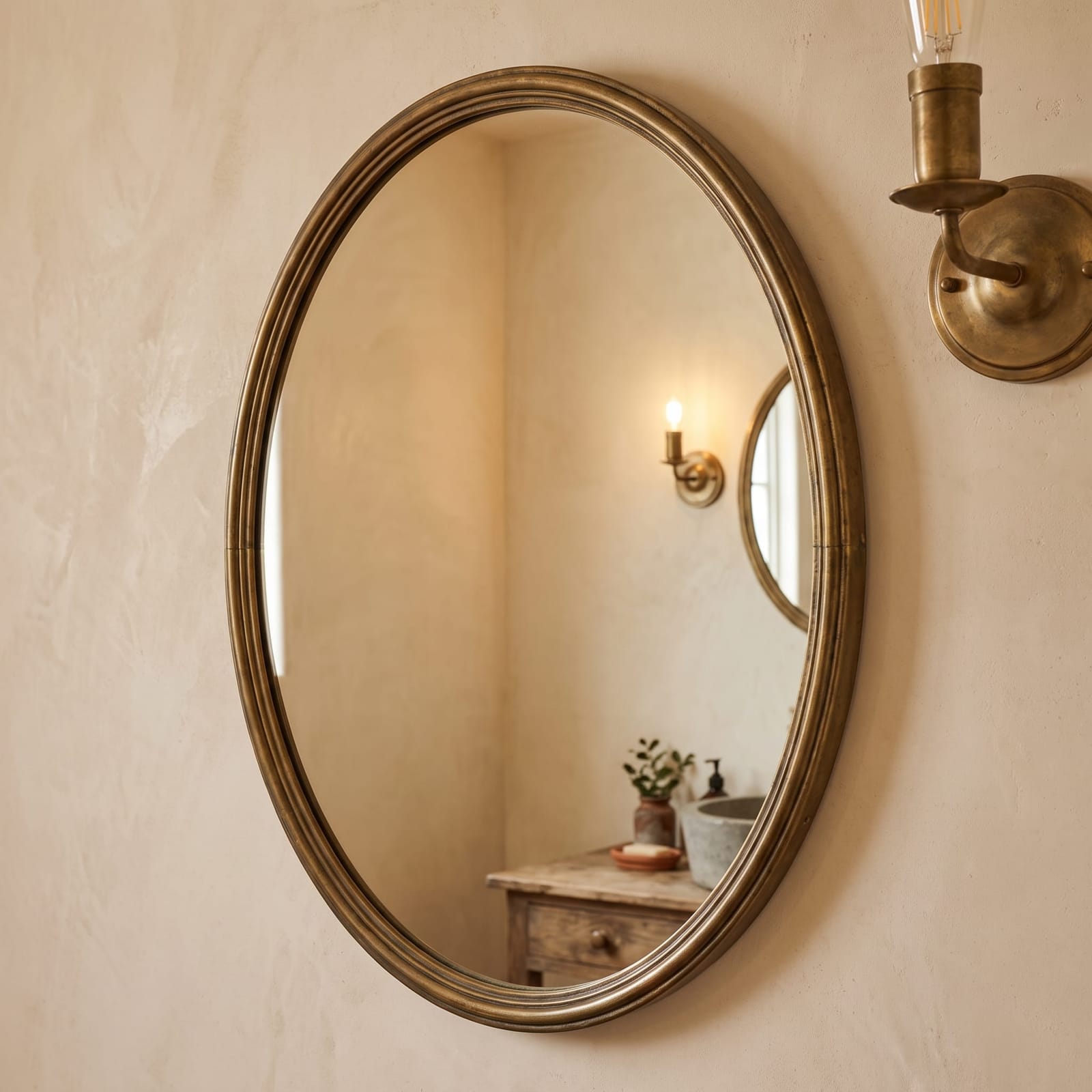
Gold Fluted Oval Wall Mirror
Oval wall mirror with gold-tone fluted frame and vertical 23 x 32 inch proportions.
A gold oval mirror with a deeper fluted frame adds the traditional brass detail shown above the rustic vanity.
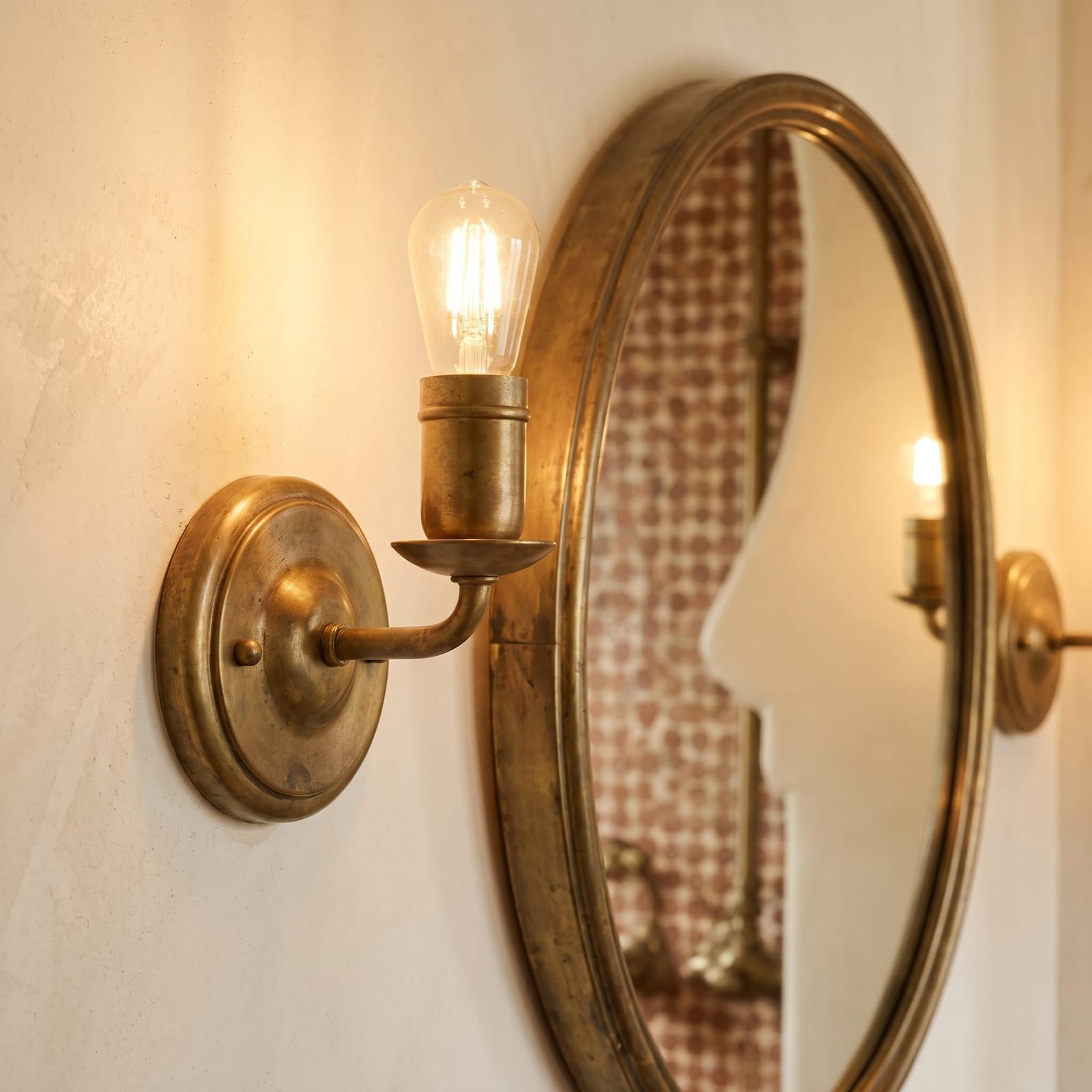
Antique Brass Bare Bulb Sconce
Antique brass single-light armed sconce with stepped backplate, simple socket cup, and exposed bulb design.
An antique-brass bare-bulb wall sconce reinforces the vintage utility lighting beside the alcove mirror.
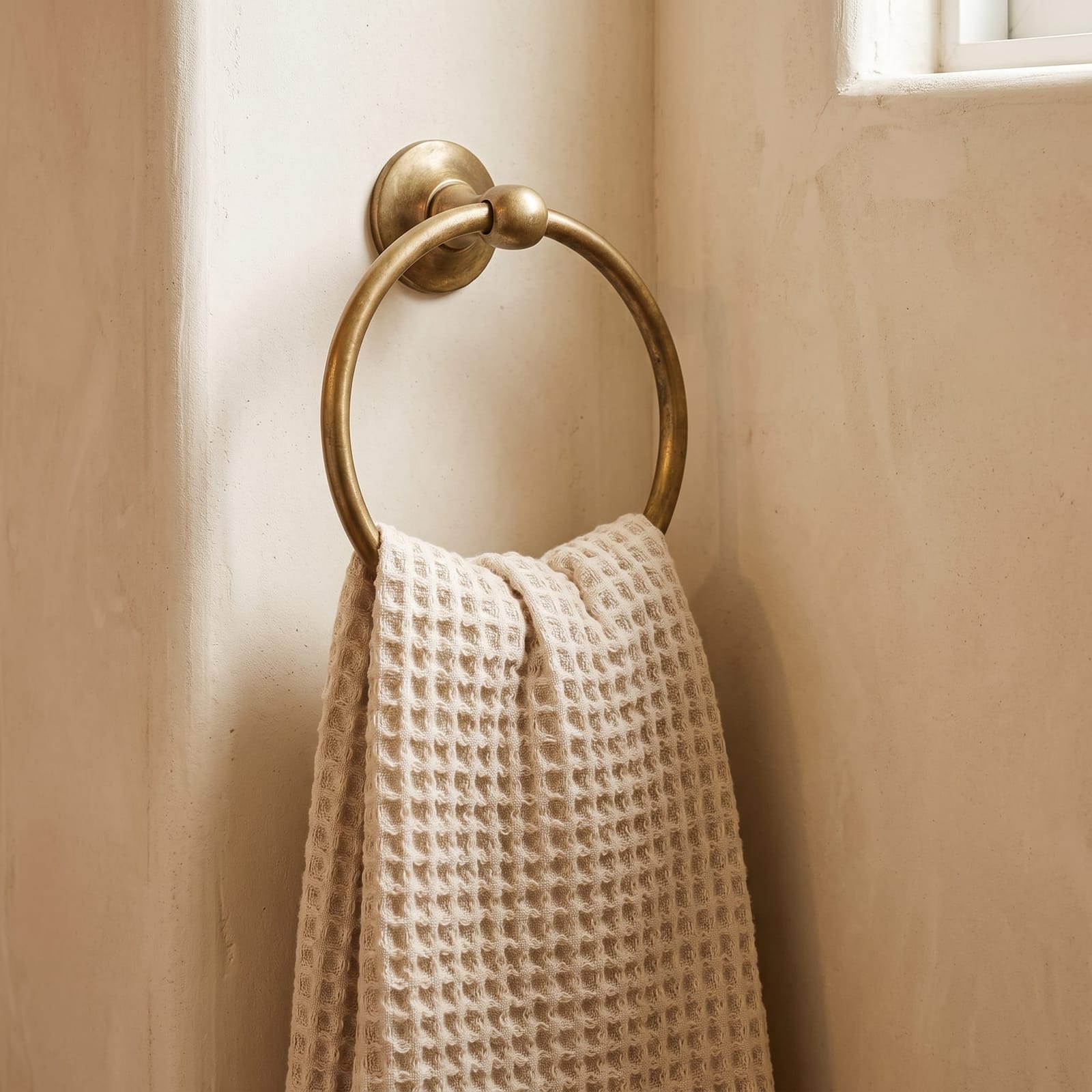
Natural Waffle-Weave Hand Towel
Pre-washed cotton waffle hand towel in Natural; select the hand towel size and natural/oatmeal color variant before purchase.
A natural waffle hand towel adds soft oatmeal texture against the warm terracotta and stone bathroom palette.
Frequently Asked Questions
What tile works best inside an arched shower alcove?
Handmade terracotta, zellige, and zellige-inspired ceramic tile all work well because their natural color variation and surface irregularity create the depth and warmth that make the alcove feel handcrafted. Square tiles in the four-inch range are typical. Confirm with the tile supplier that the product is rated for wet-zone shower use, and follow the recommended sealing schedule.
Can I use zellige tile in a shower?
It can work well in a shower, provided the tile is suitable for wet-zone use and installed with proper sealing according to the manufacturer's guidance. A penetrating sealer applied before grouting and reapplied on the recommended schedule helps protect the tile from water absorption and mineral buildup. Confirm the approach with both the tile supplier and your installer.
What brass finish works best with terracotta?
Champagne bronze, brushed gold, satin brass, and antique brass all complement terracotta because they share a warm tonal family. Avoid polished chrome or bright nickel, which introduce a cool metallic register that competes with the clay. Check whether the finish is PVD-coated or living brass — this determines how the tone may change over time.
Will brass fixtures tarnish in a bathroom?
It depends on the finish type. PVD-coated brass is designed to resist tarnishing better than uncoated alternatives. Living-brass finishes develop a patina in humid environments, gradually darkening and mellowing over time. Both approaches are valid — one stays more consistent, the other evolves. Check the manufacturer's finish description and care instructions before choosing.
Can a wood console table work as a bathroom vanity?
It can, with the right preparation. The wood benefits from being sealed on all surfaces with a moisture-resistant finish, and the bathroom needs adequate ventilation including an exhaust fan run during and after showers. With proper sealing and airflow, a rustic wood console adds warmth and furniture character that a standard vanity cabinet cannot provide.
What type of vessel sink works on a wood console vanity?
A round or oval vessel basin in a matte stone, concrete-style, or natural mineral finish sits naturally on a wood console top. The basin rests on the surface with the drain fitting through a countertop cutout. Confirm the sink weight is appropriate for the console's construction, and verify that the drain alignment works with the plumbing below.
What lighting works best in a terracotta bathroom?
Warm-filament lighting in the 2200K to 2700K range usually flatters terracotta tile, brass hardware, and wood grain best. Cool white light above 4000K tends to flatten these materials and can make the room feel clinical rather than warm. Any fixture near the shower should be rated for damp or wet locations — confirm the rating and follow local electrical codes.
How do you keep a terracotta shower clean?
Sealed terracotta cleans with a soft cloth or sponge and a pH-neutral cleaner. Avoid acidic or abrasive products, which may damage the sealer or etch the tile surface. Hard-water areas may need more frequent cleaning to prevent mineral buildup. Reseal on the schedule recommended by your tile supplier or sealer manufacturer.