A powder room is the one space in a home where restraint becomes optional. There is no shower to waterproof, no tub to plan around, no morning routine demanding even overhead light. What remains is a compact enclosure—often barely larger than a closet—with a single purpose: a basin, a faucet, a mirror, and whatever atmosphere the walls provide.
This design study starts with a question most renovation guides answer too quickly: can a small powder room handle deep, saturated colour without feeling compressed? The standard advice says no. Paint a small room dark, and it shrinks. But that advice is usually referring to flat, matte surfaces. A high-gloss glazed ceramic tile behaves differently—the glaze scatters light across the wall plane instead of absorbing it evenly, and the resulting highlights can work against the feeling of enclosure. How much depends on the light in the room, the grout colour, the ceiling finish, and how much of the wall the tile actually covers.
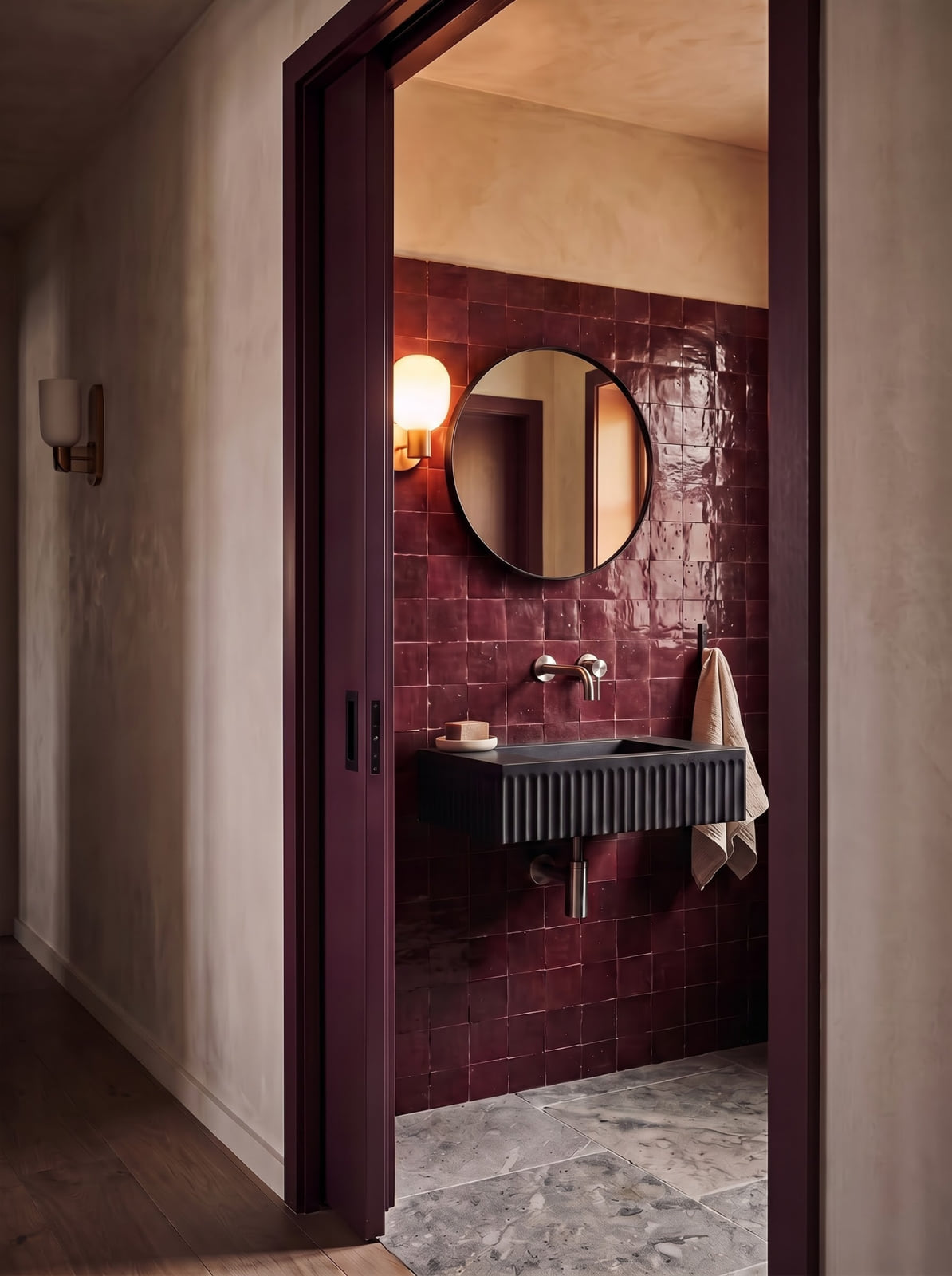
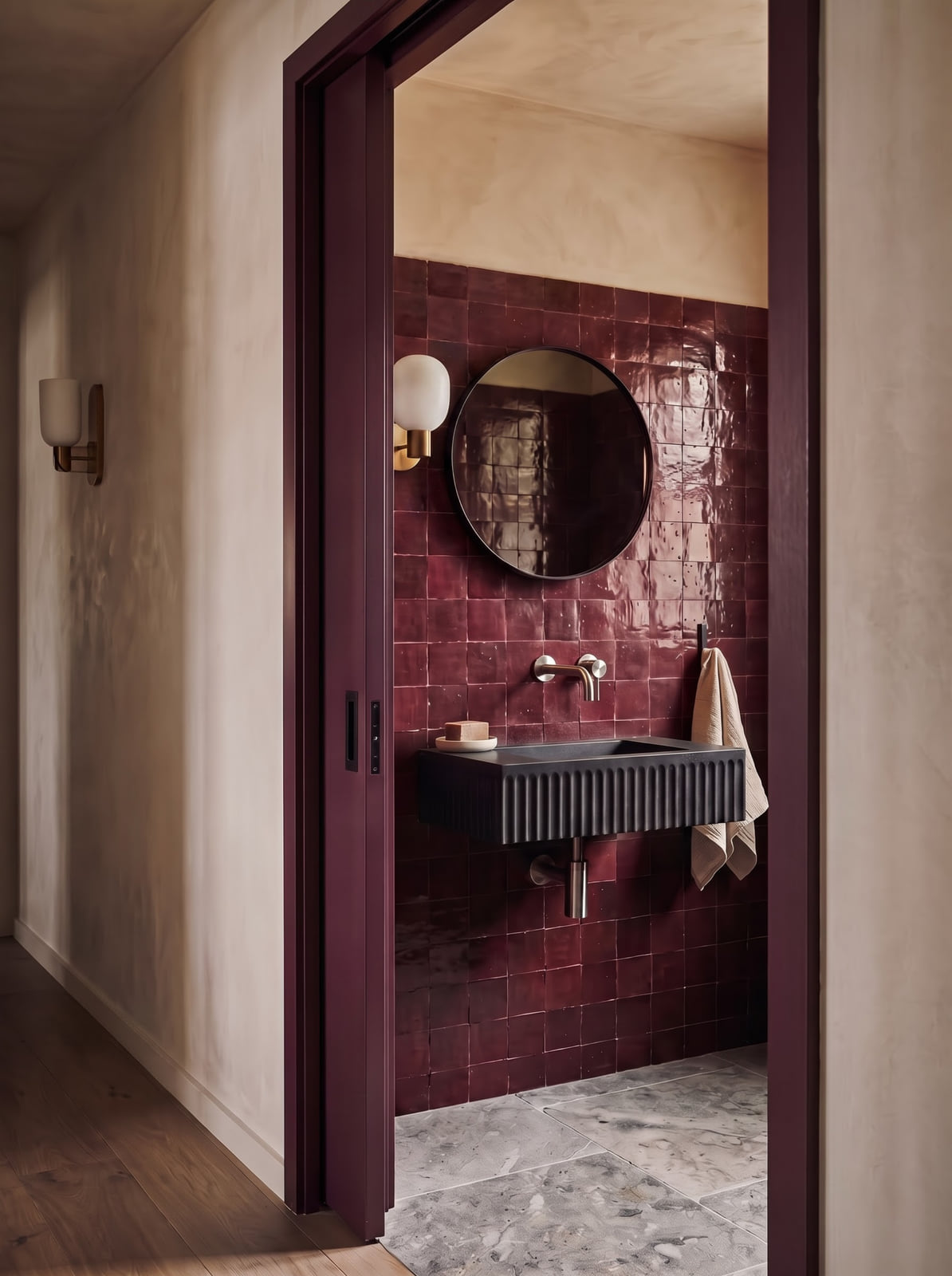
The concept here layers four principal materials: glossy maroon zellige-look tile across the walls, a wall-mounted matte black fluted basin, a single-handle brushed nickel wall faucet, and a pale sand plaster ceiling that provides visual relief above the saturated walls.
Why the Burgundy Tile Works
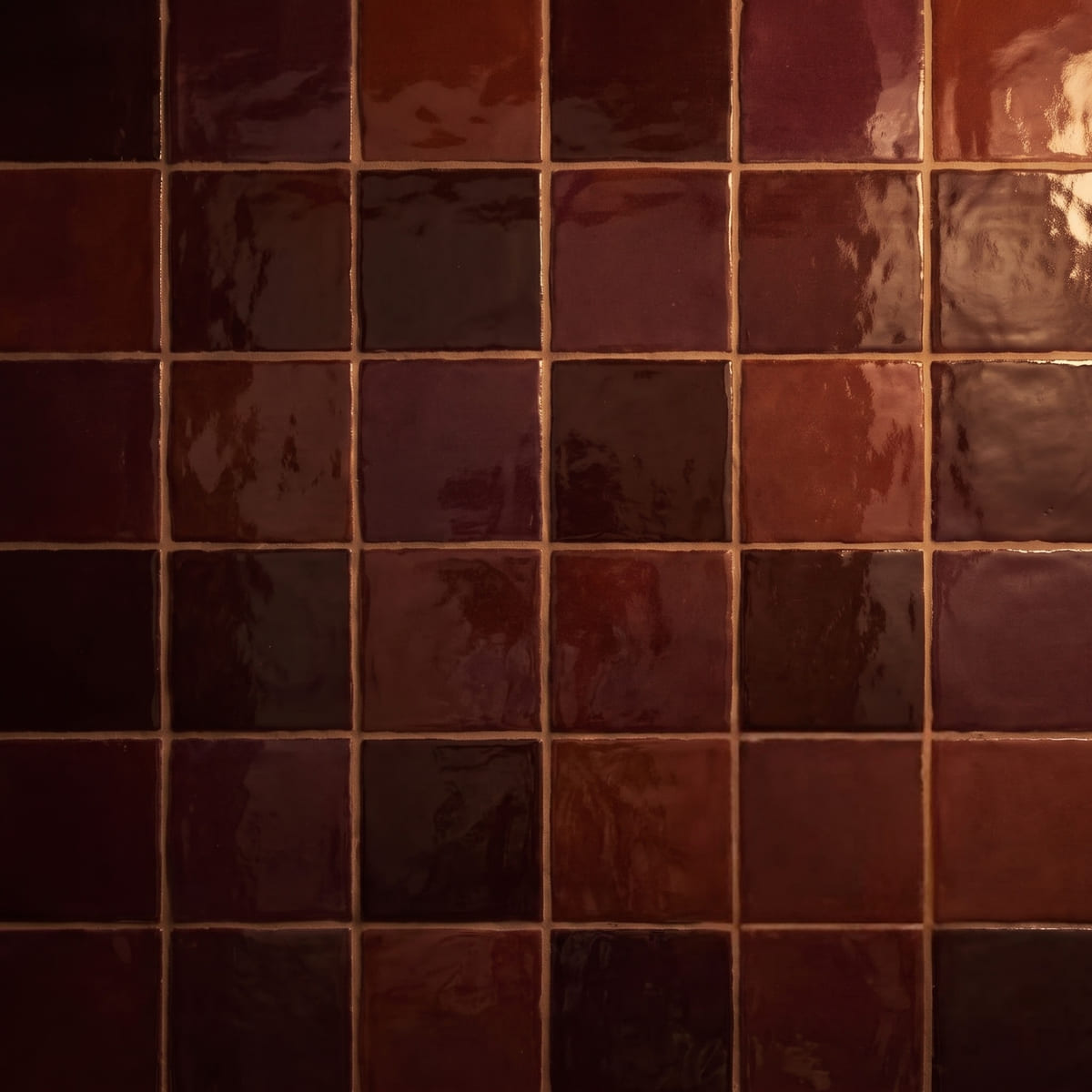
The tile driving this concept is a 4×4-inch glazed ceramic in maroon, with the undulating surface texture characteristic of zellige-look production. Unlike a flat, factory-calibrated porcelain, this tile carries an intentional surface irregularity—a soft waviness baked into the glaze—that scatters reflected light in varied directions. Each tile catches and releases light at a slightly different angle from its neighbours, so the wall surface appears to move as you change position or as the light source shifts.
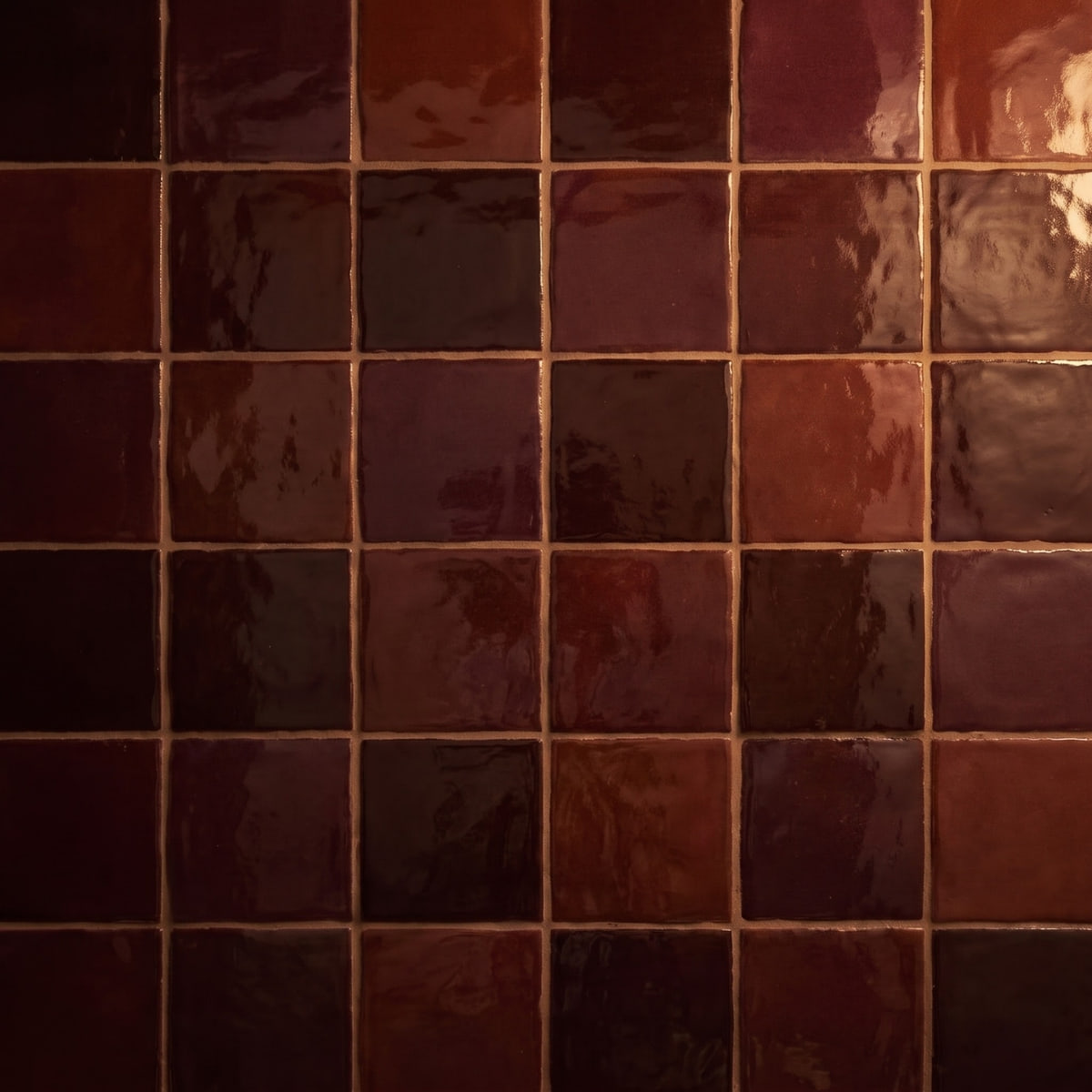
This is what separates a high-gloss dark tile from dark paint in practice. A painted wall at this depth of colour tends to absorb light more evenly across its surface, producing a relatively uniform darkness. A glossy glaze, by contrast, acts as a partial reflector. It does not bounce a clean reflection like glass, but it returns enough ambient light to add visible highlights and surface variation, giving the wall a sense of thickness rather than reading as a flat boundary.
Bedrosians rates the Zagora Maroon tile at V4 for shade variation, which is the highest rating on the industry scale. Individual tiles from the same production batch will range from deep plum to warm claret to brighter oxblood. In a large-format porcelain installation, high shade variation would look like a manufacturing defect. In a small-format zellige-look tile, the variation is the point. It produces a tonal range across the wall that prevents any single shade from dominating, and it rewards close looking—each tile carries its own particular colour, glaze pool, and surface contour.
The practical consequence of V4 variation is that tiles must be dry-blended before installation. This means opening multiple boxes, spreading tiles across a flat surface, and arranging them to distribute the shade range evenly across the wall. Installing tiles straight from one box at a time will cluster similar shades together and produce visible banding. The high-gloss glaze also requires grout release treatment before grouting—without it, grout haze can bond permanently to the glaze surface and dull the reflective quality that makes the tile effective in a compact space.
Above the tile line, a pale sand plaster ceiling draws little attention on its own but plays a real role in the composition. It provides a neutral resting point for the eye, preventing the room from becoming an uninterrupted field of deep colour. The shift from glossy maroon tile to matte plaster also introduces a material change—from hard, reflective ceramic to soft, matte finish—that keeps the room feeling deliberate rather than relentless.
How Light Changes the Room
The same tile wall reads differently depending on the light source, and this design concept takes advantage of that shift rather than trying to neutralise it.
Under soft ambient daylight, the glaze produces a broad, diffuse sheen across the wall. The maroon tiles appear brightest where the light is strongest and deepen gradually in areas that receive less direct illumination. The colour palette during the day leans toward a warm, brick-tinged red with visible oxblood variation between individual tiles. The matte black basin, in daylight, reads as a clean geometric interruption against the tonal wall: its vertical fluting catches light along each channel, producing a subtle alternation of highlight and shadow.
Under evening sconce light, the tile surface changes character. The globe sconces beside the mirror cast warm, directional light across the wall. Where daylight produces a wide wash, sconce light grazes the tile surface at a steeper angle and picks up the undulations in the glaze. Each ripple in the ceramic body becomes a small reflector, producing concentrated highlights that follow the irregularities of the zellige-look texture. Tiles closer to the light source take on a noticeably warmer tone. Tiles farther away deepen toward near-black plum.
This is the same principle at work in any room where you are balancing dark tile with warm ambient light—the tile surface does not change, but the angle and quality of the light source alter how the glaze responds. In a compact powder room, where the walls are close, this effect tends to be more visible than in a larger bathroom.
Black Basin, Round Mirror, and Mixed Metals
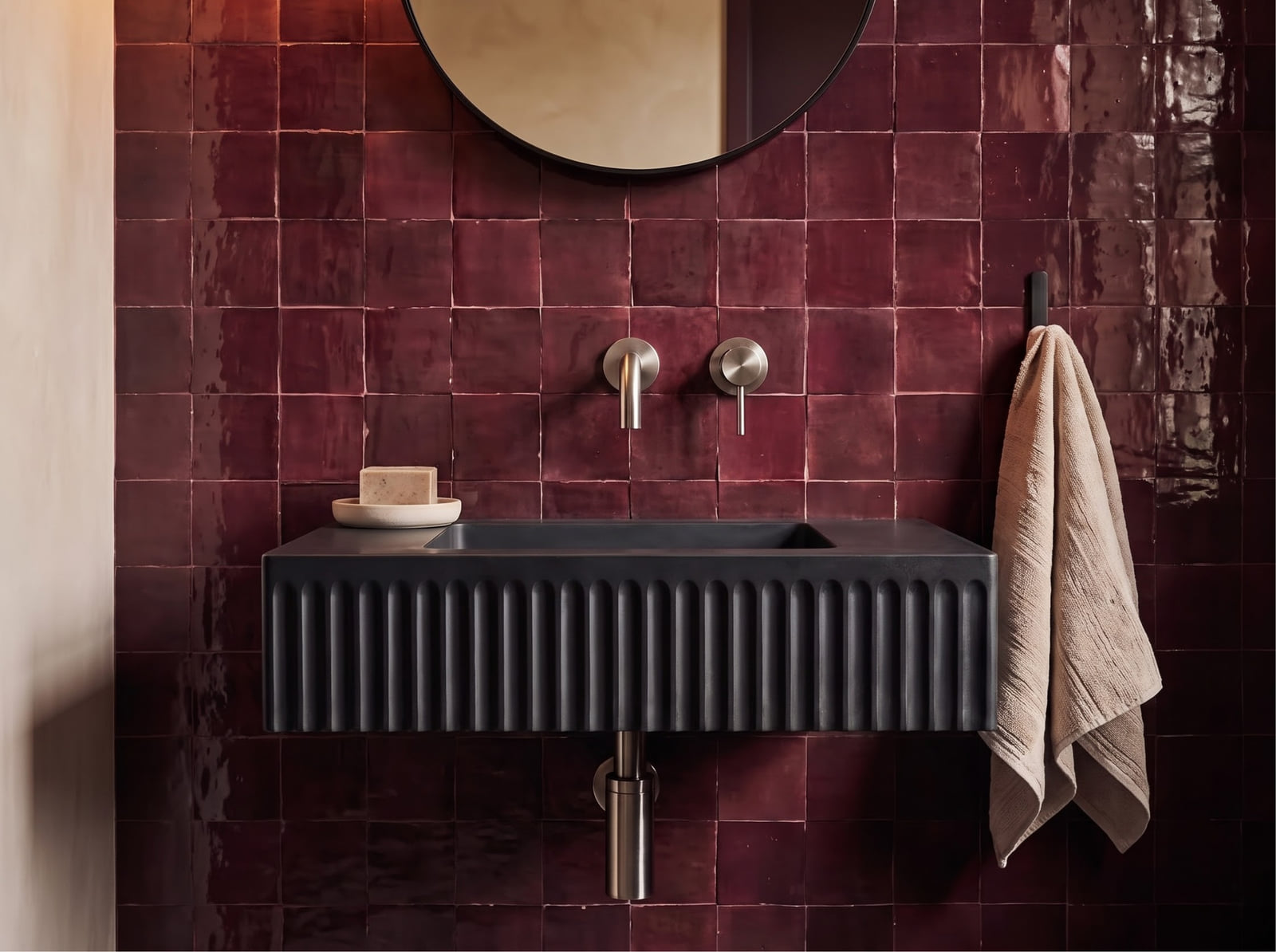
The fluted basin provides a precise matte counterpoint to the irregular glazed wall. Its dark form anchors the composition, while the brushed-nickel faucet and warmer brass lighting prevent the fixture palette from feeling uniform.
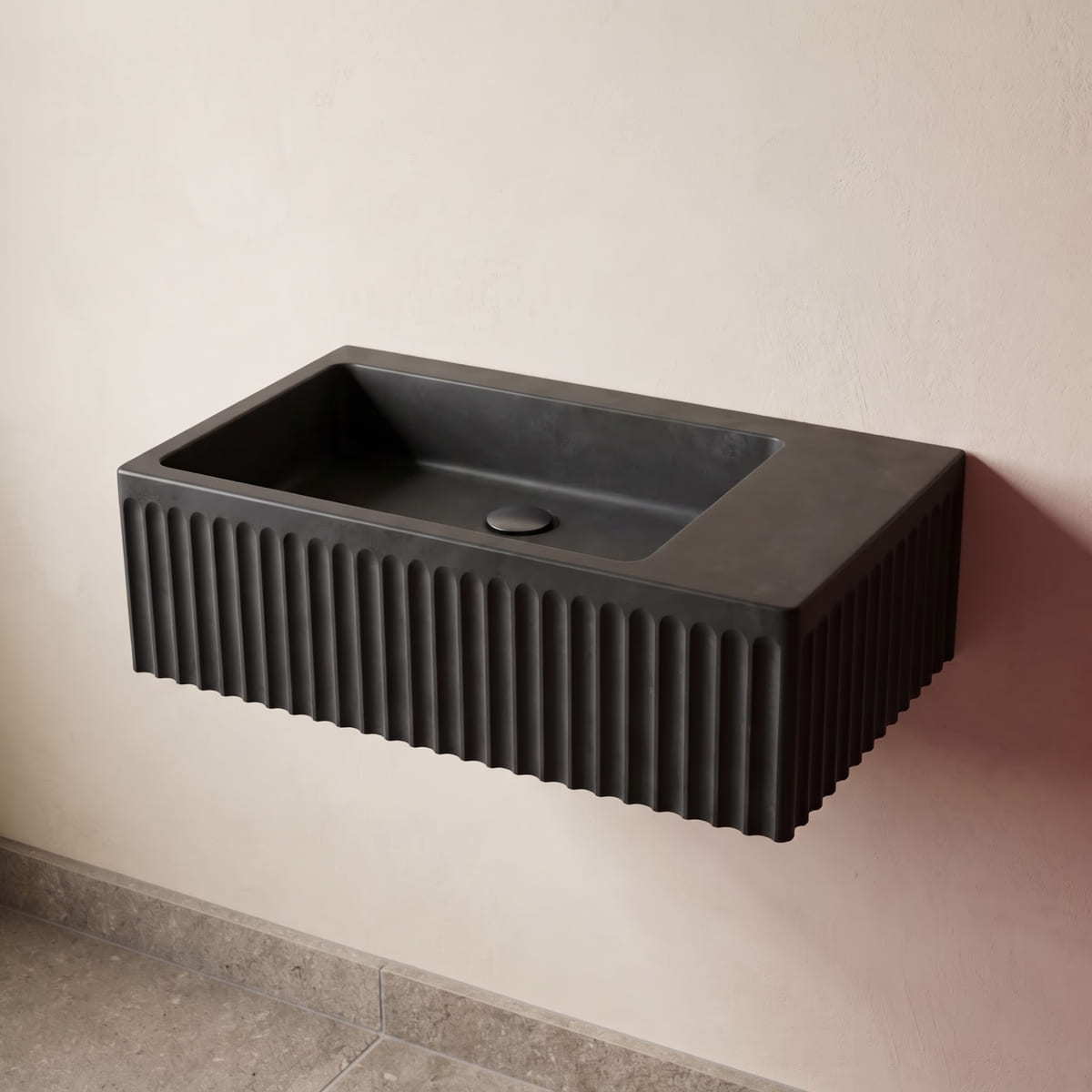
The basin anchoring this composition is a wall-mounted piece in matte black engineered stone with a fluted exterior. The flutes—deep, evenly spaced vertical channels running across the apron—introduce a controlled, geometric rhythm against the organic irregularity of the zellige-look tile. The material contrast is direct: wet-look glaze against dry, tactile stone.
Wall-mounting the basin eliminates the need for a vanity cabinet, a pedestal, or any freestanding furniture. In a powder room, where the footprint is already minimal, this recovers the floor plane below the basin. The exposed trap and supply lines become part of the visual composition rather than something concealed behind cabinetry, and the open floor helps the room feel less crowded.
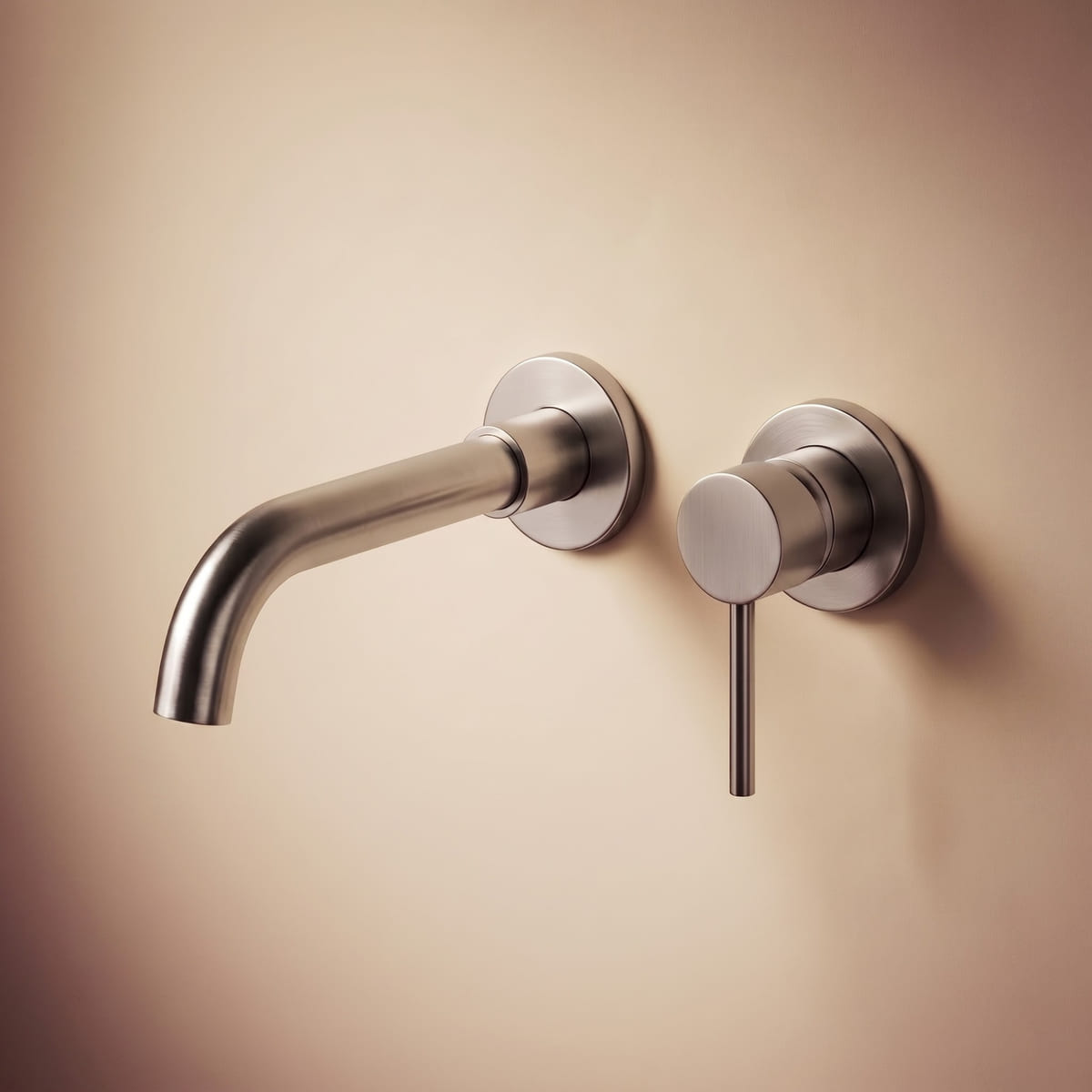
The wall faucet is a single-handle design in brushed nickel, mounted into the tile wall above the basin. The single lever sits to the right of the spout, controlling both temperature and flow. Brushed nickel sits between the warm gold of the sconces and the cool black of the basin—it does not compete with either finish but bridges the two. Against the deep maroon tile, the faucet reads as a quiet metallic accent rather than a focal point.
Centred above the basin, a round mirror in a thin matte black frame introduces a perceived opening in the wall. The black frame recedes against the surrounding dark tile, reducing the sense of the mirror as a mounted object and letting the reflected light do the work.
The gold globe sconces flanking the mirror introduce the warmest metallic tone in the room. The brass picks up the red-brown notes already present in the maroon tile, so the two materials read as related rather than separate. Here, the sconces provide task lighting for the mirror zone while also serving as the primary decorative metal accent.
The beige hand towel draped beside the basin is the only textile element in the room. Against the hard surfaces—ceramic, stone, metal, glass—the soft cotton registers as a quiet material relief.
Planning Before You Install
Wall-mounted basins and wall-mounted faucets are not simple swaps for their deck-mounted equivalents. Both require in-wall planning that must happen before the tile goes up.
A cantilevered basin of this weight and width needs structural support inside the wall, designed for the specific fixture, the wall construction, and the site conditions. This is not a matter of toggling a few bolts into drywall. The manufacturer’s installation manual specifies the support requirements, and a qualified installer must confirm the method before the wall is closed and tiled.
The wall-mounted faucet requires a rough-in valve positioned inside the wall framing. The valve body and supply connections must be set at the correct depth and height before the tile substrate is installed. Spout reach matters: the water stream must clear the rear wall and land over the basin’s drain, not against the back edge of the basin or the tile behind it. Coordinating the faucet outlet height, the basin mounting height, and the mirror position is a single planning exercise, not three separate decisions.
For the tile itself, the V4 shade variation and high-gloss glaze introduce two installation requirements that a tiler experienced with standard subway tile may not anticipate. First, dry-blending: tiles from multiple boxes must be shuffled and arranged before any adhesive is applied, to distribute the colour range evenly. Second, grout release: the glaze surface must be treated with a release agent before grouting to prevent permanent haze bonding. Skipping either step will compromise the finished result.
All layout decisions—mounting heights, clearances, framing depths, rough-in positions—should be governed by the specific product dimensions, the manufacturer’s installation instructions, local building and plumbing codes, and the actual conditions found on site. General guidelines are a starting point, not a specification. Licensed trades must verify framing and plumbing on site before the wall is closed.
Source the Look
Product links and specifications were checked during editorial preparation. Availability, pricing and listing details may change.
Bedrosians Zagora Maroon 4×4 Glazed Ceramic Tile — The primary surface material. Zellige-look glazed ceramic, V4 high shade variation, ½-inch thick. Order samples before committing to full coverage—V4 variation means your batch will not look identical to any product photograph. Requires dry-blending and grout release. View at Bedrosians →
Swiss Madison Delice Wall-Mounted Basin (SM-WS355MB) — Matte black engineered stone, 23″W × 11.5″D × 8″H, with a fluted exterior. Supports both wall-hung and countertop mounting; wall mounting requires in-wall support specified in the manufacturer’s instructions. View at Amazon →
SUMERAIN Wall-Mounted Bathroom Faucet (S1394NI) — Single-handle, right-hand lever, brushed nickel finish. Certified to cUPC, ASME A112.18.1, and NSF 372 lead-free standards. Requires in-wall rough-in valve. View at Amazon →
Growsun 24-Inch Round Wall Mirror — Matte black metal frame, 24-inch diameter. A thin-profile frame that recedes against dark tile rather than competing with it. View at Amazon →
White Classic Luxury Beige Hand Towels (6-Pack) — A close visual and style match for the towels in this design study. 100% combed cotton, 16″ × 30″, OEKO-TEX Standard 100 certified (M21LAD7P6). The neutral beige provides a soft contrast against the dark basin and tile. View at Amazon →
DIRYZON Gold Globe Wall Sconces (Set of 2) — Brass finish with milk glass globes. Note: This listing currently displays a “Frequently returned item” notice on Amazon. We recommend reading recent reviews carefully before purchasing and confirming the fixture meets your local electrical and damp-location requirements. This is a non-affiliate reference link. View at Amazon →
Closing
A high-gloss glaze over deep maroon ceramic tile adds visible highlights and surface variation that a flat painted wall at the same colour is unlikely to match. Paired with a wall-mounted basin that frees up the floor, a single-handle faucet that eliminates deck clutter, and a plaster ceiling that provides breathing room above the tile line, the result is a compact powder room that feels considered rather than constrained.
If you are drawn to the way handcrafted zellige-style tile variations interact with directional light, or to the enveloping warmth of deep burgundy interior palettes, a compact powder room is one of the most effective places to commit fully. The surface area is small enough to afford high-end tile, and the fixture count is low enough to plan each piece carefully.
Sources & Details
Explore the complete source list for this room, from the anchor pieces to the smaller finishing details.
Source note: Some links in this source list may be affiliate links, which means we may earn a commission at no extra cost to you. As an Amazon Associate I earn from qualifying purchases.
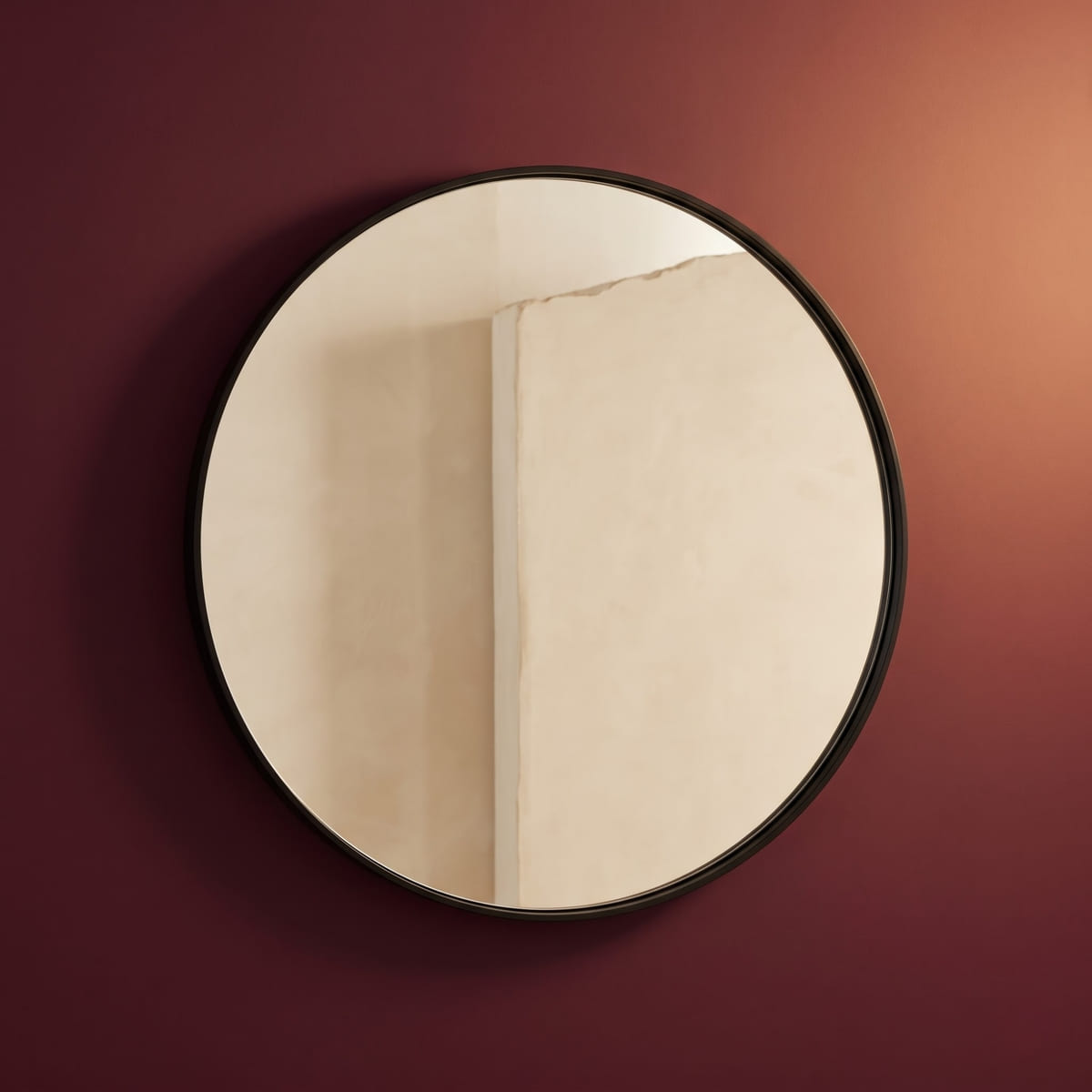
24-Inch Round Black Metal Frame Mirror
24-inch round wall mirror with thin matte black metal alloy frame.
Thin-profile matte black metal frame round mirror sized for small powder room vanity walls.
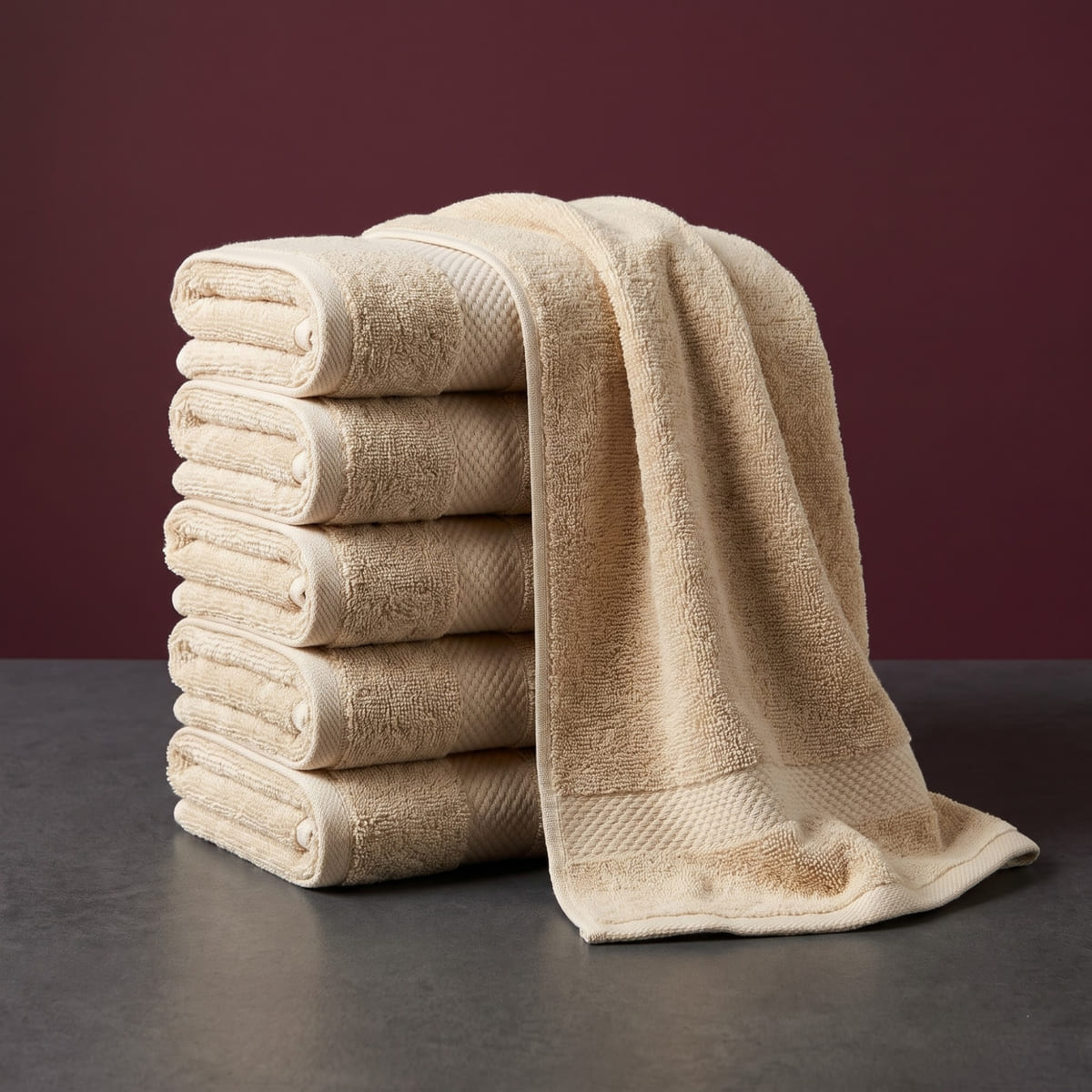
Beige Combed Cotton Hand Towel 6-Pack
100% combed cotton hand towels, 16x30 inches, OEKO-TEX Standard 100 certified (M21LAD7P6), 6-pack.
Soft combed cotton hand towels in neutral beige to provide quiet textile relief against dark tile.
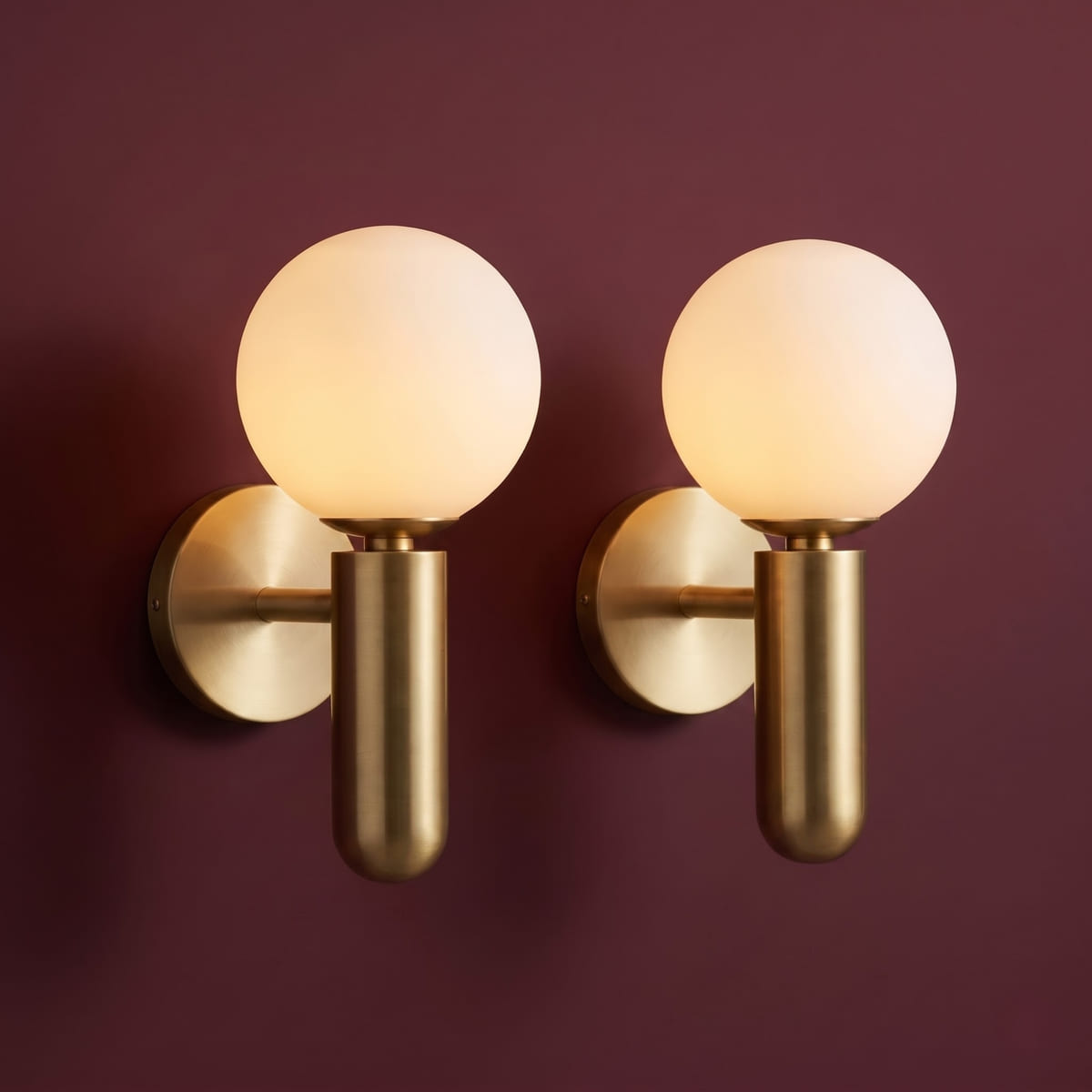
Gold Globe Wall Sconces (Set of 2)
Set of 2 gold brass wall sconces with frosted white milk glass globes.
Brass finish wall sconces with milk glass globes for warm directional vanity lighting.
Frequently Asked Questions
Does dark tile make a small powder room feel smaller?
Not necessarily. A glossy finish can return highlights and keep a saturated colour from appearing completely flat, but lighting, grout, ceiling colour and the extent of tile coverage also affect how enclosed the room feels. A pale ceiling above the tile line helps by providing a contrasting surface that lifts the visual height of the room. The tile finish matters, but it is one factor among several.
What structural support does a wall-mounted basin require?
A wall-mounted basin needs in-wall support designed for the specific fixture's weight, dimensions, and mounting method. The exact support depends on the wall construction and must follow the manufacturer's installation manual. A qualified installer should confirm the backing and framing before the wall is closed and finished. Standard drywall alone is not sufficient to carry a cantilevered basin.
How do you position a wall-mounted faucet above a basin?
The faucet outlet height, the basin mounting height, and the spout reach must be coordinated as a single layout. The spout reach—measured from the wall to the tip of the spout—needs to project the water stream past the rear edge of the basin and over the drain. The rough-in valve must be installed inside the wall at the planned height before the tile substrate is applied. This positioning depends on the exact product dimensions, the manufacturer's installation instructions, and the site conditions—it is not a fixed universal measurement.