There is a particular kind of space that most floor plans treat as an afterthought — the corner between the kitchen doorway and the window, the dead end of a hallway where a closet might go, the shallow bay that a builder left unfinished. These are the spaces that collect umbrellas and shoe racks. They are the architectural equivalent of throat-clearing.
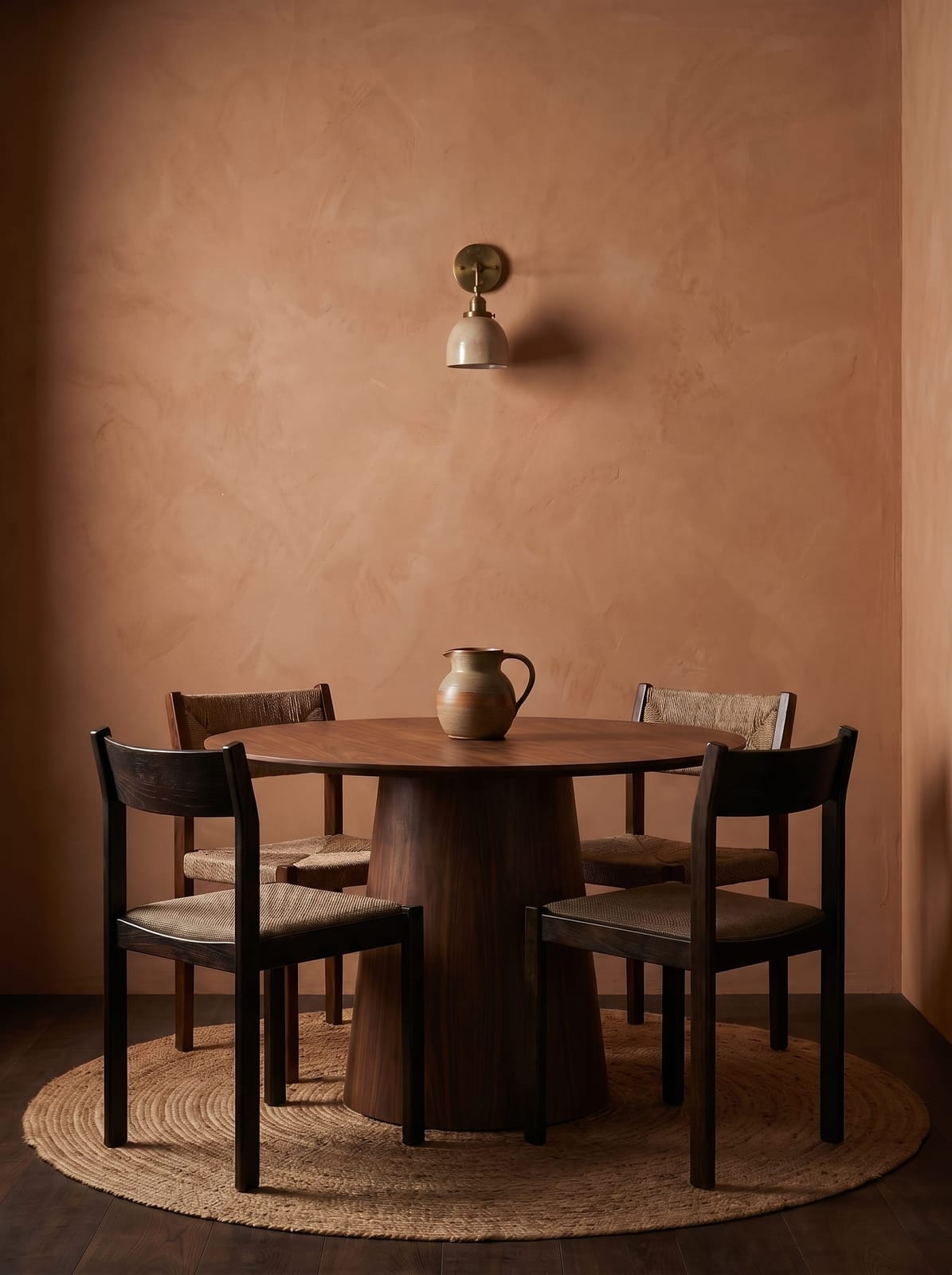
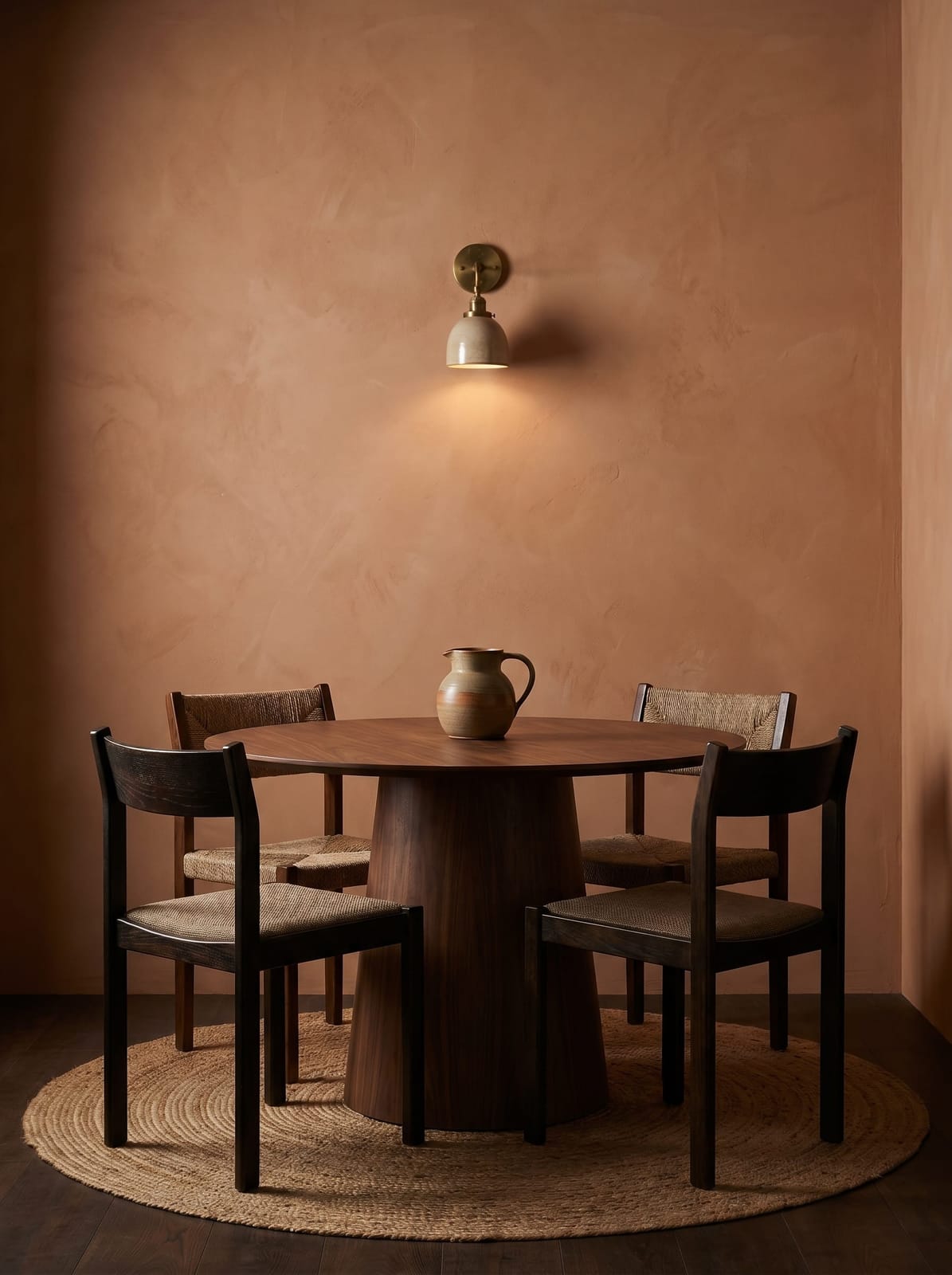
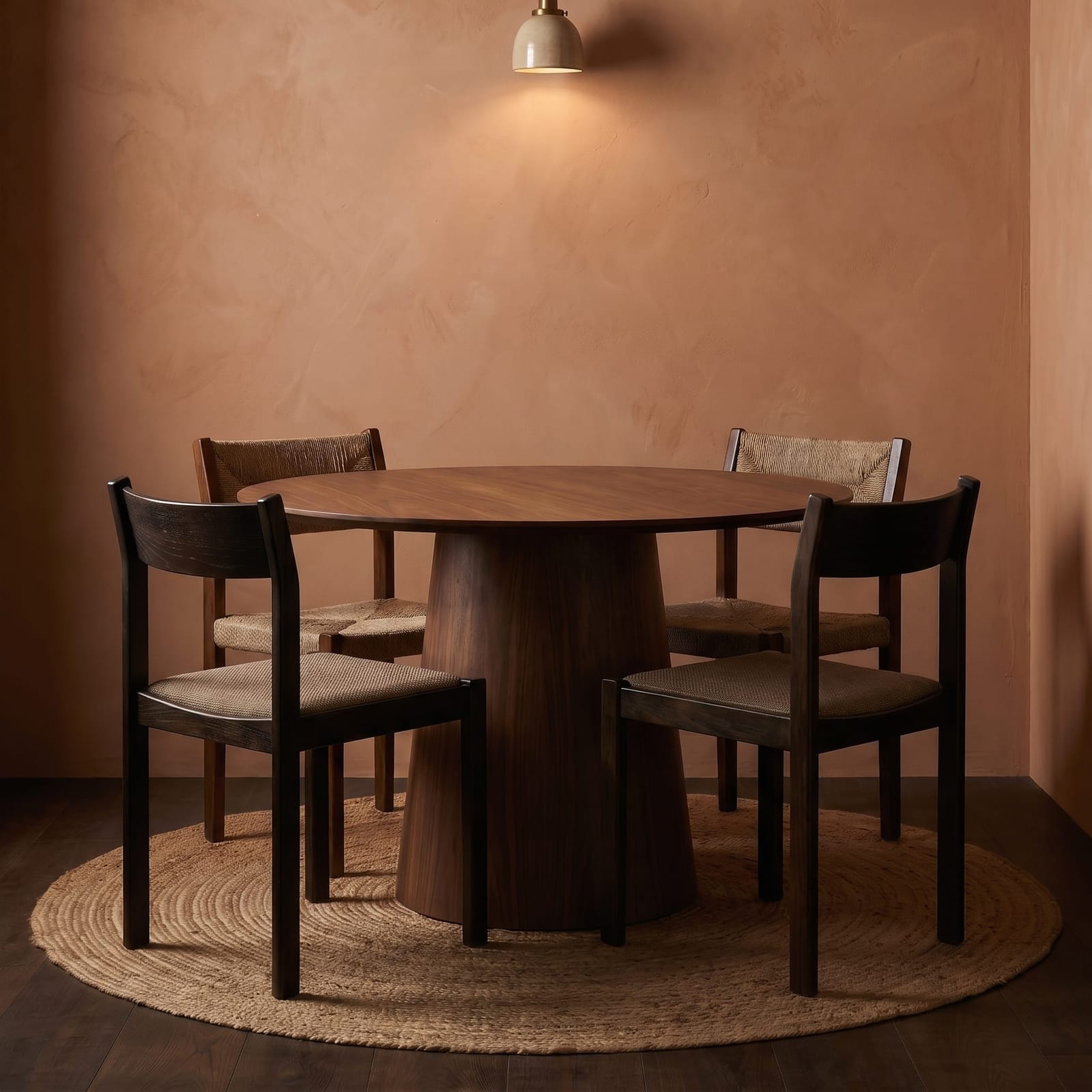
This compact terracotta dining nook reclaims that corner. It does not attempt to make the small space feel larger. It does the opposite: it wraps the walls in a warm, hand-troweled clay plaster the color of sun-baked earth, places a round walnut pedestal table at the center, surrounds it with dark oak chairs whose seats are woven from natural fiber, and illuminates the arrangement with a single ceramic-shaded brass sconce that casts a focused wash of warm light down onto the tabletop. The result is a space that feels deliberately compressed — intimate, warm, and sheltered, like a niche carved from plaster in a Mediterranean townhouse. Among compact terracotta dining nook ideas, this approach works because it treats tight dimensions as an asset rather than a limitation.
Why a Round Pedestal Table Works in a Small Dining Room
The table is the largest object in a dining nook, and in a compact space its shape and base determine whether the room flows or stalls.
A standard four-legged table defines a rigid rectangle on the floor. Its legs sit at the corners, strictly dictating where chairs can go and creating obstructions when diners slide in and out. In a tight nook, those four points of contact with the floor become the room’s dominant constraint.
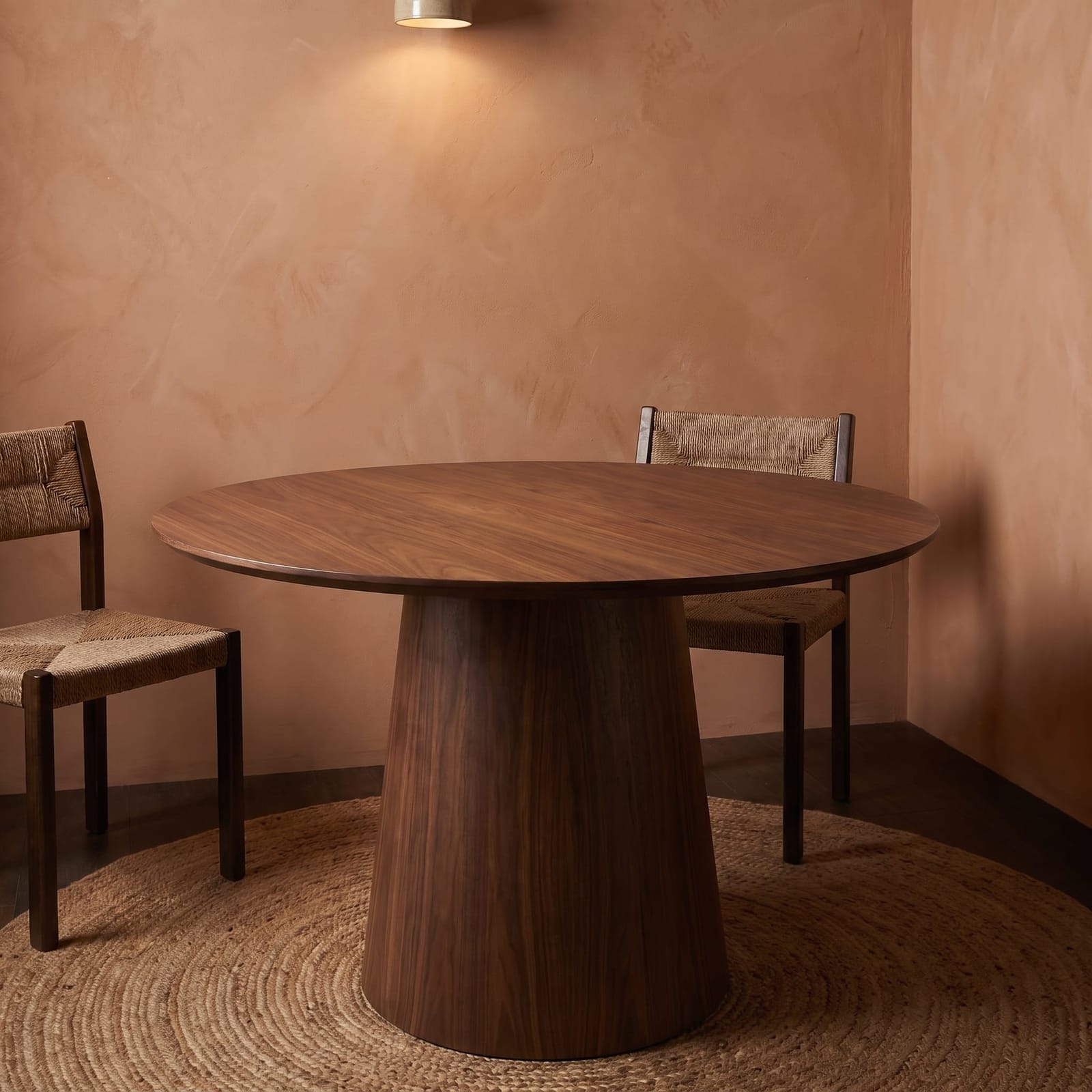
A round pedestal table eliminates all of that. A single central column supports the top, leaving the entire perimeter free for chair placement at any angle. Chairs slide in and out without catching a table leg. When the meal is over, every chair tucks fully under the table edge, and the nook becomes a clear, open passage again. The geometry is forgiving in a way that a rectangular table cannot be — there are no corners to walk into, no legs to navigate around, no dead zones between the seats.
A forty-eight-inch round top can usually seat four for everyday dining. The sunburst veneer pattern on the walnut surface — wedge-shaped sections of grain radiating from the center in a pinwheel formation — gives the tabletop its own internal energy, drawing the eye inward rather than outward toward the walls. The bullnose edge softens the silhouette from every angle, and the tapered conical pedestal base holds the visual weight low against the floor. The table feels grounded without feeling heavy.
Planning for Clearance and Flow
Small-space dining nooks need enough room between the table edge and the nearest wall or obstacle for people to sit, rise, and pass behind occupied chairs without turning sideways.
A common planning guideline is to aim for roughly thirty-six inches of clearance between the table edge and the wall. This typically provides enough space for a seated diner with a chair pulled back, though the exact distance depends on the chair depth, the room shape, and how many directions people approach the table from. In nooks where someone regularly walks behind occupied seats — a pass-through between the kitchen and living room, for example — forty-two to forty-eight inches of clearance tends to feel more comfortable.
These are planning baselines, not rigid rules. Every nook is different. Before committing to a table size, it helps to measure the corner with chairs in position and someone seated in them. If a person can rise and step back without grazing the wall, the proportions are working.
The pedestal base helps here. Because there are no corner legs, the usable perimeter of the table extends further than a four-legged design of the same diameter. Diners have more legroom, chairs slide closer, and the clearance between the table zone and the walls stretches a few critical inches wider.
The Terracotta Wall Finish: A Clay Envelope
The wall treatment defines the nook. Every surface within the corner is finished in an earthy, terracotta-toned Roman clay plaster — a dense, mineral-rich finish applied by hand in thin, overlapping layers. Each trowel stroke leaves behind a slightly different thickness and opacity, producing a surface that resembles old European plasterwork: mottled, clouded, and rich with the visible movement of the artisan’s hand.
Roman clay is not paint. Paint sits on a surface in a uniform film. Clay plaster embeds into it, building up a dimensional texture that changes with the angle of the light. The result is a wall that reads differently at every hour — warm and bright when the morning sun hits it directly, deep and saturated when the sconce casts its angled wash in the evening. The trowel marks, invisible under flat overhead light, emerge as soft ridged shadows under directional illumination, giving the wall a geological quality, as though the surface had been shaped by slow erosion rather than by hand.
Because the plaster is ultra-matte and absorbs light rather than reflecting it, it changes the spatial feeling of a compact corner. Standard painted walls bounce light back in a flat, uniform plane, making small rooms feel bright and exposed. Matte clay plaster softens, dims, and envelops. Glossy walls in a tight space amplify every window reflection and overhead fixture. Clay walls swallow them. The corner becomes a warm cocoon rather than a bright box.
For anyone considering this type of wall finish, application is best guided by the manufacturer’s product instructions and coverage specifications. Clay plaster finishes generally require smooth, well-prepared wall surfaces and benefit from professional application to achieve an even, layered result.
Dark Woven Dining Chairs: Armless and Compact
The chairs around the walnut table are black oak dining chairs with woven natural-fiber seats — armless, narrow, and designed to disappear under the table edge when not in use.
The armless profile is the critical detail in a compact nook. Standard dining armchairs add four to six inches of width per seat, and their arms prevent the chairs from tucking fully under the table. Armless chairs at roughly twenty inches wide slide entirely beneath the bullnose edge, clearing the floor when the nook is not in use and keeping walkways open. In a space where every inch of clearance matters, the absence of arms is not a compromise — it is the design.
The frame is solid oak in a deep, warm brown finish that stops short of true black, preserving the visibility of the wood grain. Against the lighter walnut tabletop, the chairs read as a dark, grounding ring — structural, quiet, and deliberately secondary to the table and the walls. A curved bentwood backrest arcs in a continuous line that cradles the lower back, providing support without the bulk of a fully upholstered dining chair.
The woven seats introduce a sandy, golden-brown texture that is both organic and tactile. The weave is tight and slightly irregular, catching light along its ridges and introducing a natural warmth that complements the clay walls and the jute rug below. A removable tie-on cushion in a neutral performance fabric adds comfort for longer meals and can be taken off when the woven seat itself is preferred.
A note on woven seat care
Woven natural-fiber seats are durable for everyday dining use, but they are not impervious. Clean crevices with a soft brush to remove crumbs and dust. If a deeper clean is needed, wipe gently with a barely damp cloth — not saturated. Avoid soaking the fibers with water, which can weaken natural weaves over time. The seats will develop a subtle patina with use, and like the walnut table, they look better for it.
A Round Jute Rug Under a Round Table
Defining the dining zone on the floor is a round hand-braided jute area rug, centered directly beneath the table. The round shape is not decorative whimsy. In a compact nook, a rectangular rug would extend past the dining zone, emphasizing the room’s tight dimensions by drawing lines that parallel the walls. A round rug, matched to the table’s diameter, creates a self-referencing composition — a dining island that floats within the larger room without calling attention to the boundaries.
The concentric braided ridges echo the circular geometry of the table and the pedestal above. The warm tan tone of natural jute acts as a visual bridge between the dark oak chair legs and the lighter walnut of the pedestal base, preventing the floor zone from creating a harsh color break. The texture underfoot is substantial and cushioned — a grounding layer that makes stepping into the nook feel like stepping into a different zone.
Jute under a dining table: the honest tradeoff
Jute is beautiful, textural, and made from natural plant fiber. It is also absorbent. Unlike synthetic rugs that can be wiped down and hosed off, jute is a natural plant fiber that absorbs moisture quickly. Spills need prompt blotting with a dry white cloth — not rubbing, not scrubbing, not soaking. Left unattended, liquid can wick into the fibers and cause discoloration or, in prolonged cases, mildew.
Vacuum regularly with a suction-only setting. Avoid rotating beater bars, which can pull and fray the braided surface. Do not steam clean or wet-extract a jute rug — excess moisture can cause shrinkage and fiber damage. For a dining setting with children or frequent entertaining, a jute rug asks for a bit more attentiveness than a synthetic alternative. The reward is a material that looks and feels like nothing synthetic can replicate — warm, organic, and genuinely handmade.
The Ceramic Dome Sconce and the Striped Pitcher
In a compact nook, there is no room for large decorative gestures. The focal points need to be small, considered, and architecturally integrated.
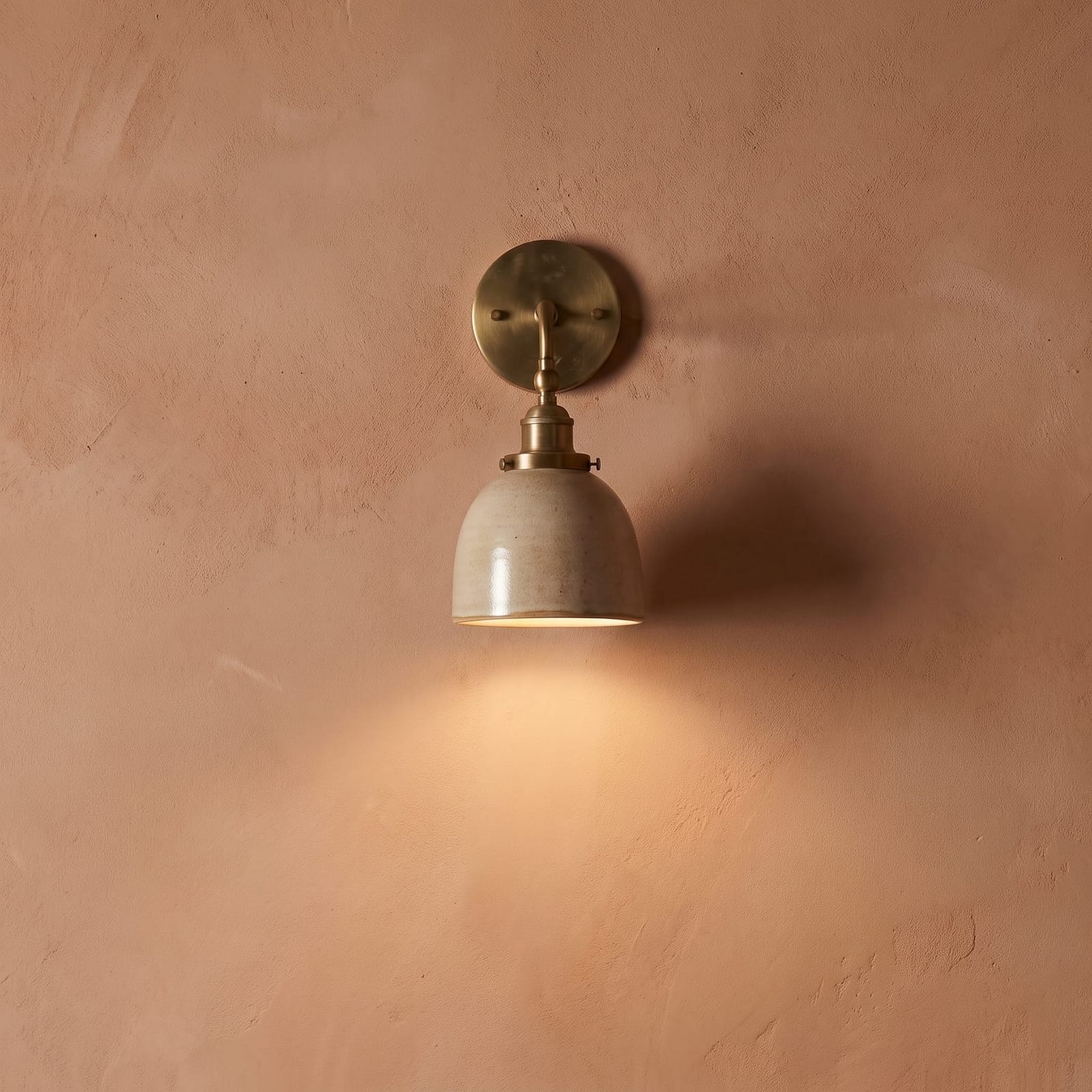
A brass wall sconce with a russet ceramic dome shade, mounted on the clay wall above the table, provides the nook’s primary evening light. The ceramic shade is handcrafted from fired clay in a warm, matte terracotta tone that mirrors the plaster behind it — the sconce reads as an extension of the wall rather than an object hung on it. The dome filters and colors the light, casting a warm amber wash down onto the walnut tabletop and the woven seats below. The brass fixture arm introduces a single metallic accent — quiet, warm, and restrained — that catches ambient light along its curve and provides just enough sparkle to keep the matte surfaces from reading as flat.
Fixture placement for a dining wall sconce is typically around sixty to sixty-six inches from the floor, centered to the table. For specific mounting height and wiring details, follow the fixture manufacturer’s instructions and local code requirements where applicable.
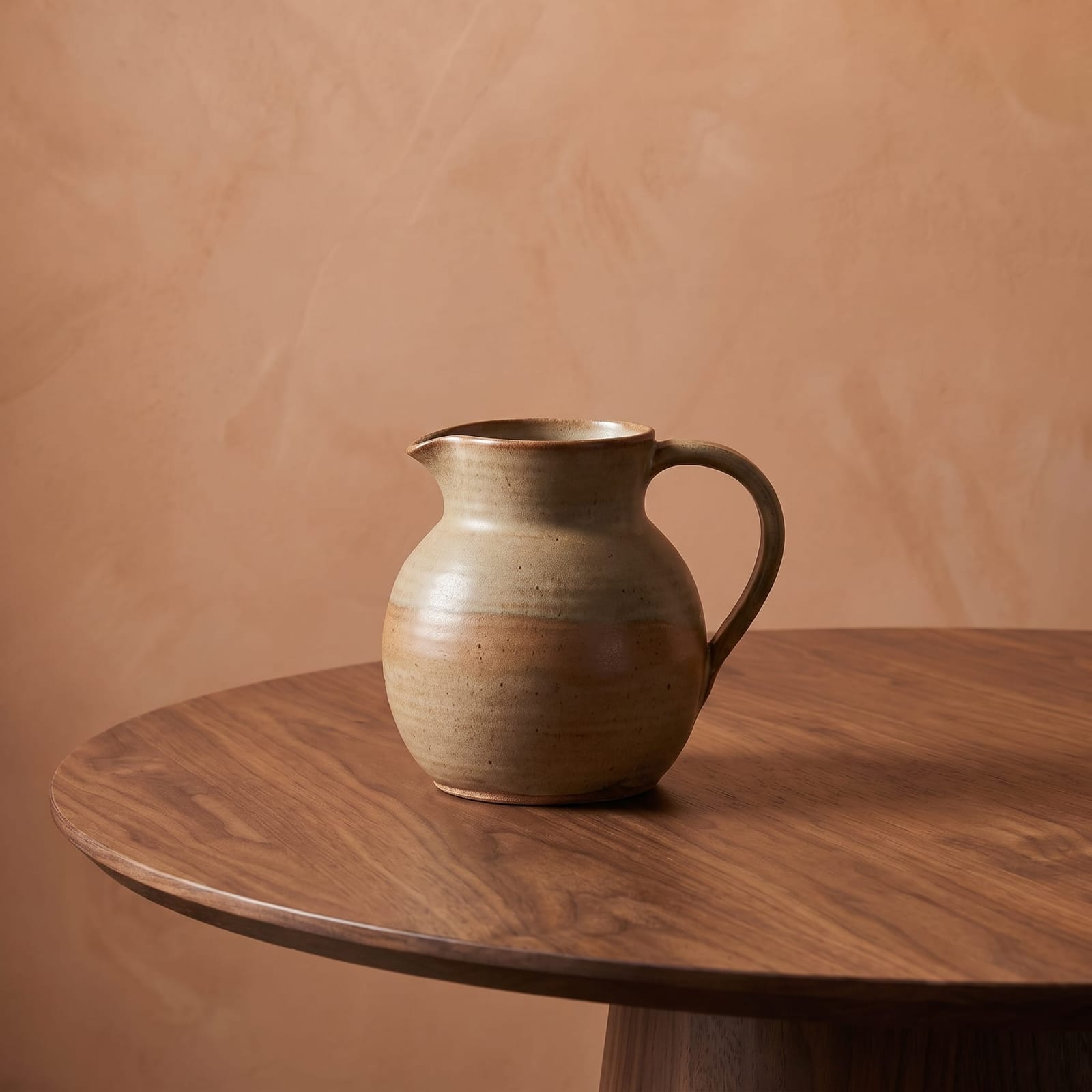
On the table itself, a hand-painted striped terracotta pitcher serves as both a practical vessel and a graphic centerpiece. The bold black stripes on a cream body introduce the nook’s only high-contrast pattern — a sharp, rhythmic element that breaks the soft gradient of terracotta, walnut, and jute. The stripes echo the horizontal bands of the braided rug below and the banded rim detail of the table edge, creating a subtle visual rhyme across the vertical layers of the composition. The handmade irregularity of the painted lines — slightly uneven, slightly wavering — keeps the pattern grounded in the same wabi-sabi tradition as the trowel marks on the plaster walls.
How to Keep the Palette Warm Without Making It Heavy
The nook’s palette operates within a narrow, warm band: terracotta rust, natural walnut, golden jute, dark oak, sandy fiber, and cream. There is no cool blue, no clinical gray, no contrasting accent wall. The entire corner belongs to the same tonal family — the family of clay, of earth, of sun-dried fiber — and this monochromatic warmth is what makes the compact space feel intentional rather than leftover.
The risk with a warm monochrome palette is heaviness. A room where every surface is the same temperature can feel dense and airless if nothing interrupts the pattern. Three things prevent that here.
A single metallic accent. The brass arm of the wall sconce is the only reflective surface in the room. It catches and redistributes whatever light exists in the space, providing a point of brightness that the matte surfaces around it cannot. One is enough. A second brass object would dilute the effect.
A high-contrast pattern. The black stripes on the ceramic pitcher break the warm gradient with a graphic rhythm that gives the eye a hard edge to land on. Without it, the palette would drift into an undifferentiated warmth. With it, every soft surface around the pitcher feels more deliberately soft.
Negative space on the table. A compact table with too many objects on it becomes cluttered, and clutter in a small space reads as chaos. One pitcher, one clear surface, and enough open walnut to let the sunburst grain breathe. The restraint is what makes the nook feel calm rather than crowded.
What These Materials Ask of You
Every material in this nook is chosen for warmth and texture, but each one has care needs that are worth knowing before you commit.
Walnut tabletop. Dust regularly. Wipe with a soft, slightly damp cloth as needed. Avoid placing hot dishes directly on the surface without a pad or trivet — sustained heat can affect the finish. If the table has an oiled or lacquered finish, follow the manufacturer’s guidance for reapplication. Walnut deepens in color over time, which is part of its appeal.
Jute rug. Vacuum with suction only — no rotating beater bars. Blot spills immediately with a dry white cloth. Do not wet-clean, steam, or saturate the fibers. Rotate the rug periodically to distribute foot traffic evenly. In a dining setting, promptness with spills is the single most important care habit.
Woven chair seats. Brush crumbs from the weave with a soft brush. Wipe with a barely damp cloth for deeper cleaning — never saturate. The fibers may soften slightly with use, developing a patina that adds character. If the chairs include a removable cushion, clean it according to the fabric manufacturer’s care instructions.
Roman clay wall finish. For everyday dust, a dry cloth or soft duster is sufficient. For marks or scuffs on sealed surfaces, a lightly damp cloth may work — test in an inconspicuous area first. Roman clay is not designed for wet zones. Avoid harsh cleaners. Touch-up and repair, if needed, is best handled by referring to the product manufacturer’s guidance.
Ceramic dome sconce. Wipe the shade and fixture with a dry or lightly damp soft cloth. The ceramic shade is fired and stable, but avoid abrasive cleaners that could dull the matte surface. For bulb replacement, follow the fixture manufacturer’s specifications for wattage and bulb type.
Sources & Details
Explore the complete source list for this room, from the anchor pieces to the smaller finishing details.
Source note: Some links in this source list may be affiliate links, which means we may earn a commission at no extra cost to you. As an Amazon Associate I earn from qualifying purchases.
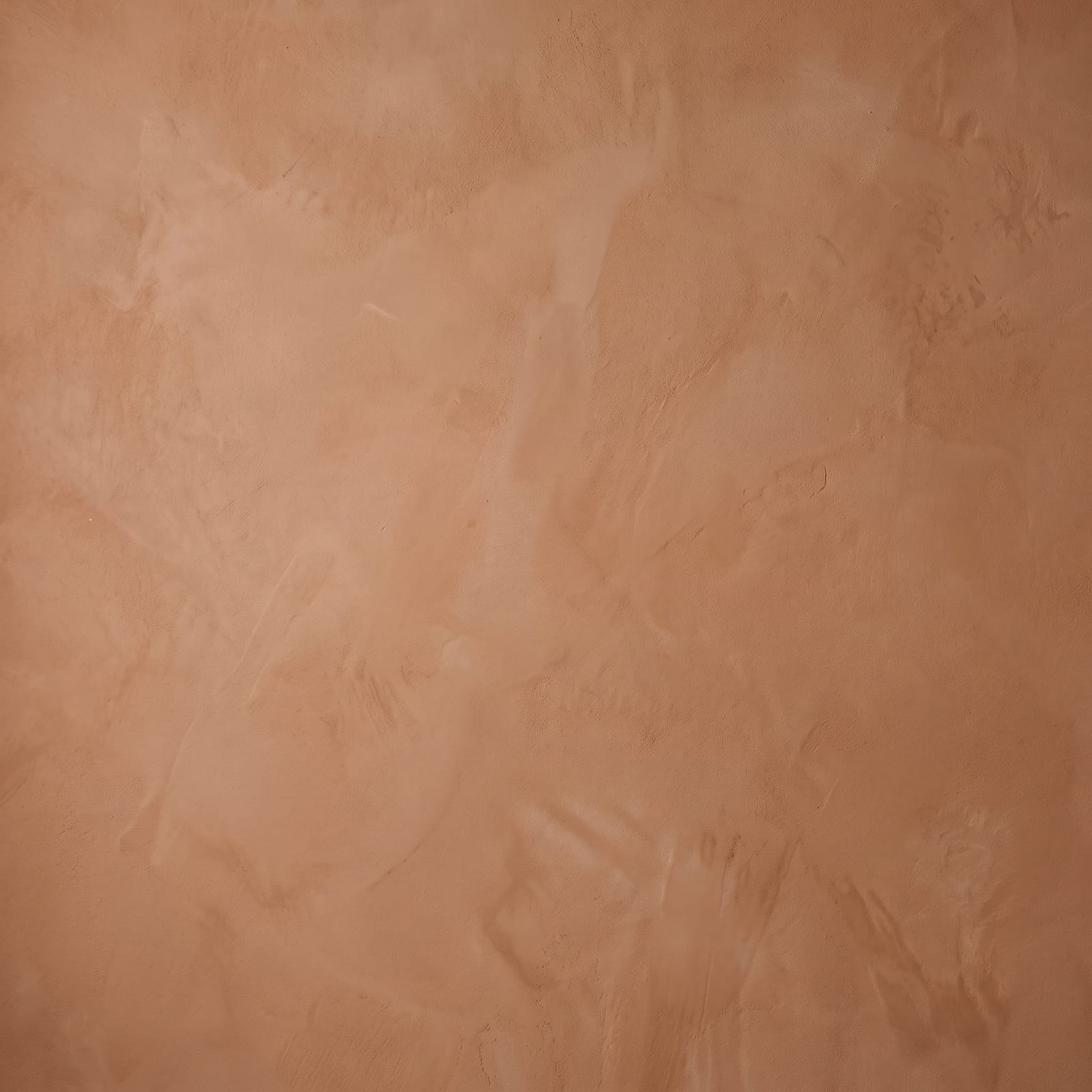
Portola Paints Terra Roman Clay
Eco-friendly clay-based plaster finish designed for smooth interior drywall to create a textured, mottled marble-like effect.
Textured, earthy clay-plaster finish in a rich rust/natural clay tone.
Frequently Asked Questions
How do you design a compact dining nook?
Start with a round pedestal table, which eliminates corner legs and allows chairs to tuck fully underneath. Choose armless chairs to minimize width. Anchor the arrangement with a round rug that matches the table's diameter, creating a self-contained dining island. Wrap the walls in a warm, light-absorbing finish — terracotta clay plaster, matte paint in a deep earth tone — and light the space with a single wall sconce that casts a focused pool of warmth onto the table. The goal is a corner that feels intimate and intentional rather than cramped and leftover.
Why use a round pedestal table in a small dining room?
A round pedestal table has a single central base instead of four corner legs, which means chairs can be positioned at any angle around the full perimeter and slide fully underneath when not in use. This frees up walkway space, provides more legroom for diners, and eliminates the obstructions that make four-legged tables difficult in tight corners. The round shape also removes sharp corners from the traffic path.
How much clearance do you need around a dining nook table?
A common planning guideline is roughly thirty-six inches between the table edge and the nearest wall or obstacle. This typically allows a seated diner to push back and rise comfortably. In areas where people regularly walk behind occupied chairs, forty-two to forty-eight inches tends to feel more practical. These are baselines — the right clearance for any particular nook depends on the chair depth, room shape, and how the space is used.
Is a jute rug a good choice under a dining table?
Jute is beautiful, textural, and brings genuine organic warmth that synthetics cannot replicate. However, jute is an absorbent natural fiber. Spills need to be blotted immediately with a dry cloth — not rubbed or scrubbed. It should not be steam cleaned or wet-extracted, as excess moisture can cause shrinkage and fiber damage. If you are comfortable with prompt spill attention, jute works well under a dining table. If the table sees frequent large spills, a synthetic alternative may be more practical.
How do you clean a jute rug in a dining area?
Vacuum regularly using a suction-only setting — avoid rotating beater bars, which can pull and fray the braided surface. Blot spills immediately with a dry white cloth. Do not rub, scrub, or saturate the fibers with water. Avoid steam cleaning or wet extraction. Rotate the rug periodically to distribute foot traffic. For stubborn stains, consult a professional rug cleaner experienced with natural-fiber rugs.
Are woven dining chair seats practical for everyday use?
Yes, woven natural-fiber seats are durable for daily dining. They handle regular weight and movement well and develop a subtle patina over time. Clean crumbs from the weave with a soft brush, and wipe with a barely damp cloth for deeper cleaning. Avoid saturating the fibers with water, which can weaken natural weaves over time. With reasonable care, woven seats hold up well and look better with age.
Is Roman clay wall plaster durable for a dining room?
Roman clay can be well suited to dry interior walls like those in a dining room when it is specified, applied, and finished according to the product guidance. For everyday maintenance, dust with a dry cloth. Marks on sealed surfaces can often be addressed with a lightly damp cloth — test in an inconspicuous spot first. Roman clay is not designed for wet zones like showers or splash areas. For application, touch-up, or sealer questions, follow the product manufacturer's guidance.
What lighting works best for a small dining nook?
A single wall sconce with a warm-toned shade, mounted above and centered to the table, provides focused downlighting that pools onto the dining surface without flooding the room. Choose a bulb in the 2700K to 3000K range for a warm, amber quality. Avoid overhead recessed downlights or exposed bulbs, which can create harsh shadows in small spaces. A dimmable fixture adds flexibility — bright enough for a weeknight dinner, soft enough for an evening with wine.